
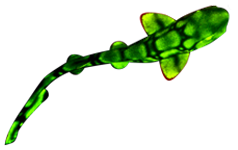
Life in Sand Enhanced by Fluorescence Microscopy
There is a lot more to see in a random scoop of sand than you might expect. On a trip to the Monterey peninsula (California) I collected sand from a tide pool at the north end of Asilomar State Beach and then looked at it under a stereo microscope outfitted with the NIGHTSEA Stereo Microscope Fluorescence Adapter with Royal […]
read more »Practical Searching with Fluorescence
Fluorescence is good for more than science and finding beauty in nature. It can also be put to many practical uses. I was traveling recently, and as I was preparing to take a vitamin D capsule I dropped it on the hotel room floor. The capsule is about .9 cm (3/8″) long and is almost transparent, with […]
read more »Origin of the Word Fluorescence
The term fluorescence is derived from the name of a rock. It is often the case that a physical phenomenon is observed well before it is named. For fluorescence this gap was almost 300 years. Anomalous colors of natural substances under different illuminations were noted as early as 1565. The red emission of chlorophyll extracts […]
read more »Lumens and Lights for Fluorescence – Part 2
In the previous installment we talked about what lumens are and why they are not the right rating to consider in a light for fluorescence diving and imaging. We closed by saying that the right question to ask is not ‘How bright is this light (in lumens)?’ but ‘How bright a fluorescence does this light produce in the […]
read more »Green Bandpass Barrier Filter for the SFA
The green bandpass barrier filter option for the Stereo Microscope Fluorescence Adapter isolates the green part of the spectrum and is for use with the Royal Blue excitation source. While our other barrier filters are longpass filters, transmitting all wavelengths longer than the filter’s cutoff, this new filter transmits in the restricted range from approximately 500 to 560nm. The […]
read more »Lumens and Lights for Fluorescence
How do light ratings in lumens relate to choosing lights for fluorescence? Here are a couple of questions we are asked on a regular basis: “I have a light that puts out 2000 lumens. If I put a blue filter on it will I be able to see fluorescence? What about shooting stills and video?” […]
read more »The Fluorescence Diving Experience
“Our group was so blown away by the NIGHTSEA filters that they wanted to forego the local nightlife for the rest of the week and night dive instead.” “I saw things I could not imagine.” It’s been called many things – fluodiving, fluoro diving, fluorescence night diving, UV diving – but no matter what you call […]
read more »Underwater Fluorescence Diving Videos
Fluorescence night diving, Bonaire. Stills and video by Charlie Mazel using the Sola NIGHTSEA lights. Two videos, both with fantastic close-up work, by Jeff Honda. These were made using the Sola NIGHTSEA light. Video by Paul Cater Deaton off Little Cayman, made with the Sola NIGHTSEA. This video can be seen on Google Earth! This is a […]
read more »Visible Implant Elastomers and NIGHTSEA Lights
Another great application of fluorescence in marine research! Researchers often need a way of tagging individual animals so they can better study their ecology and behavior. One method is the use of Visible Implant Elastomer (VIE), a biocompatible material that can be injected beneath transparent or translucent tissue and remain externally visible. VIE tags are widely used […]
read more »Adventures in Fluorescence – The Case of the Yellow Band
We were contacted to help a customer solve a fluorescence imaging problem. There was some urgency since he was on vacation. We were able to help him out quickly, and afterwards we decided to have some fun with this by posing the same challenge to our own community in the form of a puzzler. We described […]
read more »Forms of Luminescence
Fluorescence is one of many forms of luminescence, the emission of light not resulting from heat. This distinguishes luminescence from incandescence, which is light emitted by a substance as a result of heating. All luminescence requires some input of energy to cause the light emission, and the varieties are distinguished by where that energy comes […]
read more »Physics of Fluorescence – the Jablonski Diagram
So what is really happening when something fluoresces? Electromagnetic radiation at one wavelength is absorbed and is then re-emitted at a longer wavelength. Wavelengths of light correspond to perceived colors (if they fall in the visible range), and this means that shorter wavelength light like ultraviolet or blue is converted to longer wavelength light, like green, yellow, orange, red. Before we […]
read more »Seeing Natural Fluorescence Underwater in the Daytime
When we think about underwater fluorescence we automatically think about night diving, and that is definitely the best way to see the full range and magnificence of the phenomenon. But once you get your eyes and brain tuned to it you will start to notice naturally occurring fluorescence on the reef in the daytime. Divers […]
read more »SFA Application Notes
We have prepared several application notes related to use of the NIGHTSEA Stereo Microscope Fluorescence Adapter, and more will be added from time to time. ♦ Application Note 1 – Using routine fluorescence stereo microscopes for sorting Drosophila larvae This application note describes how the SFA system helped a researcher at the University of Alabama with a high-throughput fly-sorting challenge […]
read more »Story Behind a Fluorescence Photograph
by Charles Mazel, PhD Underwater fluorescence is beautiful and widespread. It’s not hard to find photogenic subjects and you can come back with lots of striking shots on camera – especially in this digital age. But sometimes there is more of a story behind a photograph. This is one of them. The image here is […]
read more »Diver in the Act of Taking a Fluorescence Photograph
There are many images of subjects fluorescing underwater (check out the Galleries!), but you don’t often see a photograph of a diver in the act of taking a fluorescence photograph. The photo below is from my (NIGHTSEA founder Charlie Mazel) archives of 35mm slides (I hope some of you remember film). This shot was taken at […]
read more »Fluorescence Diving – Dedicated Blue Light vs White Light with Filter
Should you get a dedicated blue light for fluorescence diving or use a white light with an added filter? No one solution fits all, but there are some definite trade-offs in the approaches. The 3 minute video below compares the Light & Motion Sola NIGHTSEA (blue light), the Sola 1200 with an added filter, and […]
read more »Fluorescence for Automatic Seafloor Classification
Note – While the article below describes an application of fluorescence for automatic image classification in an underwater application, the concepts can apply to any use of fluorescence imaging. In addition to increasing contrast of a fluorescing subject against its background, fluorescence response can at times aid in distinguishing elements of an image from each […]
read more »Sources of Underwater Fluorescence
Diving at night with blue light reveals a spectacular display of intense, saturated colors in a wide variety of marine plants and animals. Sometimes a subject is entirely fluorescent, and sometimes just a part. Sometimes there is just one color and sometimes a veritable rainbow. But where is the fluorescence coming from? Right now there are three […]
read more »Fluoro Diving Leads to Discovery – a Fluorescing Ostracod
by Charles Mazel, PhD – NIGHTSEA founder So there I was, underwater in the dark, chasing a fluorescing speck around with a plastic sandwich bag. It was back in 2003 and I had a research project where we set up one of the Harbor Branch Oceanographic Institution Johnson Sea-Link submersibles to conduct the first-ever deep sea explorations […]
read more »Will the Stereo Microscope Fluorescence Adapter Fit my Microscope?
The key elements of any fluorescence system are: a light source that produces sufficient energy in the appropriate wavelength range to excite fluorescence in the sample of interest; a barrier filter in the viewing path that blocks reflected excitation light while transmitting the fluorescence emitted by the sample. NIGHTSEA implements these in different ways […]
read more »Sorting Fluorescent Transgenics
The Model SFA Stereo Microscope Fluorescence Adapter is a great workhorse tool for screening and sorting your fluorescent transgenics. It’s an economical way for new faculty to use their limited start-up budgets to get right to work with fluorescence without waiting for a big grant to come in. Some labs that already own high end fluorescence microscopes are purchasing the […]
read more »Underwater Fluorescence FAQ
There are a number of questions that come up all the time about underwater fluorescence and the equipment needed to view and photograph it. Read on for answers to many of these questions, and please contact us to suggest other questions we should be answering! What is fluorescence? Does NIGHTSEA sell fluorescent lights? Do the […]
read more »Why NIGHTSEA uses Blue Light for Underwater Fluorescence
We use blue light for underwater fluorescence for the simple reason that it is better than ultraviolet light (black light) for this application. There is no one light that will make everything fluoresce, but if you want to choose a light to give you the most varied and vibrant fluorescence experience blue is the way […]
read more »Fluorescent Light vs. a Light that Excites Fluorescence
People often refer to lights for bringing out (exciting) fluorescence – whether for night diving or in the lab or field – as ‘fluorescent lights’. While there is no harm in that, they aren’t, and we try to be technically correct. ‘Fluorescent lights’ are what you commonly find in office buildings. They are called that because […]
read more »Fluorescence Silhouette Photography
Put a non-fluorescent subject in front of a fluorescent background and what do you get? A silhouette that can have remarkable detail and make a striking and novel image. The photograph below is a great example of this. NIGHTSEA contributor Wayne MacWilliams captured this brittle star against a green-fluorescent coral while diving at Deep Blue […]
read more »Focus Stacking for Improved Depth of Field
Some kinds of photography have shallow depth of field, making it difficult to impossible to have as much of the subject in focus as you would like. This is especially true for macro photography and for photography under the microscope. The technique of focus stacking combines multiple images, each taken with a slightly different plane of focus, […]
read more »Scientific and General Interest Publications on Underwater Fluorescence
This page is a list of publications related to fluorescence effects in marine organisms. If you have suggestions for references that should be added to this list, please e-mail nightsea@nightsea.com. Popular articles/books with color photographs AW, Michael, 2002. Underwater Jungles Sarawak. OceanNEnvironment, Australia. 128 pp. Catala-Stucki, Rene, 1964. Carnival Under the Sea. R. Sicard, […]
read more »The Role of the Barrier Filter in Fluorescence Viewing and Photography
You need the barrier filter to block reflected excitation light and transmit only the fluorescence. Without a barrier filter you can see fluorescence from very brightly fluorescing subjects, but you would miss many, many others because the reflected excitation light can completely overwhelm the fluorescence. For best results the spectral properties of the barrier filter […]
read more »Reef Aquarium Fluorescence Links
Blue Zoo Aquatics interview with NIGHTSEA founder Charlie Mazel Coral Coloration, Part 1: Fluorescence– by Dana Riddle Coral Coloration, Part 2: Fluorescence: Pigments 510 – 565 and Notes on Green Fluorescent Proteins – by Dana Riddle Coral Coloration, Part 3: Pigments Responsible for Yellow Coloration – by Dana Riddle Lateral Lines: The Seen and Unseen World […]
read more »Fluorescence for Coral Recruitment Research
Fluorescence enables researchers to find newly settled coral polyps both in the field and in the laboratory.
read more »Fun with Fluorescence Photography – Chlorophyll
Anything with chlorophyll – green plants on land, seaweeds and symbiotic algae in corals underwater – emits a characteristic deep red fluorescence. Chlorophyll’s job is to capture light and convert it to chemical energy for photosynthesis, and it is very good, but not perfect, at doing that. Some of the incident light always escapes as fluorescence […]
read more »What Fluorescence Colors can you See and Photograph?
A new customer asked: “In some of your displayed pictures you have predominately green or red colors. Is this dependent upon the subject or your barrier filter? Do you need different filters to get different colors?” Great question! The barrier filter determines what colors it is possible to see, while the fluorescence properties of the […]
read more »Fluorescence-Aided Dissection
Researchers are using NIGHTSEA equipment as an aid in fluorescence-aided dissection over a range of size scales. A selection of examples that we are aware of follows: Example 1 – Dr. Xin Lu, a researcher at the MD Anderson Cancer Center in Houston, contributed some nice images of his work with GFP-tagged tumors in a universally […]
read more »Underwater Fluorescence in the Depths of the Sea
In 2003 NIGHTSEA founder Dr. Charles Mazel had the privilege of being the Chief Scientist on the first-ever project to explore for fluorescence on the deep sea floor. The ONR-supported expedition used the Johnson Sea-Link manned submersible operated by Harbor Branch Oceanographic Institution, making a total of 18 dives to depths as great as 850 meters […]
read more »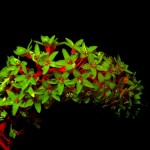
Fluorescence Photography without Darkness
Read any guide on fluorescence photography and it will tell you that it needs to be done in the dark, the darker the better. When you look at fluorescence with a good excitation light in the dark the fluorescence look bright to the eye, but in reality the emission tends to be weak and it can […]
read more »Use the Strap Wrapper to Protect the Filter Visor
TIP – The Strap Wrapper’s main job is to secure the Filter Visor to your mask strap so you won’t lose it during a dive. But the Strap Wrapper also works well as a protective cover for the visor, protecting it from scratches between dives and while traveling. The Filter Visor is acrylic and can […]
read more »Biological Function of Fluorescence in a Marine Organism – Mantis Shrimp
A team led by NIGHTSEA founder Charlie Mazel discovered and videotaped fluorescence in a mantis shrimp in the Bahamas in May of 2002. The discovery led to a new research project into the contribution of the fluorescence to the color pattern of the animal, and its functional role in visual ecology. The results were published in […]
read more »History of Underwater Fluorescence Observation and Photography
Fluorescence Observation The first printed record we have found of an observation of fluorescence of a marine organism dates to 1927. A Mr. C. E. S. Phillips was walking along the shore in Torbay, England, and noticed that the anemones in a tidepool seemed to be an especially bright green. He collected several specimens […]
read more »Easy Fluorescence Photography Test
You can test your fluorescence photography equipment with subjects that are easy to find at home.
read more »