
Early Underwater Fluorescence Photographs, Pedro Bank, Jamaica – Charles Mazel
– by NIGHTSEA founder Charles Mazel
Background
In this and additional galleries (links will be provided when they are posted) I am sharing some of my early underwater fluorescence photographs, the ones that got me started in what turned into a massive life change. The equipment and techniques for finding subjects and taking the photos were tested and ‘perfected’ in dives at Folly Cove, Gloucester, Massachusetts. Once the lights and photo setup were working in cold New England waters it was time to head to the Caribbean.
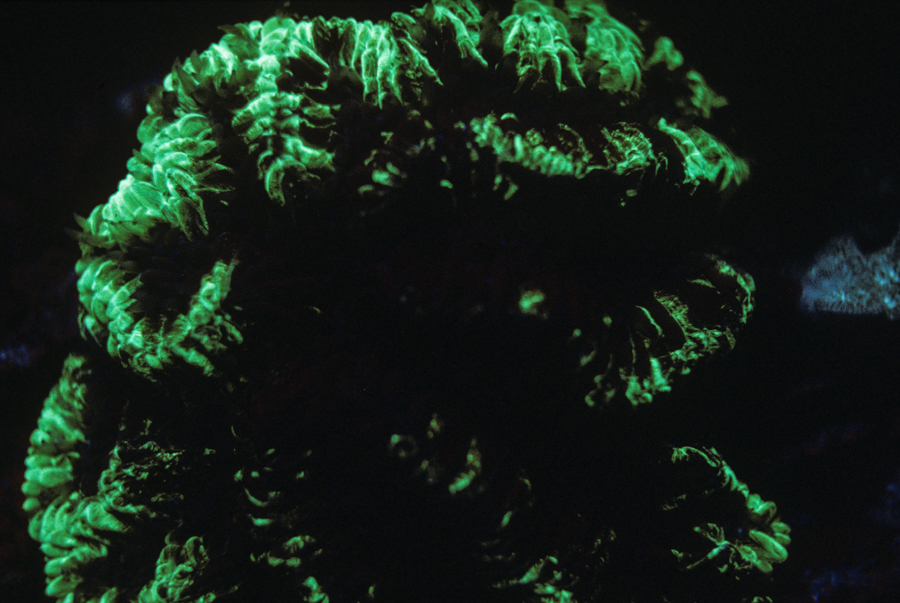
One thing about these images that is different than what virtually everyone – including us – recommends for underwater fluorescence work is that they were done using ultraviolet (UV) light, as opposed to the blue light that is used today. This was before I got into the science and learned that blue light was a generally better choice.
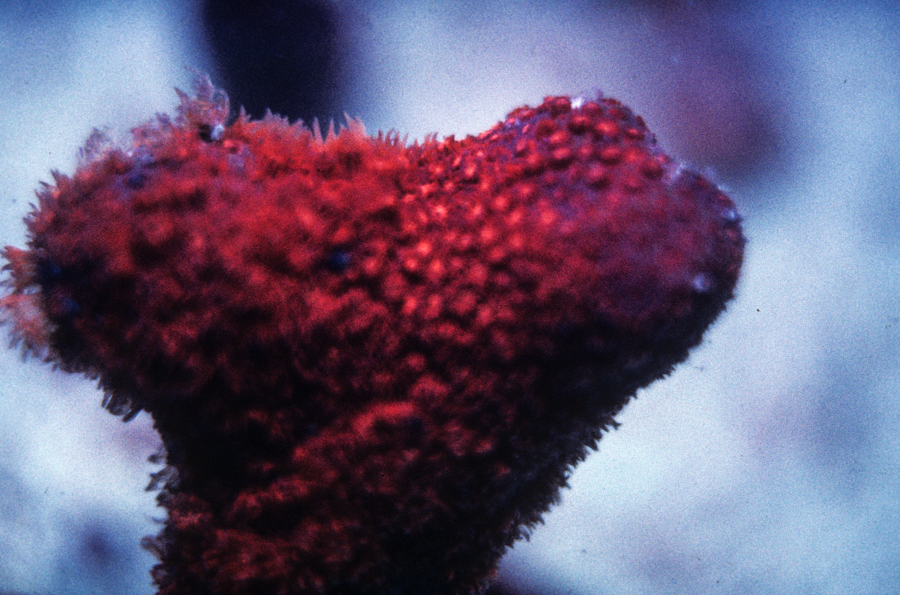
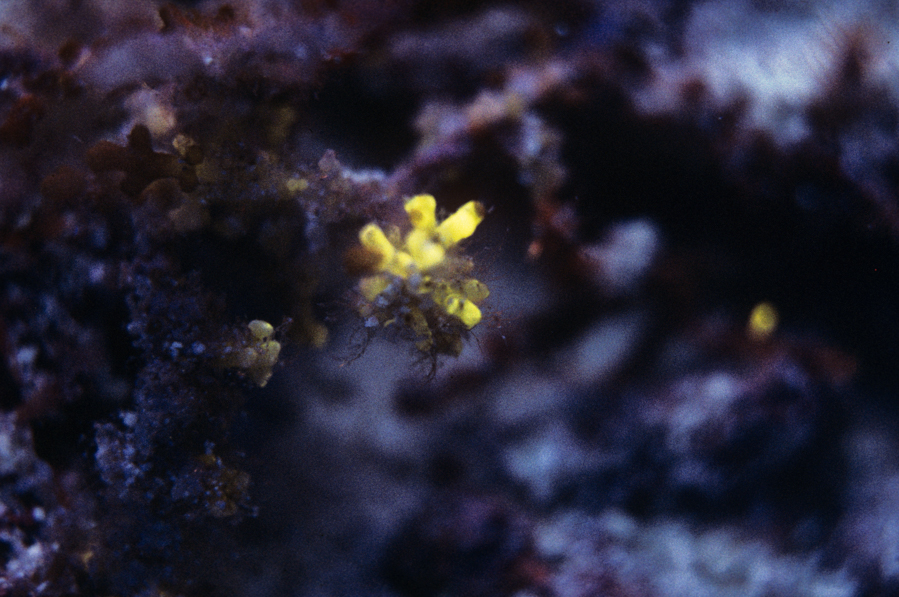
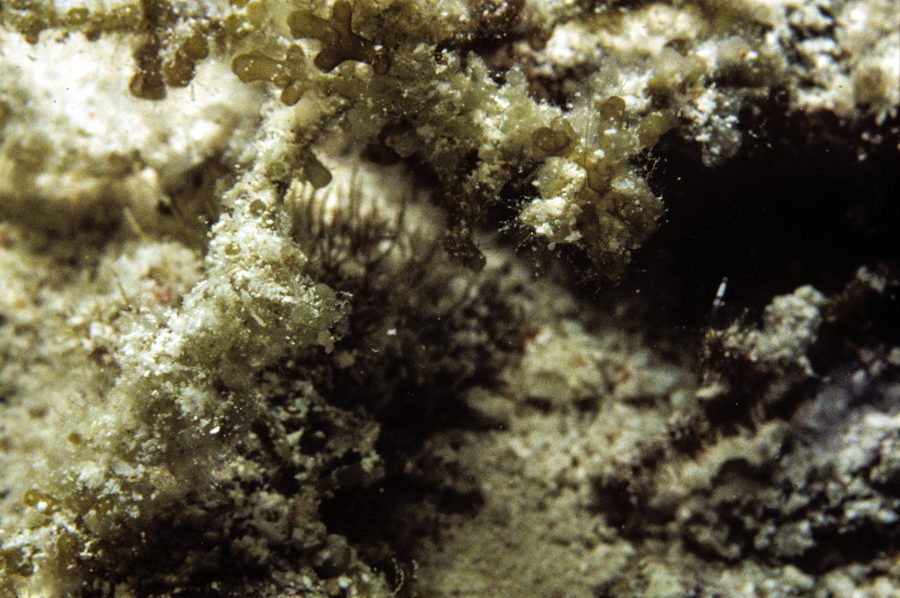
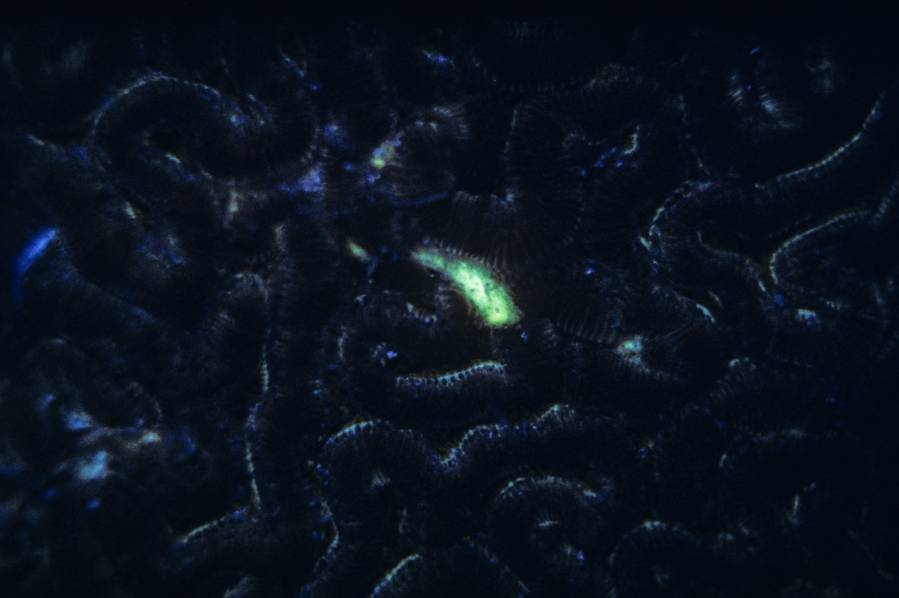
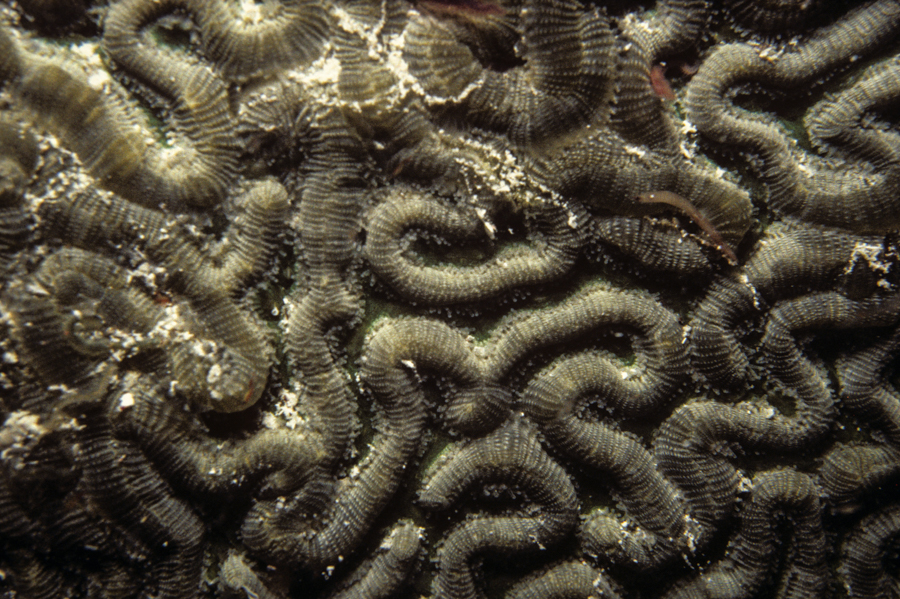
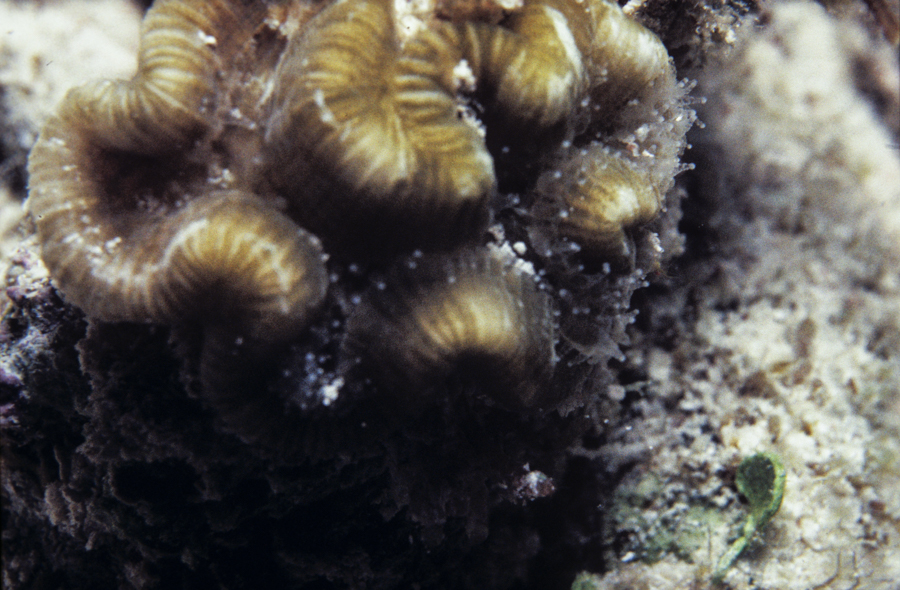
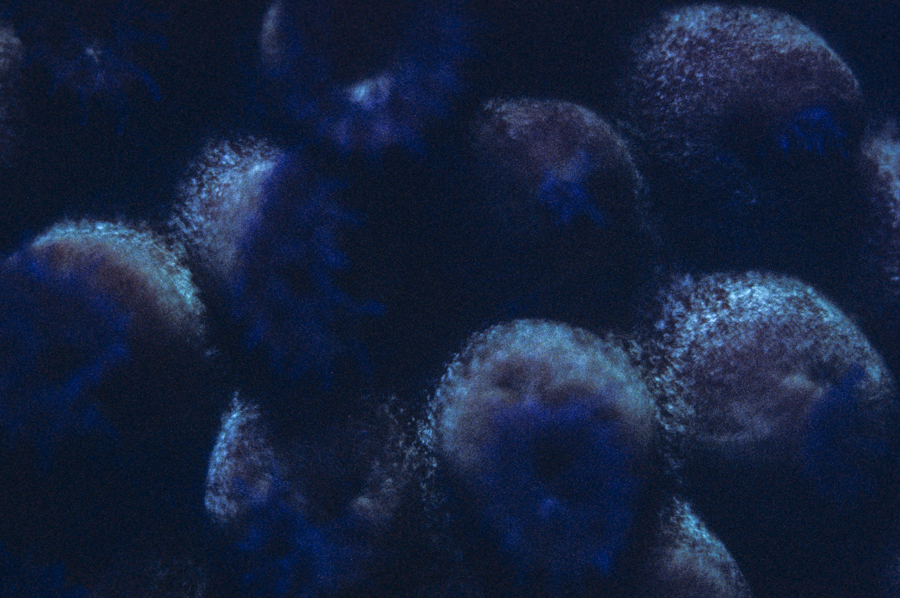
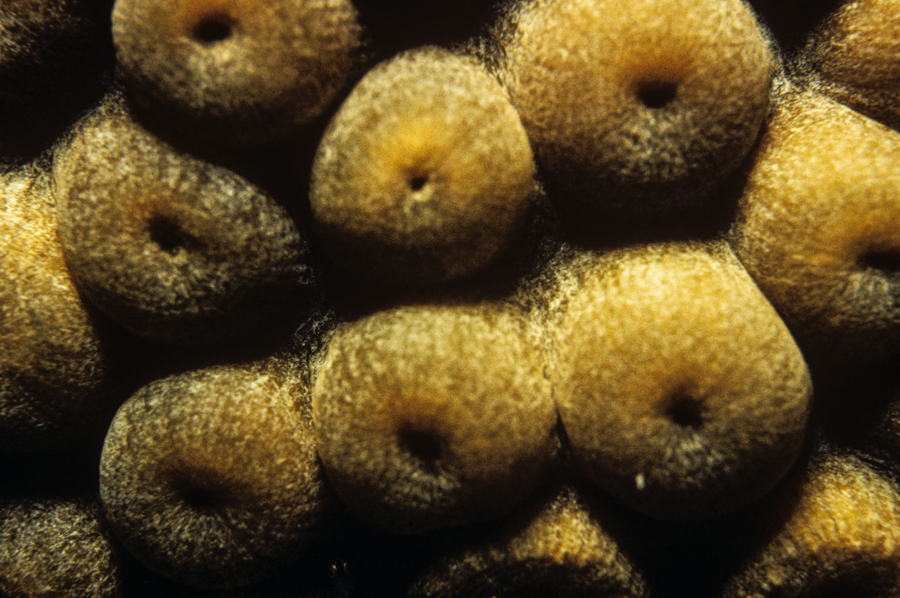
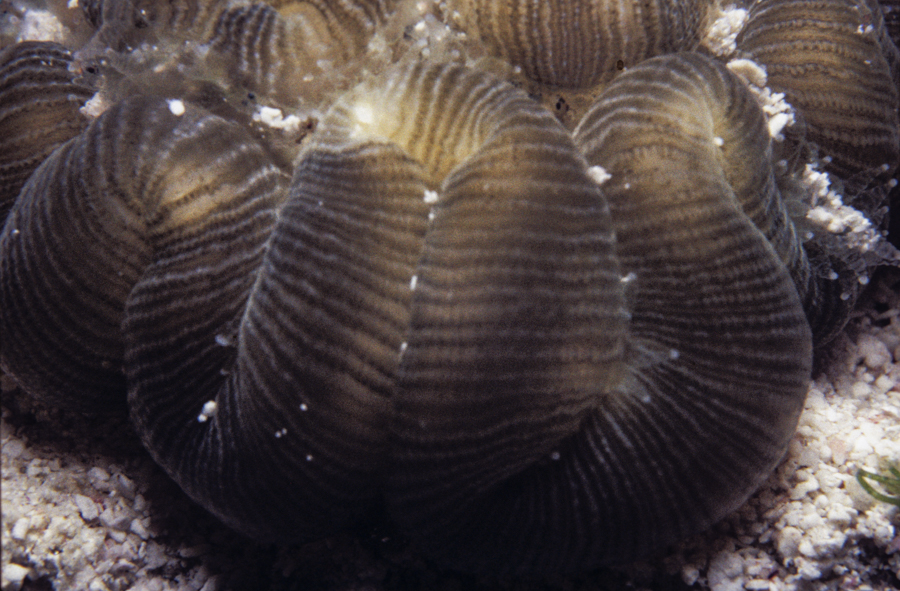
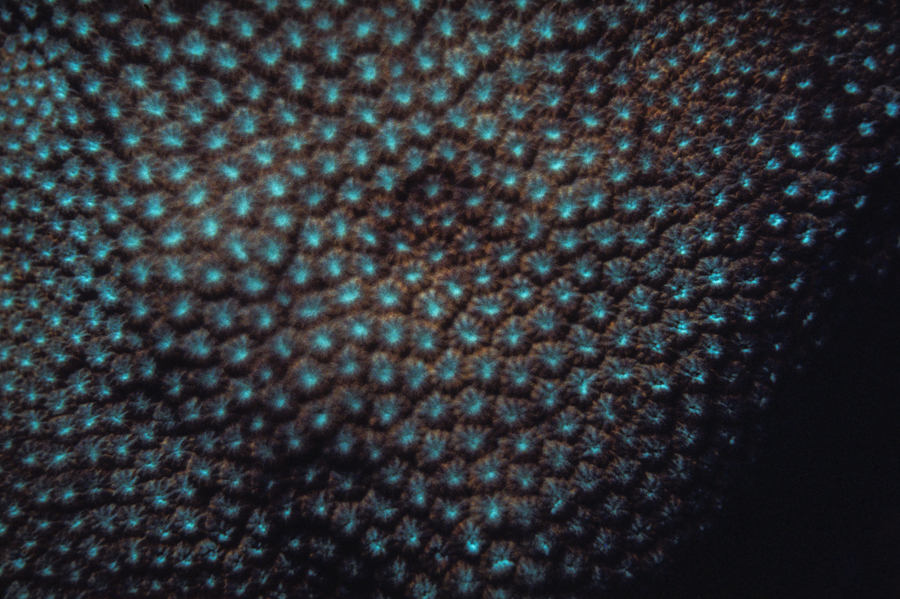
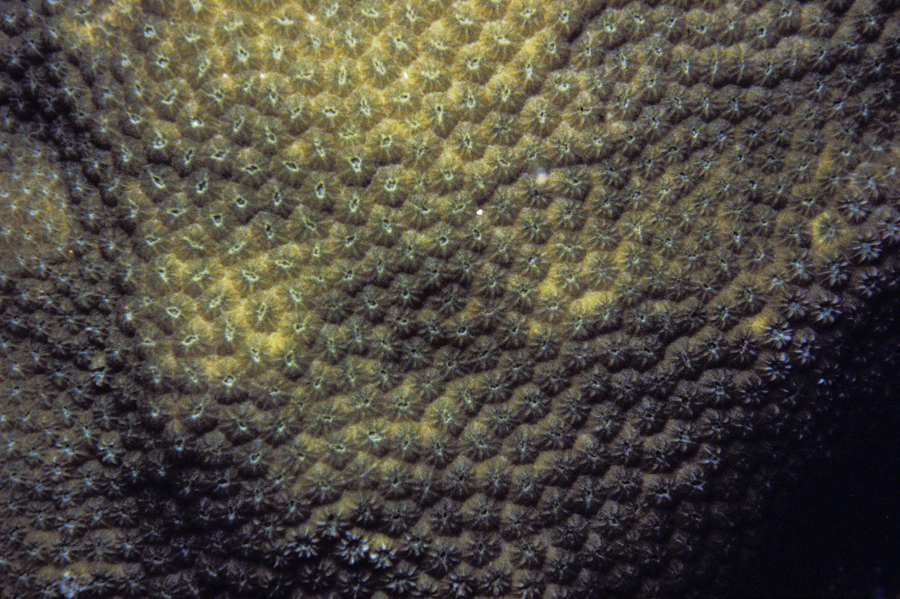
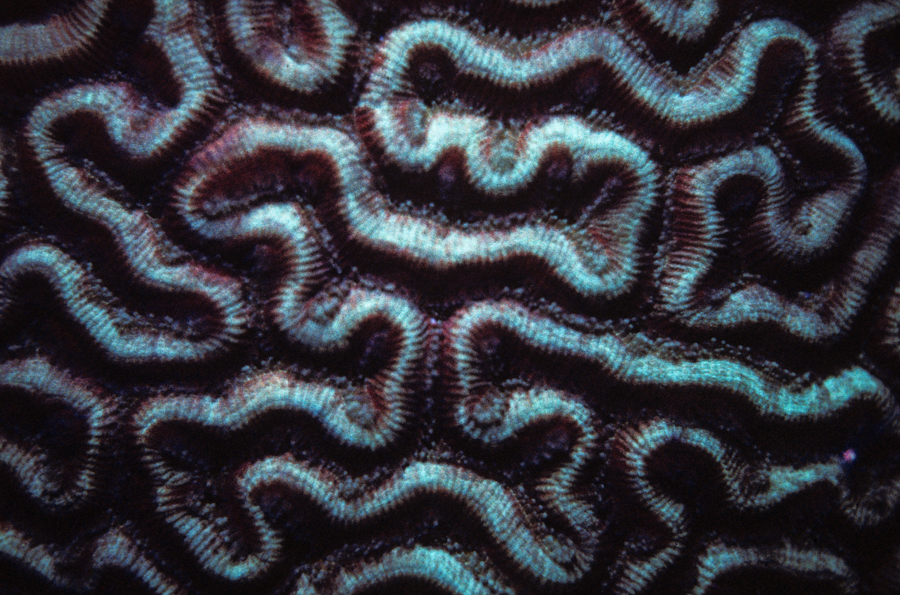
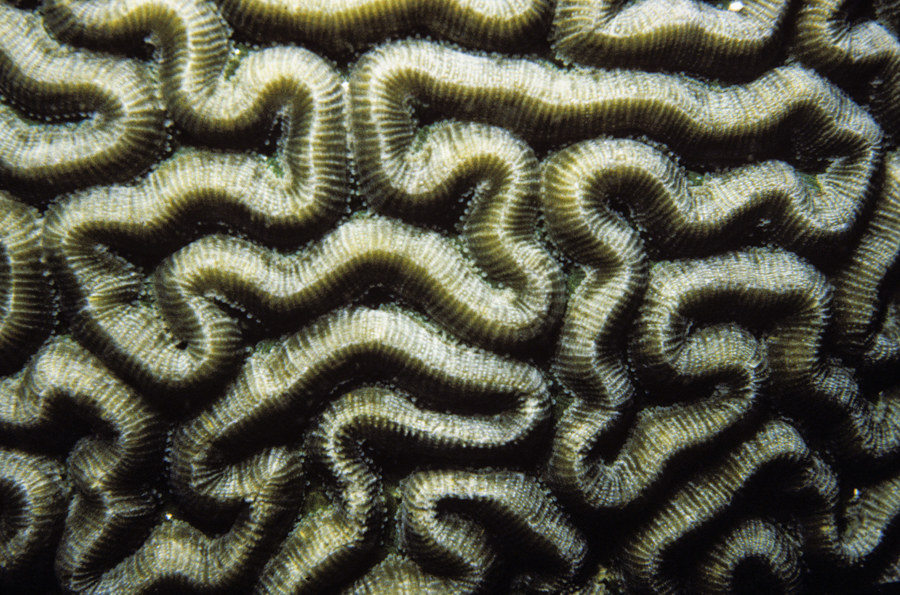
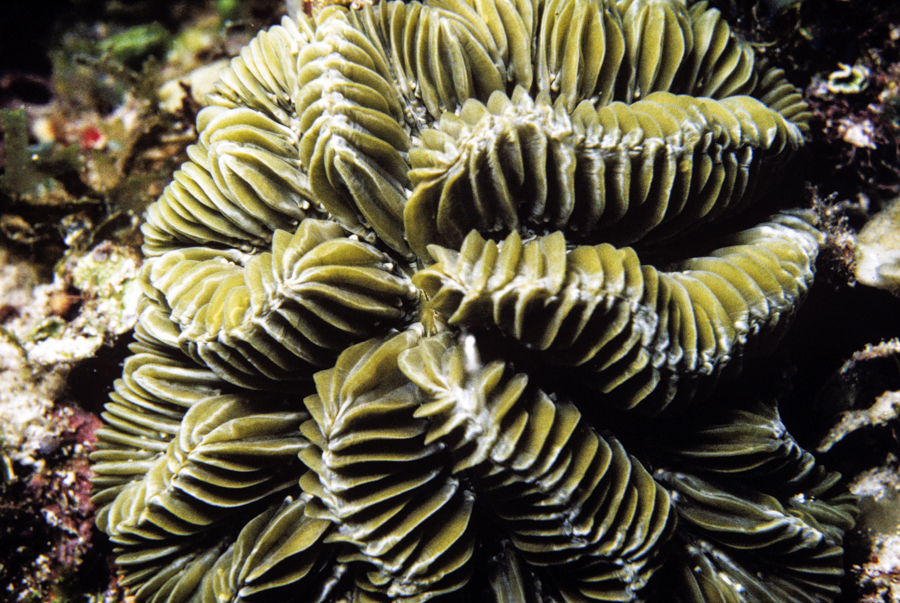
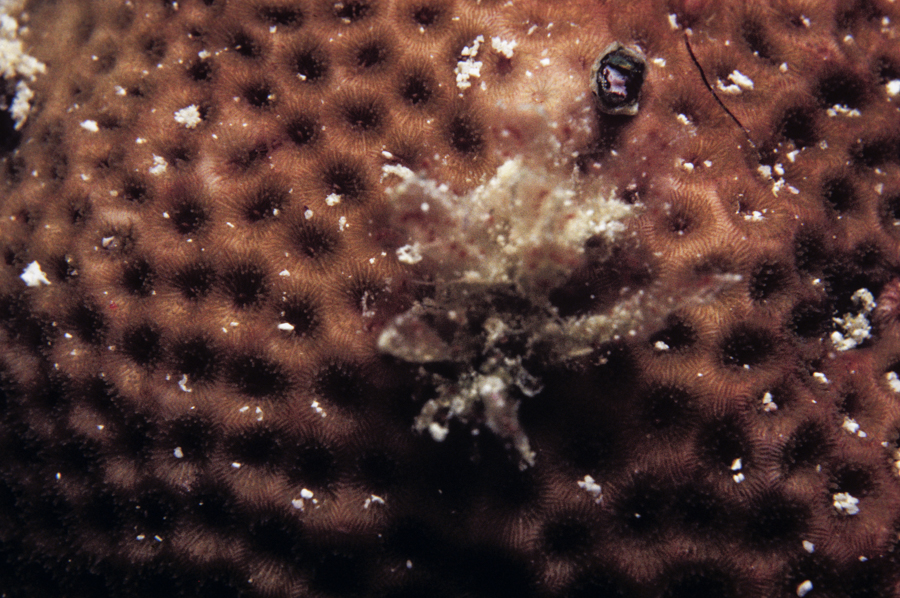
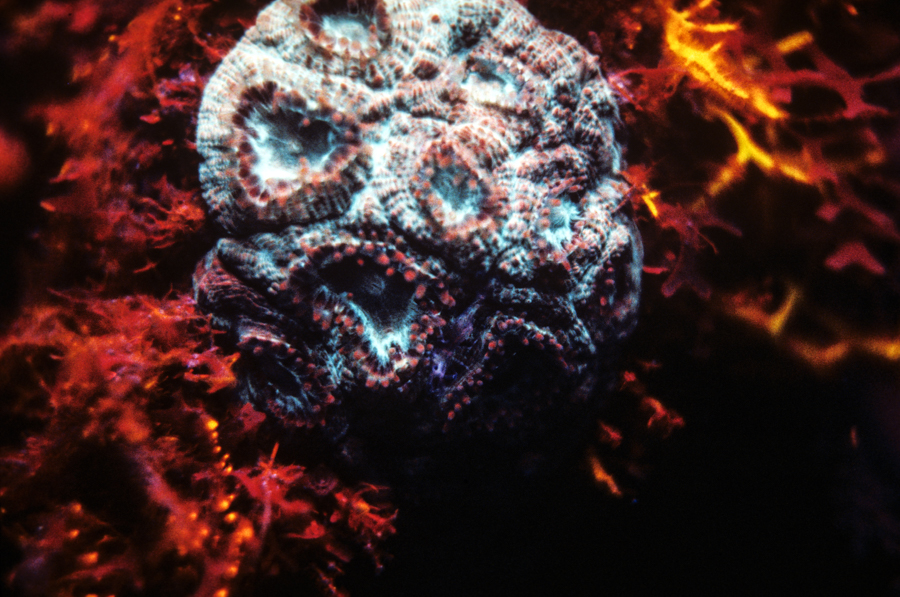
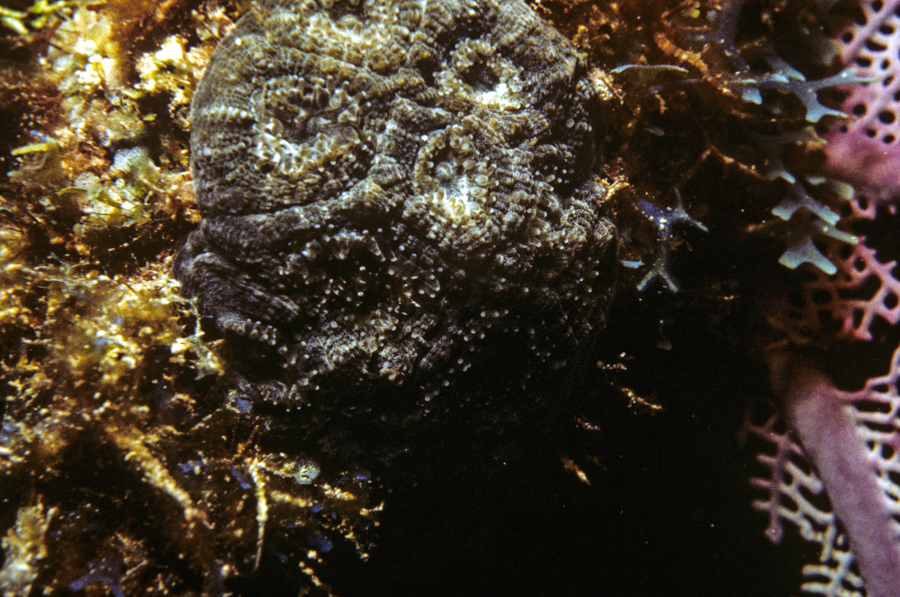
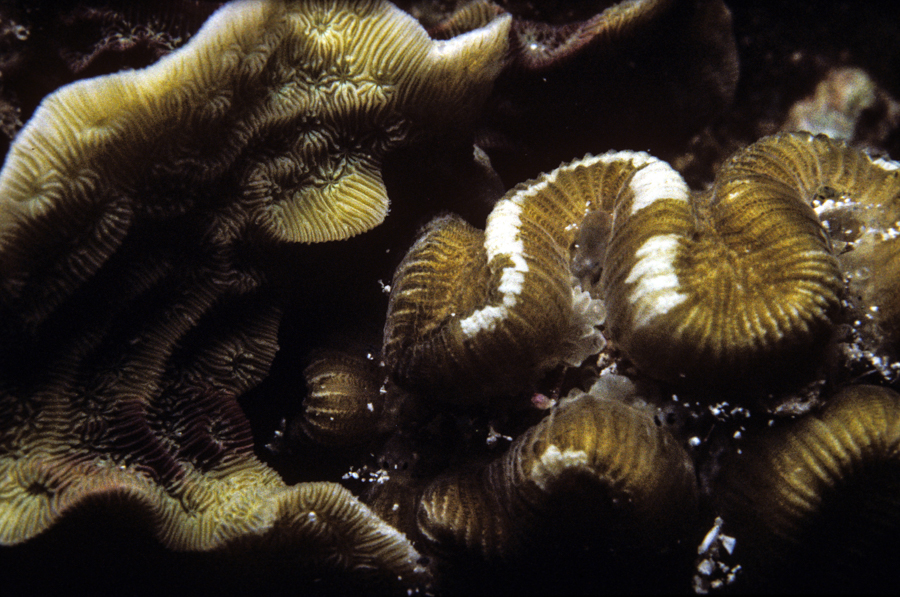
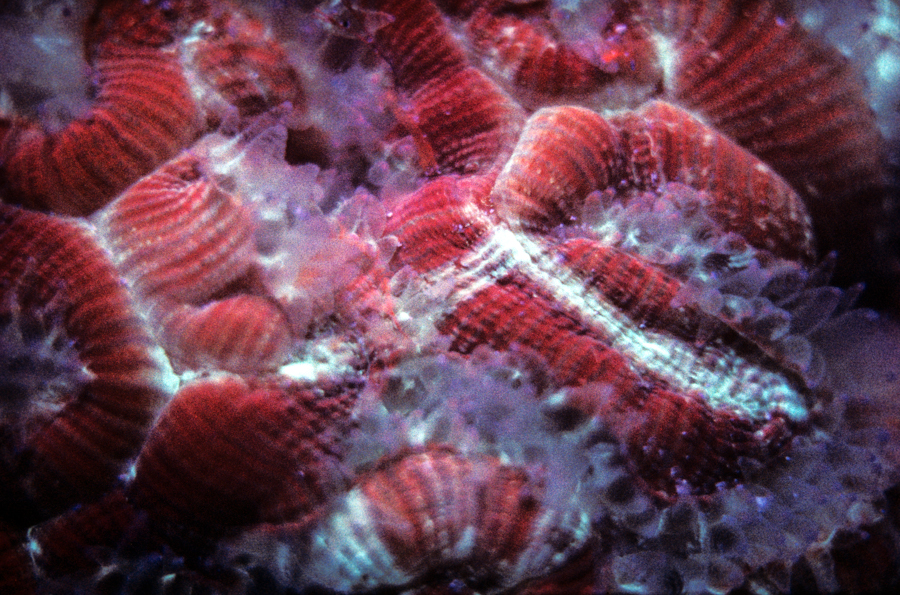
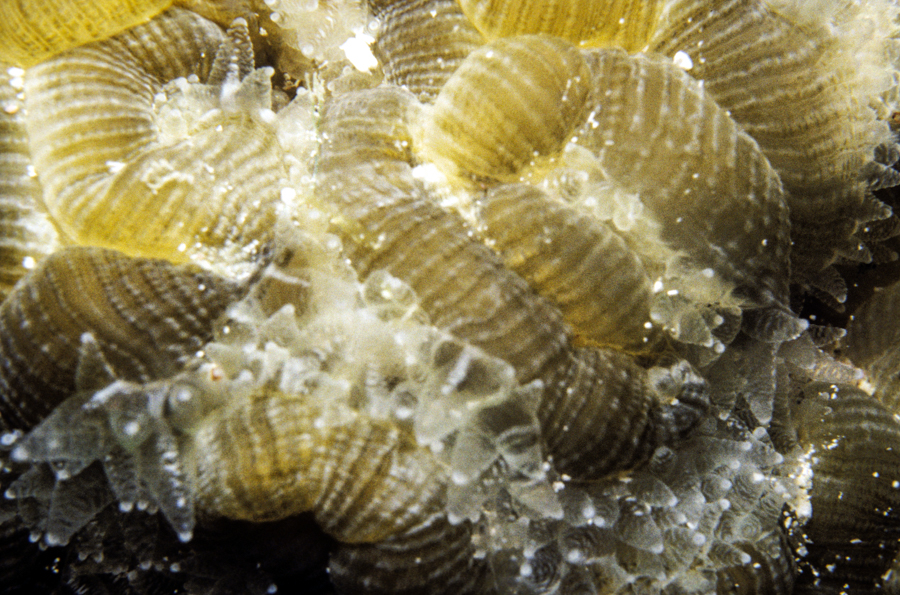
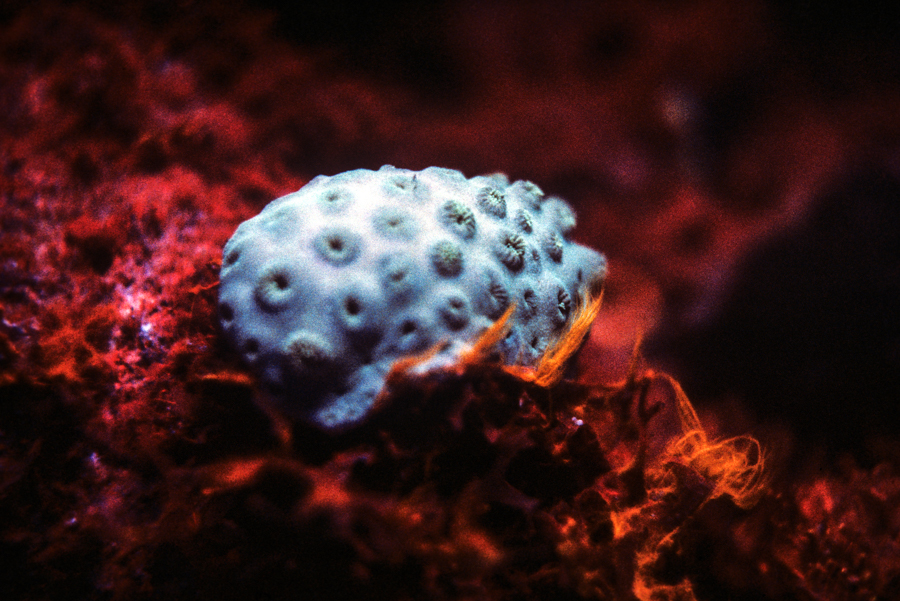
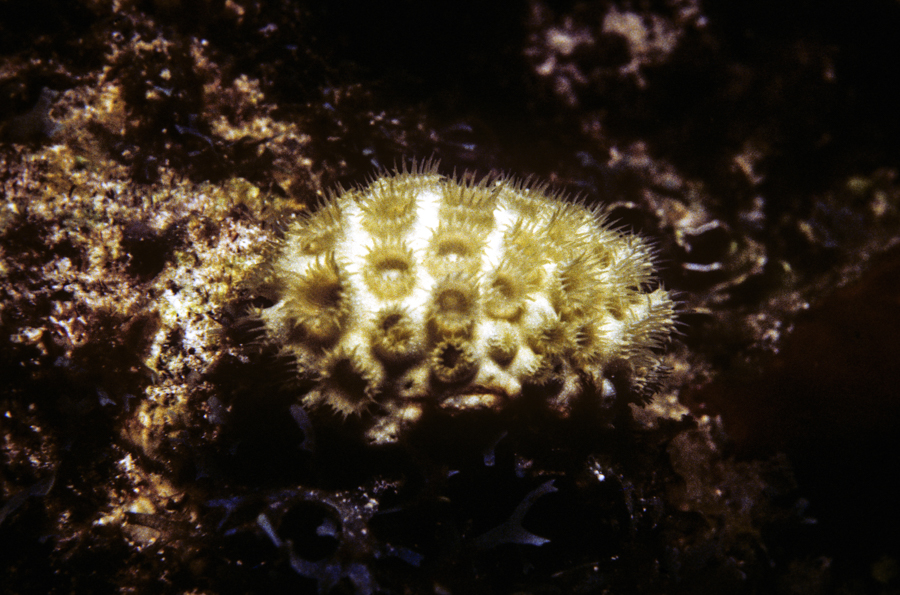
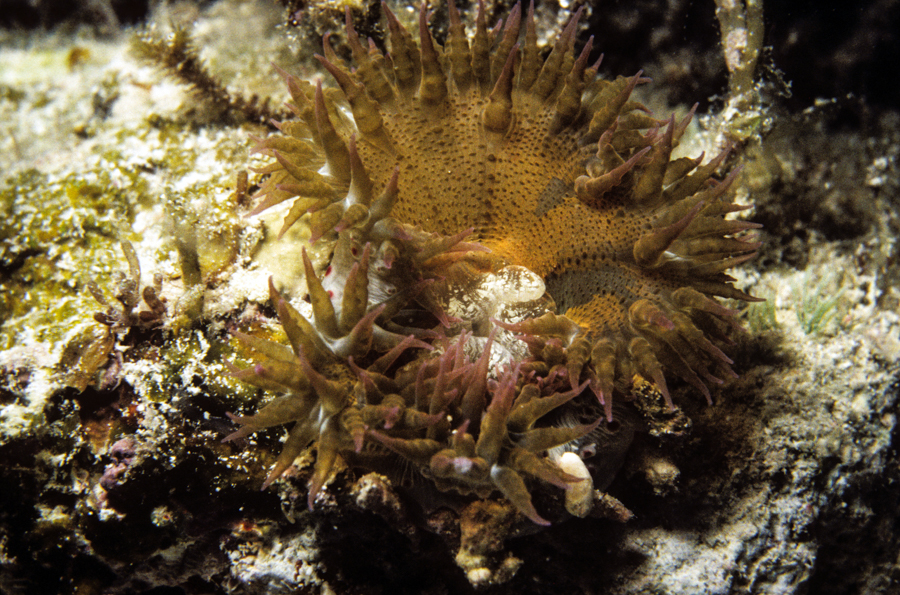
The images in the gallery below were made at Pedro Bank, Jamaica, in the spring of 1987. There is more info on the location after the gallery. These are scans of 35mm color slide film. Images first, and for more information scroll down below the gallery. The image names tie to a database that I made as images were made, recording subject/camera/film/exposure info. A list of the photo subjects is at the end of this post.
(Click any image for larger view and file names.
The ‘PB’ in the file names stands for Pedro Bank. The V or F at the end of the filename stands for ‘visible’ (white light) or ‘fluorescence’.)
Location
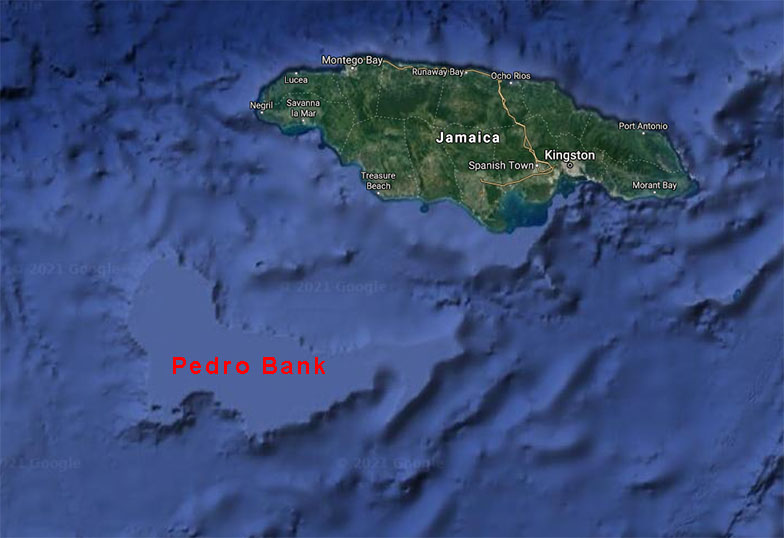
This was just my second trip to the Caribeean for fluorescence photography, in May of 1987. The very first had been in March of the same year, to Roatan, Honduras. The opportunity for this trip came out of my involvement in underwater archaeology. I attended the annual Council of Underwater Archaeology conference in Savannah, GA, in January of that year and learned that a friend of mine, Jim Parrent, was organizing a shipwreck excavation and was in need of archaeological divers. I told him that I would join the project and do excavation work in the daytime if he would promise me dive buddies for night dives for my fledgling fluorescence work. He agreed, and in May I joined the team in Miami to board the expedition vessel, M/V Morning Watch, for the transit to Kingston, Jamaica, and then on to Pedro Bank, located about 80 km (50 mi) southwest.
Pedro Bank is a plateau that rises out of the surrounding deep waters of the Caribbean. Much of the Bank is navigable, but the southeastern edge is dotted with a series of shoals. Its position in the middle of what seems to be open sea with no high points of land to mark it has made it a death trap for ships through the centuries.
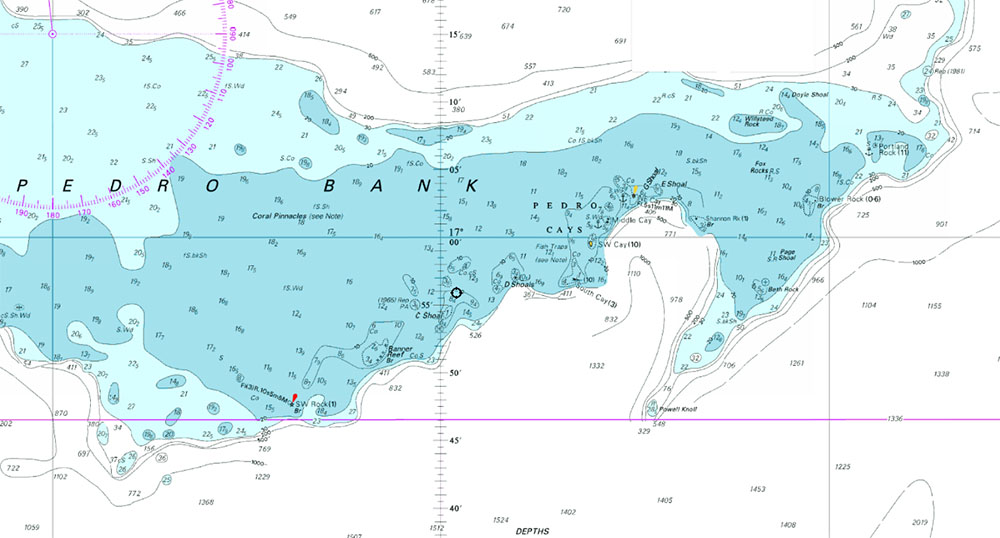
It was dive all day (pretty much literally) performing manual labor and then muster the energy to go back in at night. It was easy finding eager night dive buddies during the early part of the trip, but as we all got tired that became more of a chore!
Equipment
Camera – Nikonos II and III, 35mm lens with AquaCraft 1:2 and 1:3 extension tubes
Flash – Ikelite Substrobe 150D with UV filter
Film – Fujichrome pushed to ISO1600
See the first post in this series for expanded details on the equipment.
More on particular images
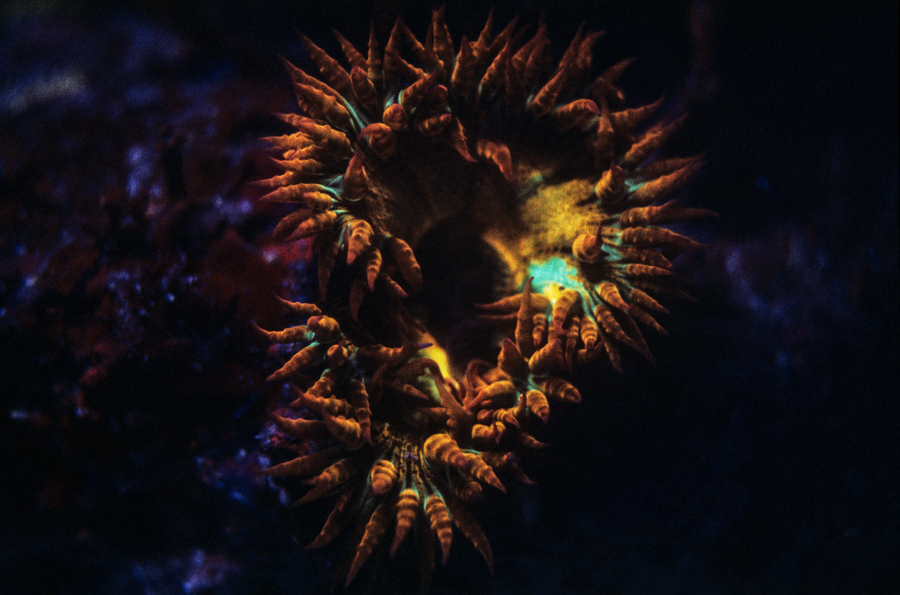
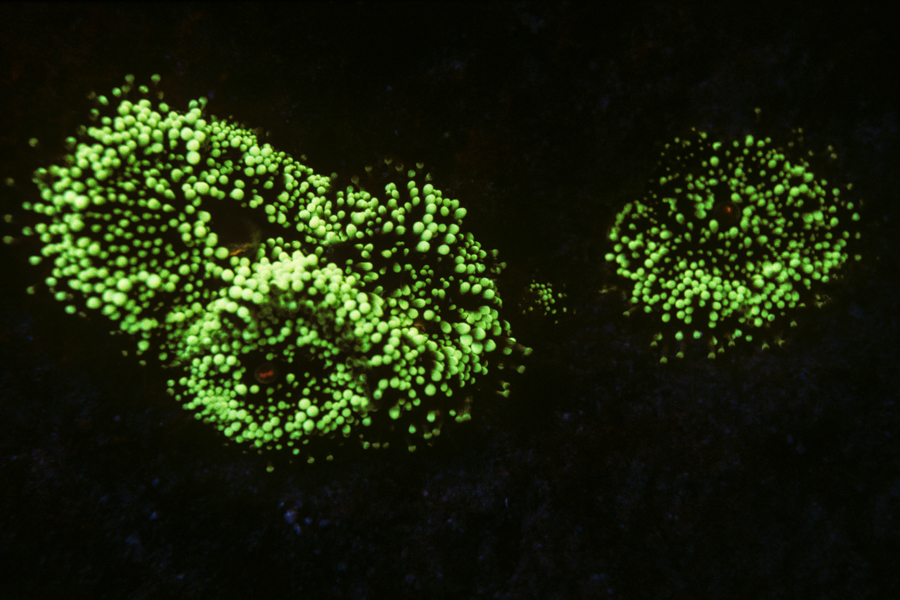
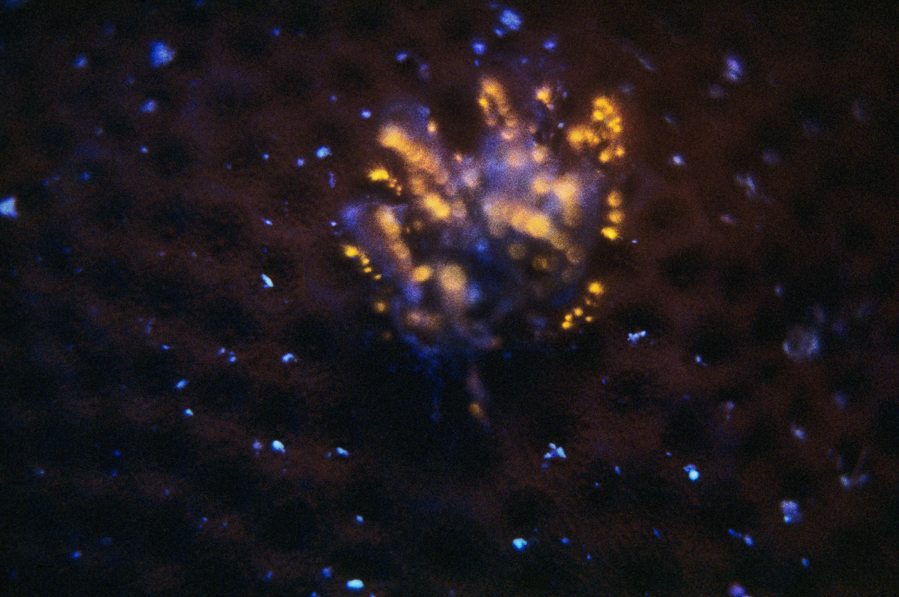
Image PB0025F (speckled anemone, Phymanthus crucifer), has a story behind it that you can read at this link.
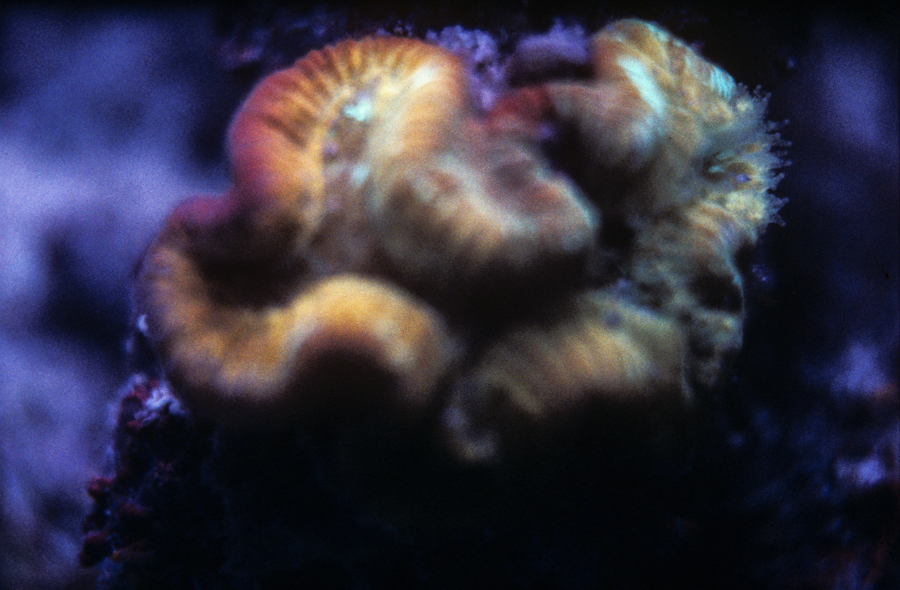
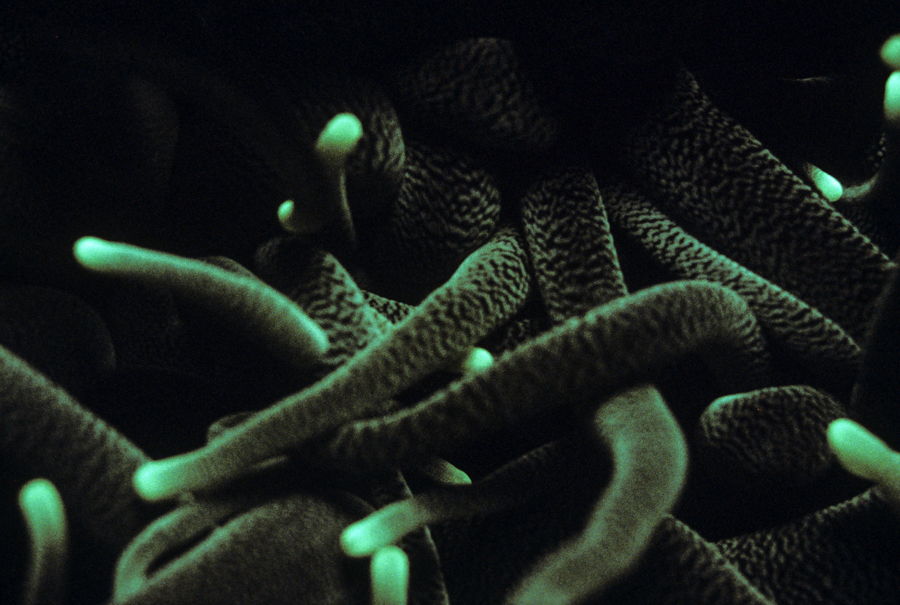
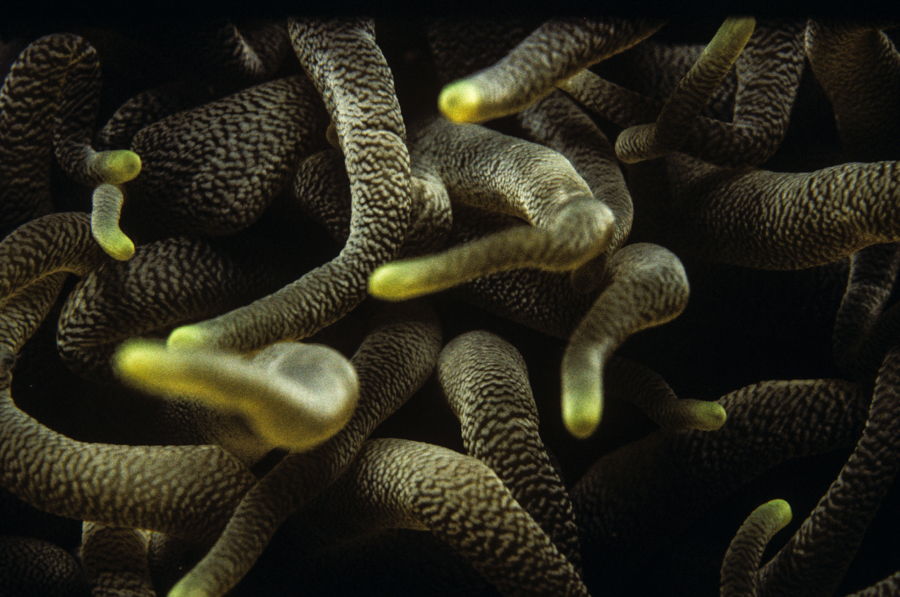
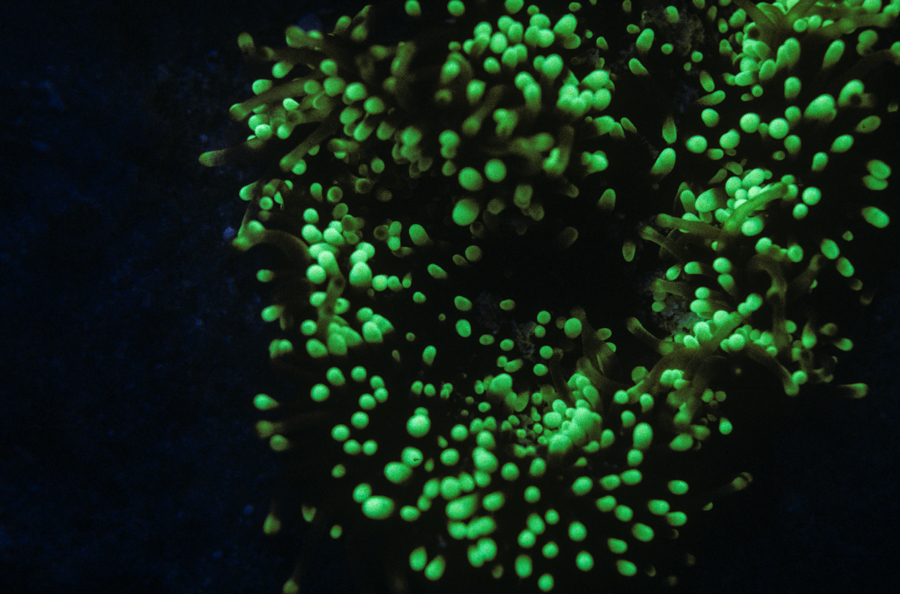
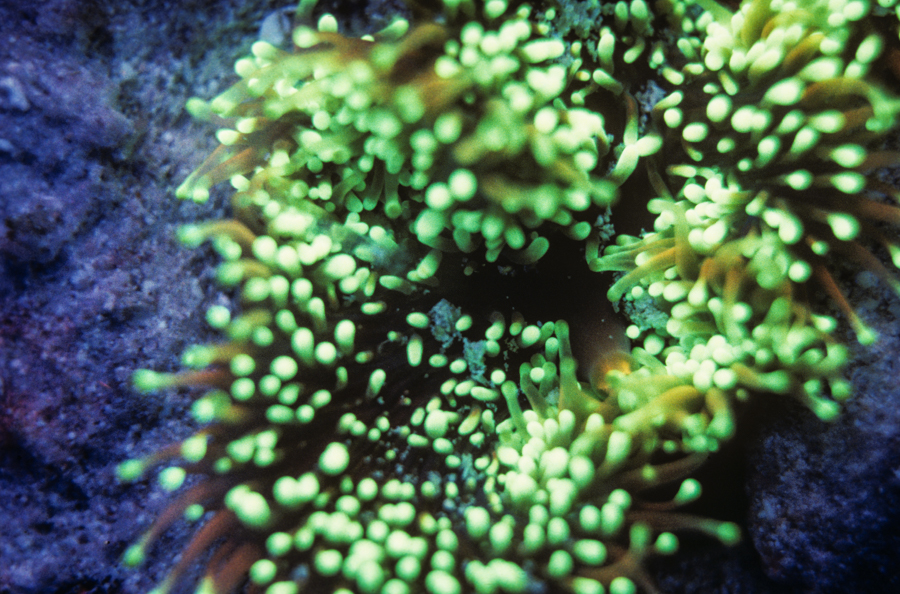
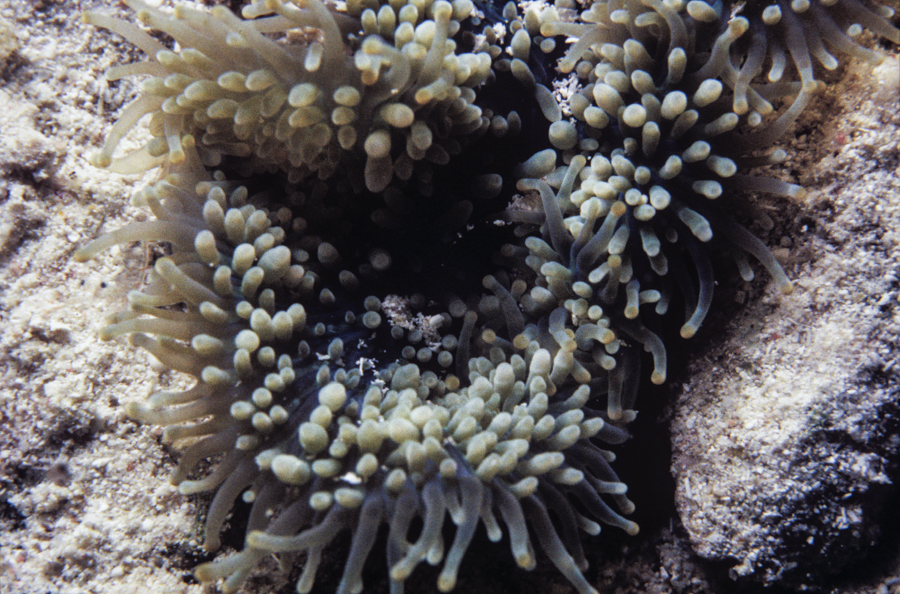
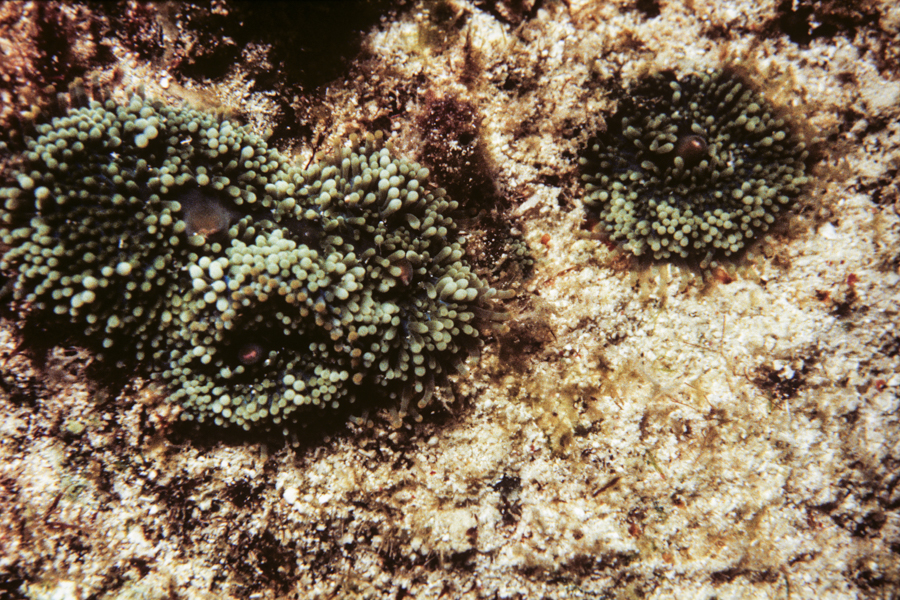
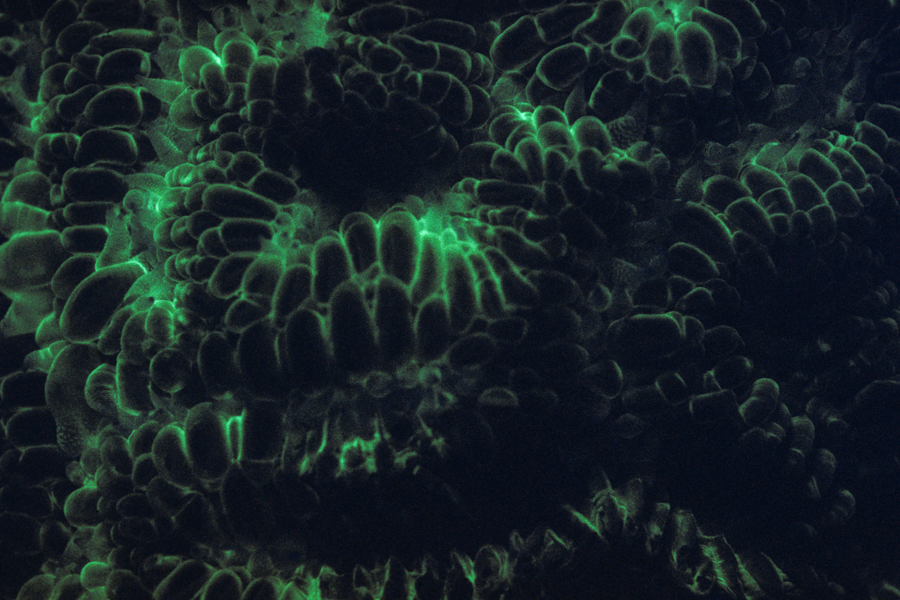
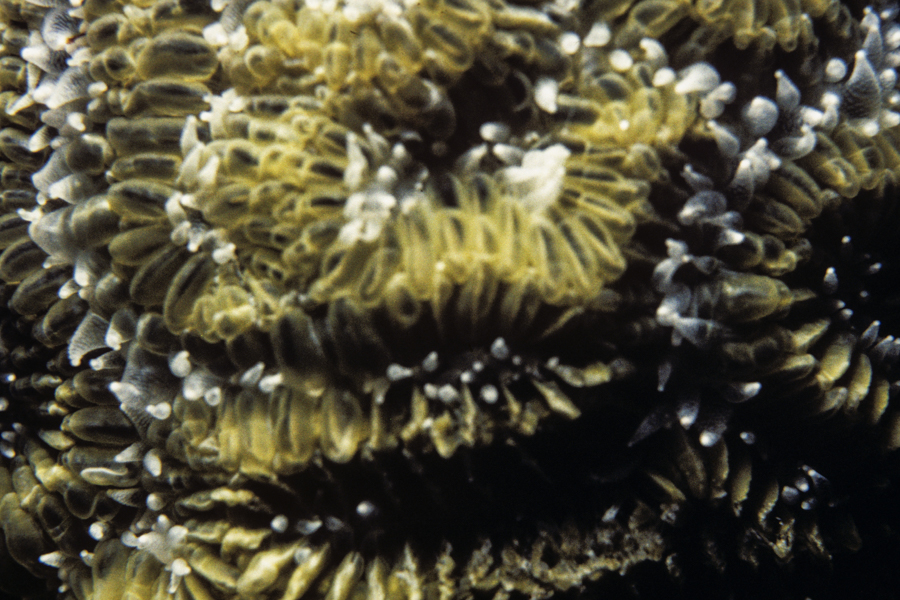
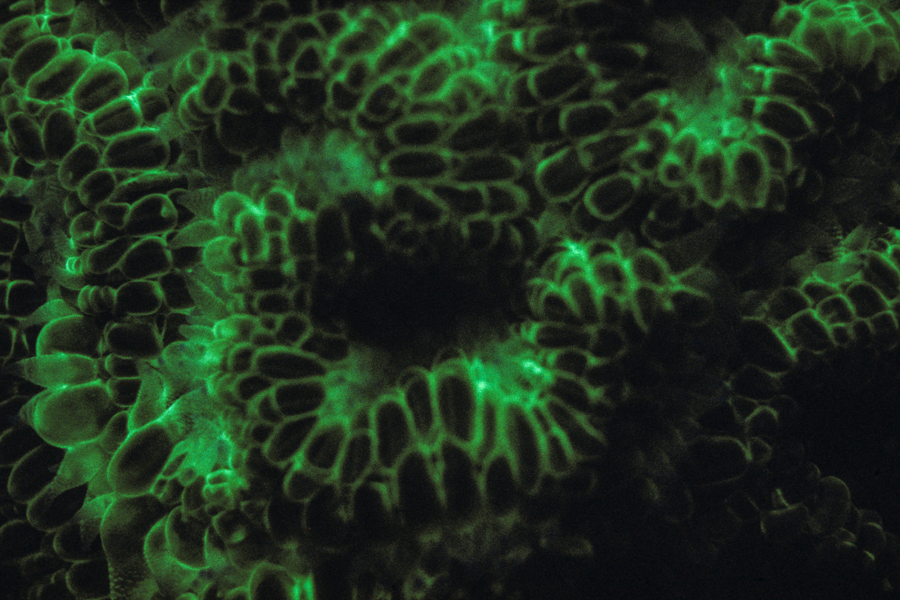
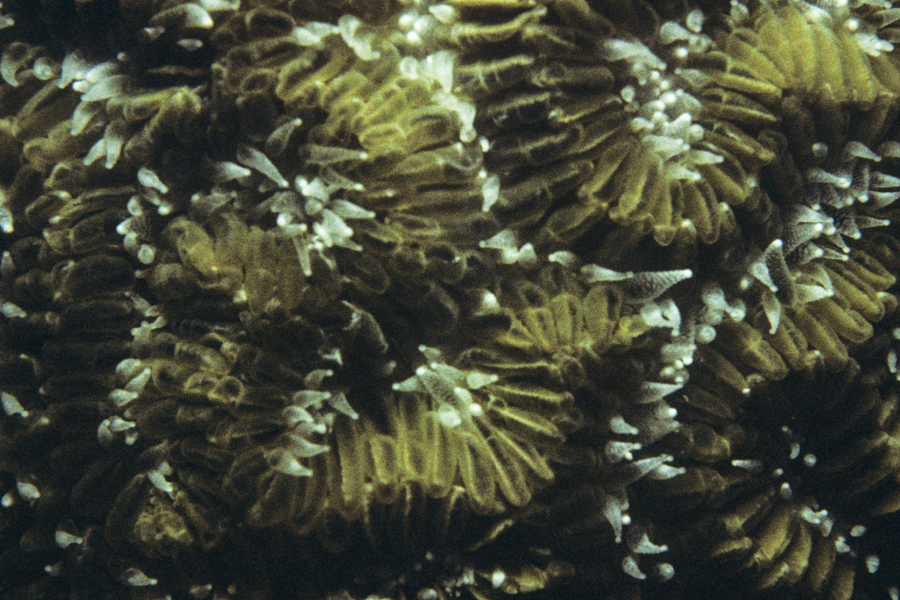
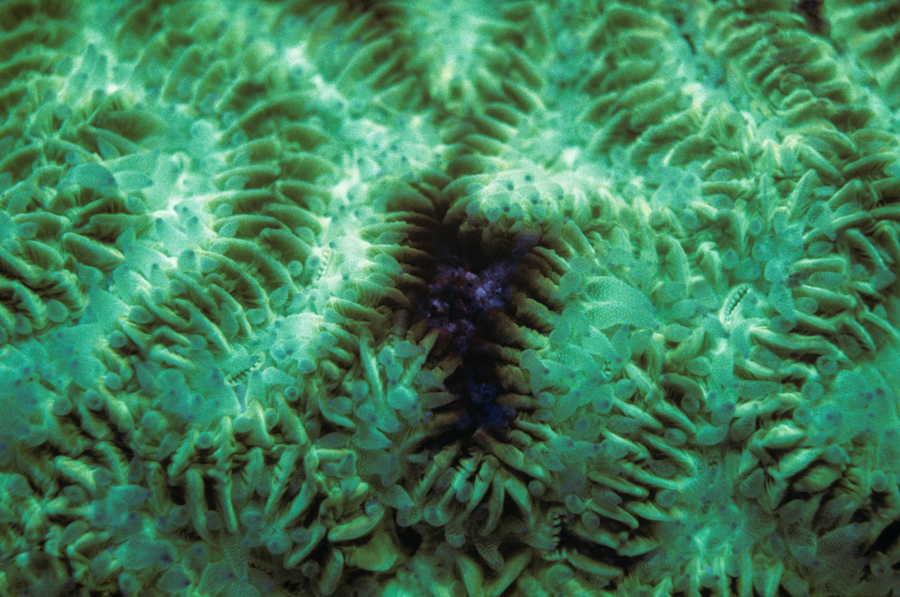
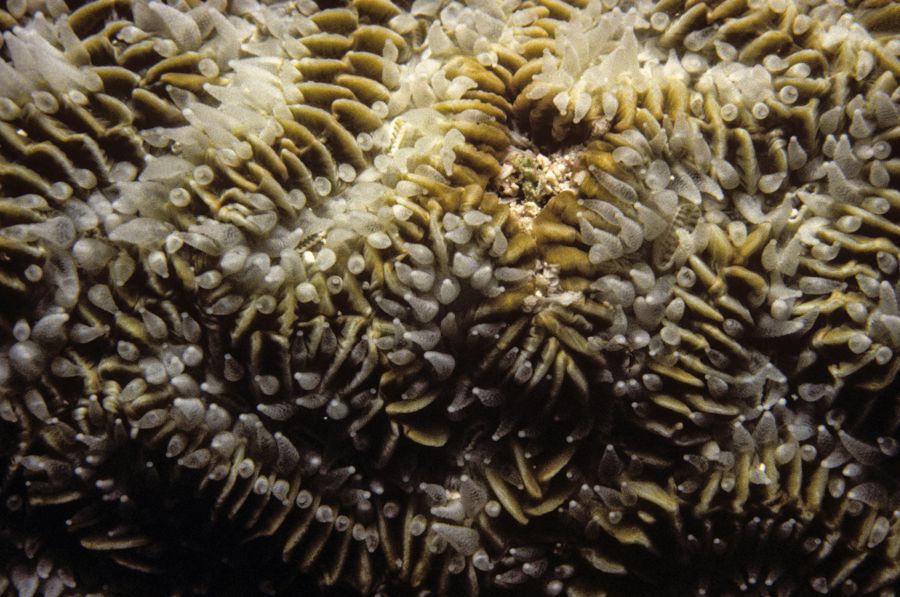
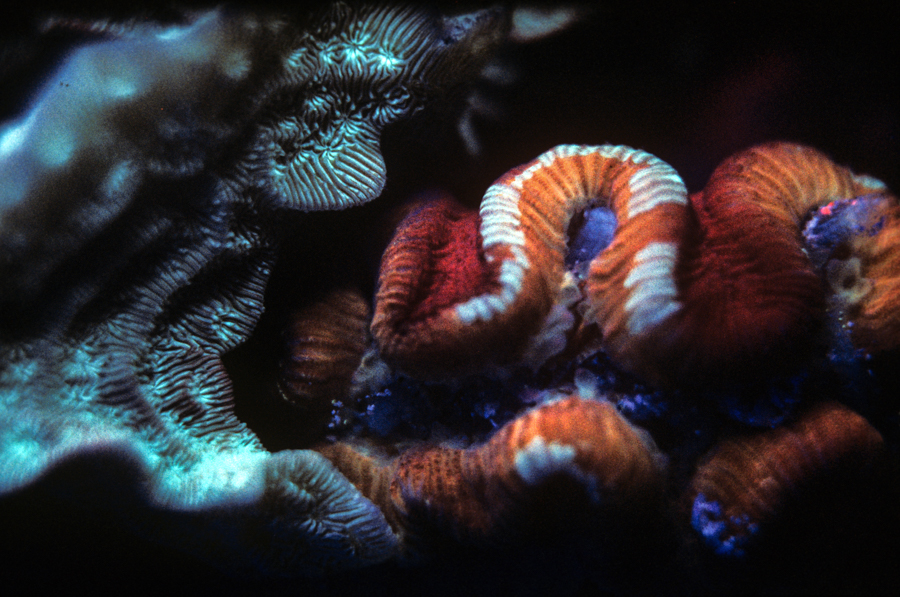
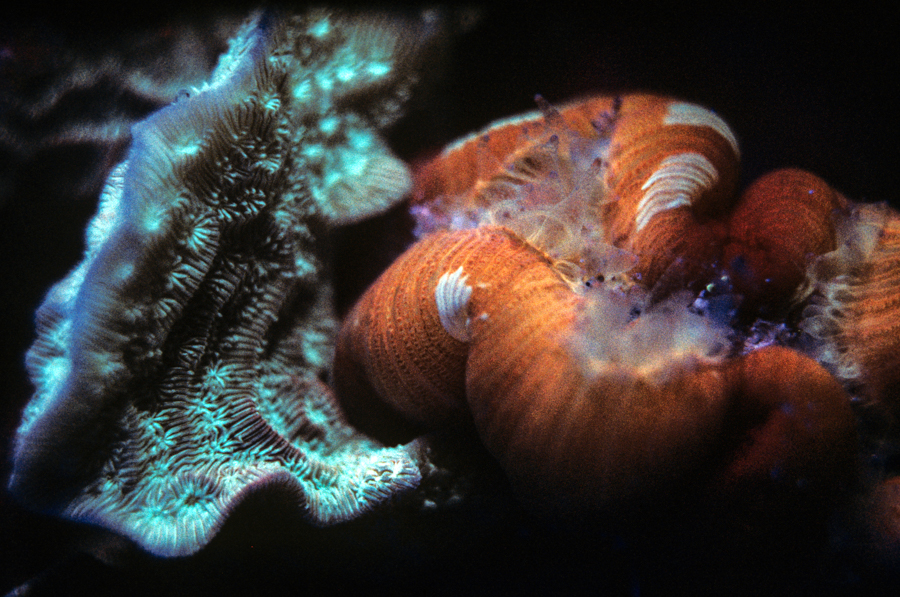
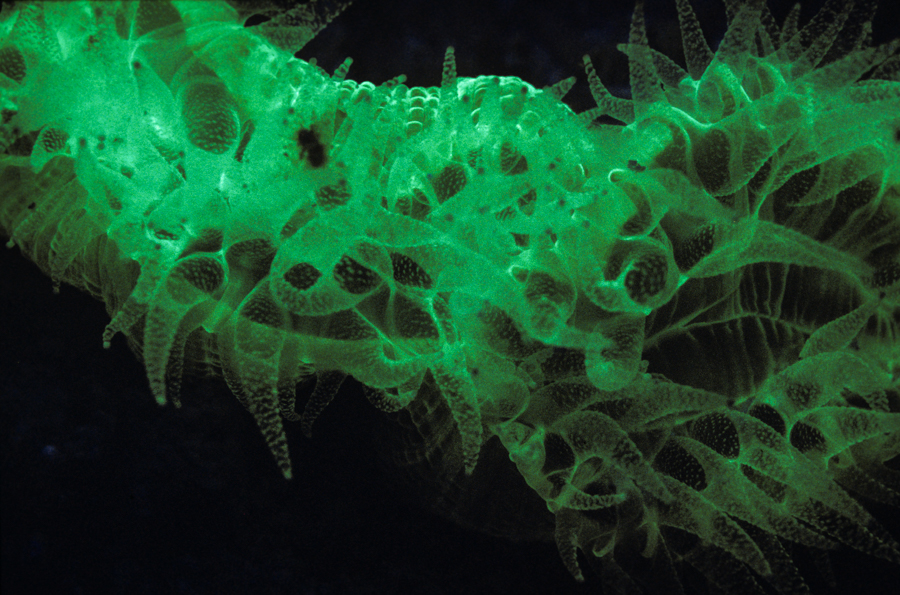
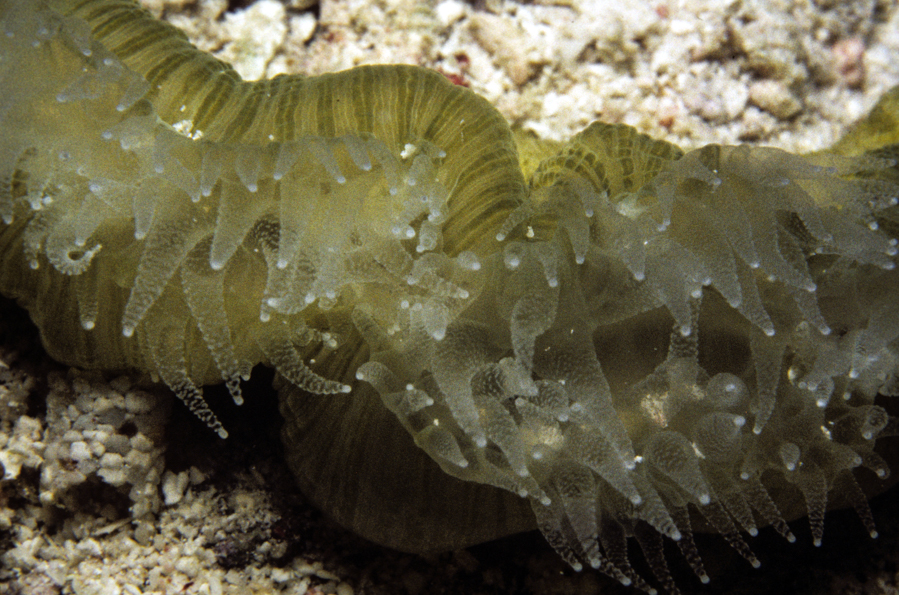
The two fluorescence images illustrate something about fluorescence photography that you sometimes just have to deal with. Some subjects, in this case the corallimorpharian Ricordea florida, may have more than one fluorescing molecule within them, and one may fluoresce significantly more intensely than the the other. That is the case here. The green fluorescence arises from proteins in the GFP family in the host tissues. In the middle shot above, PB0009Fb, you can also see a reddish-orange fluorescence in the tentacles. This likely arises from chlorophyll in endosymbiotic algae. This fluorescence is much weaker than the green, so in order to capture it the green comes out overexposed. F0009Fa – f5.6, F0009b – f2.5.
Photo subjects
When I made the first trip, in 1987, I did not know anything about coral identification. I first thought I just needed to learn the common names, but I quickly realized that there was a lot of ambiguity in that. So I armed myself with Paul Humann’s excellent Ocean Realm Guide to Corals of Florida, Bahamas and the Caribbean (1983) and did my best at matching what I was seeing underwater to the images and descriptions in the book. The species identifications are: (a) those of an amateur at the time, and potentially incorrect; and (b) possibly outdated – the classifications of some corals has changed over time, leading to changes in the genus and/or species names. The names here are from my original identifications from the field and the photographs.
The ‘PB’ in the filenames below stands for Roatan. The V or F at the end of the filename stands for ‘visible’ or ‘fluorescence’.
PB0001F
Porites divaricata
small finger coral
PB0002
Caulerpa sp.
algae
PB0004
Diploria strigosa
brain coral
PB0006
Manicina areolata
rose coral
PB0007
Condylactis gigantea
giant anemone
PB0008
Montastrea cavernosa
large star coral
PB0009
Ricordea florida
green corallimorpharian
PB0010
Manicina areolata
rose coral
PB0011
Montastrea annularis
common star coral
PB0012
Diploria strigosa
brain coral
PB0013
Meandrina meandrites
tan or butterprint brain coral
PB0014
Ricordea florida
green corallimorpharian
PB0015
Meandrina meandrites
tan or butterprint brain coral
PB0016
Meandrina meandrites
tan or butterprint brain coral
PB0017
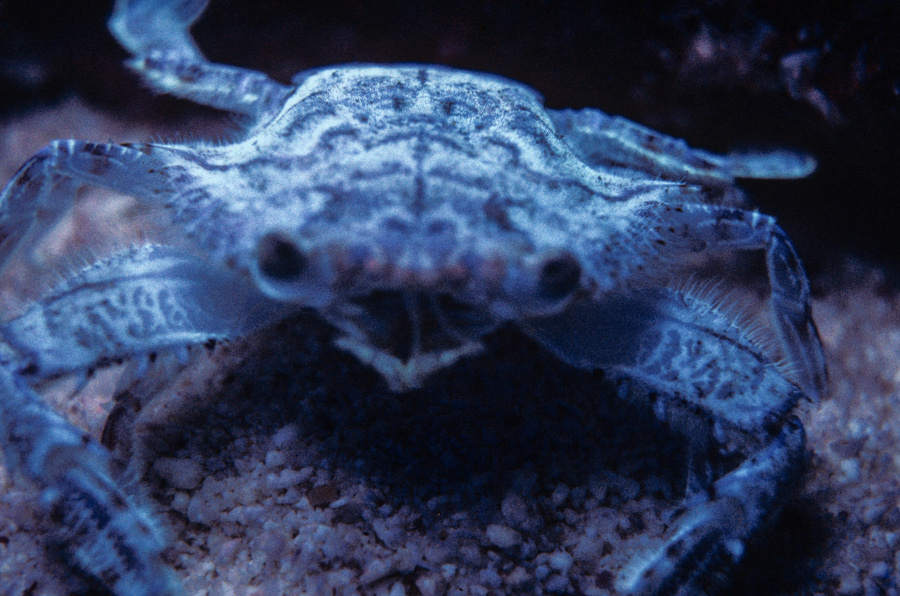
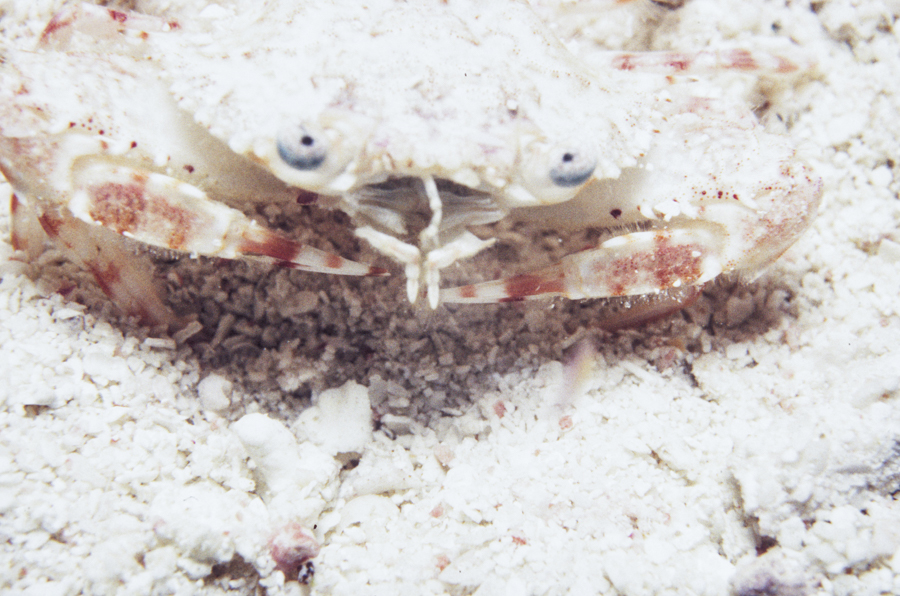
Portunus sp.
swimming crab
PB0018
algae, unidentified
PB0019
Meandrina meandrites
tan or butterprint brain coral
PB0020
Isophyllastrea rigida
polygonal coral
PB0021
M. areolata + A. agaricites
rose coral and lettuce coral
PB0022
Manicina areolata
rose coral
PB0023
Manicina areolata
rose coral
PB0024
Palythoa caribbea
white zoanthid
PB0025
Phymanthus crucifer
speckled anemone