
Early Underwater Fluorescence Photographs, Roatan, Honduras – Charles Mazel
– by NIGHTSEA founder Charles Mazel
Background
In this and additional galleries (links will be provided when they are posted) I am sharing some of my early underwater fluorescence photographs, the ones that got me started in what turned into a massive life change. The equipment and techniques for finding subjects and taking the photos were tested and ‘perfected’ in dives at Folly Cove, Gloucester, Massachusetts. Once the lights and photo setup were working in cold New England waters it was time to head to the Caribbean.
One thing about these images that is different than what virtually everyone – including us – recommends for underwater fluorescence work is that they were done using ultraviolet (UV) light, as opposed to the blue light that is used today. This was before I got into the science and learned that blue light was a generally better choice.
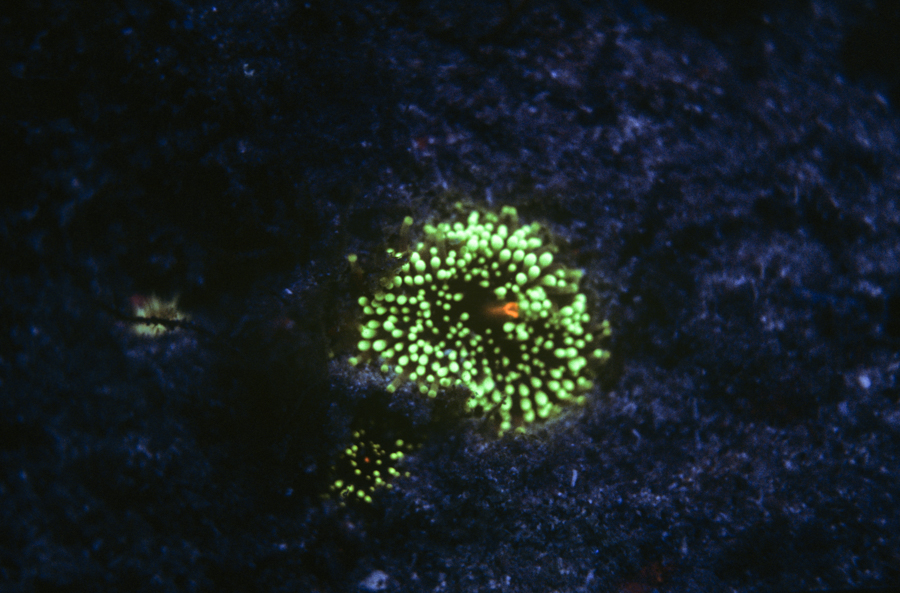
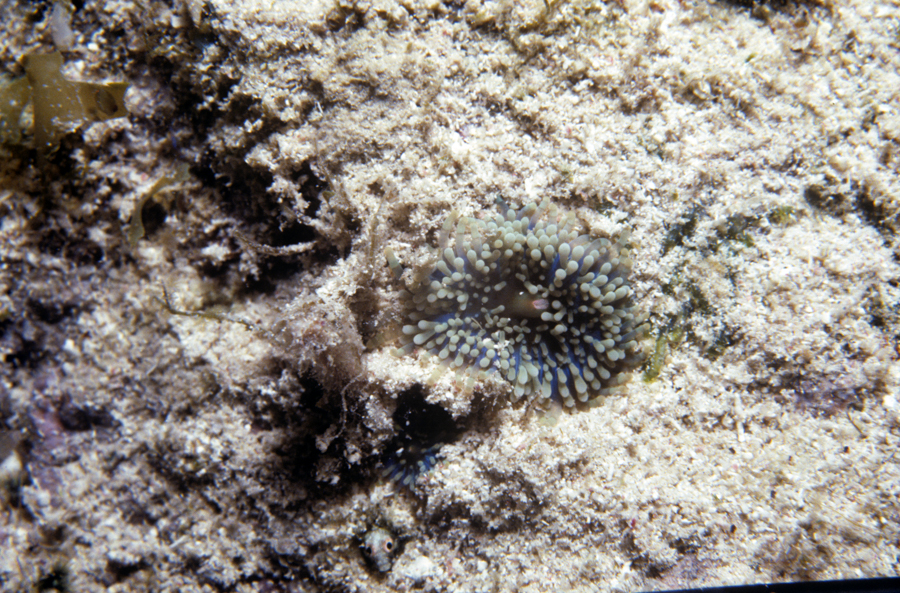
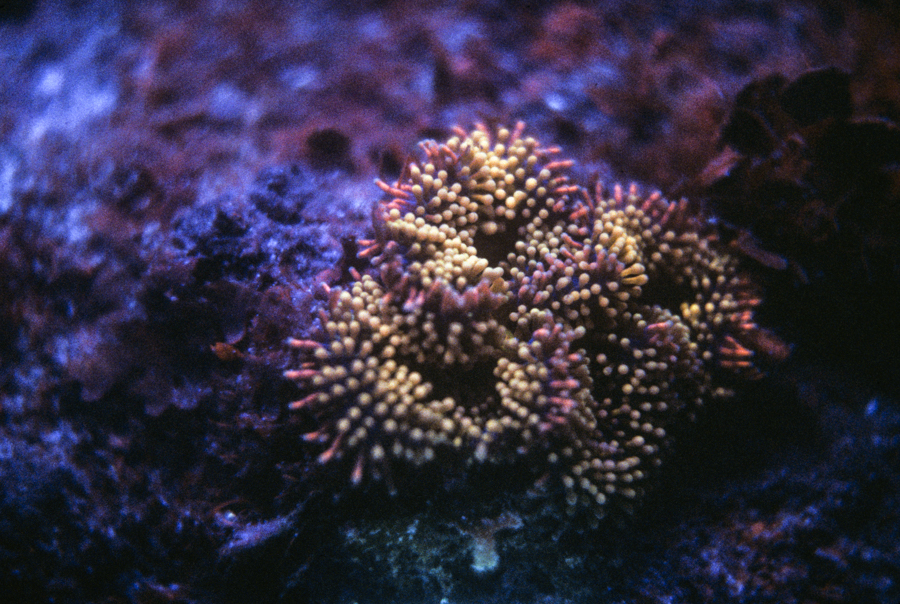
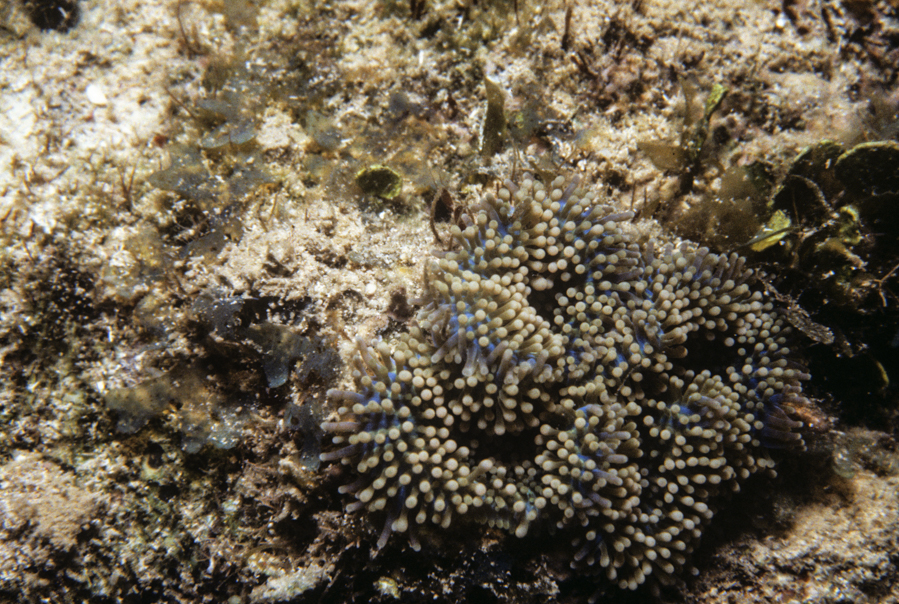
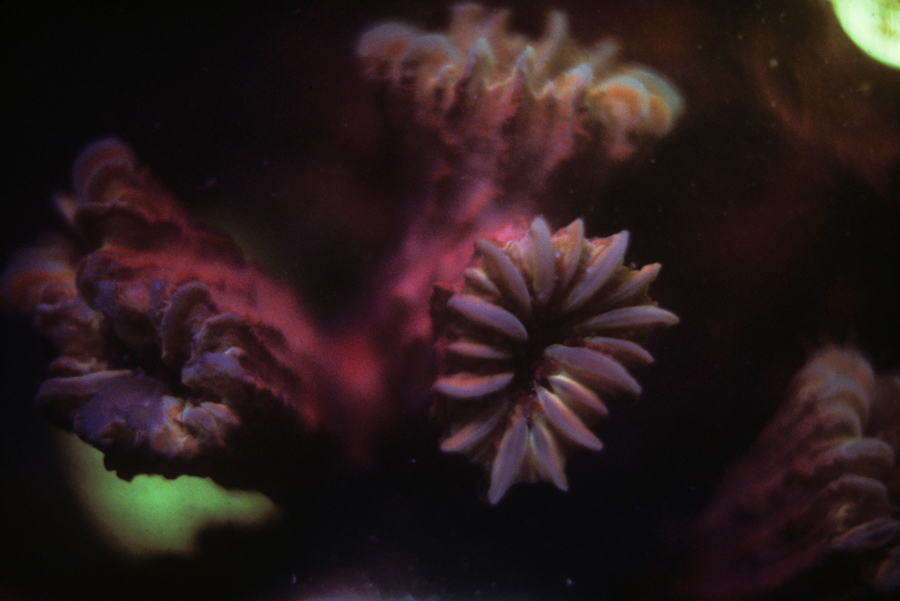
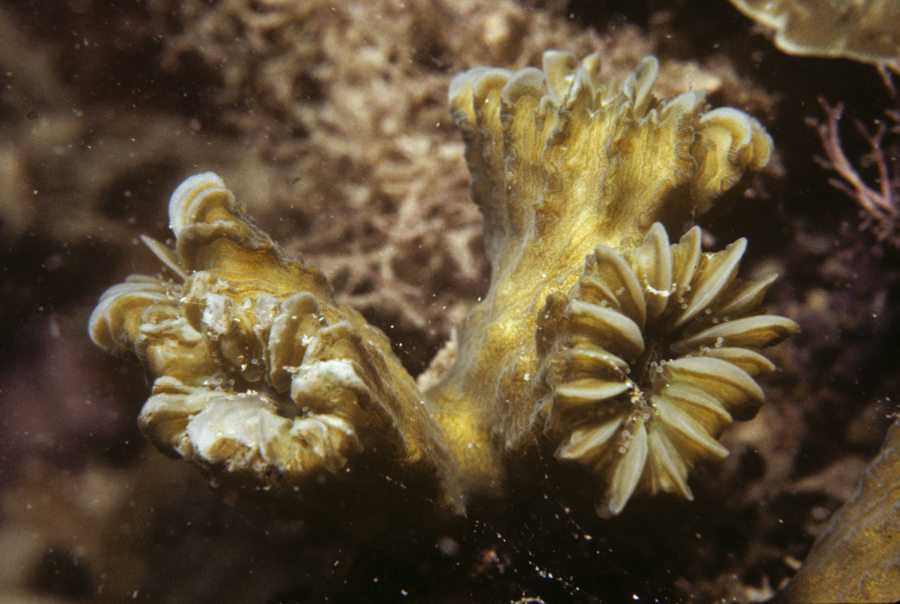
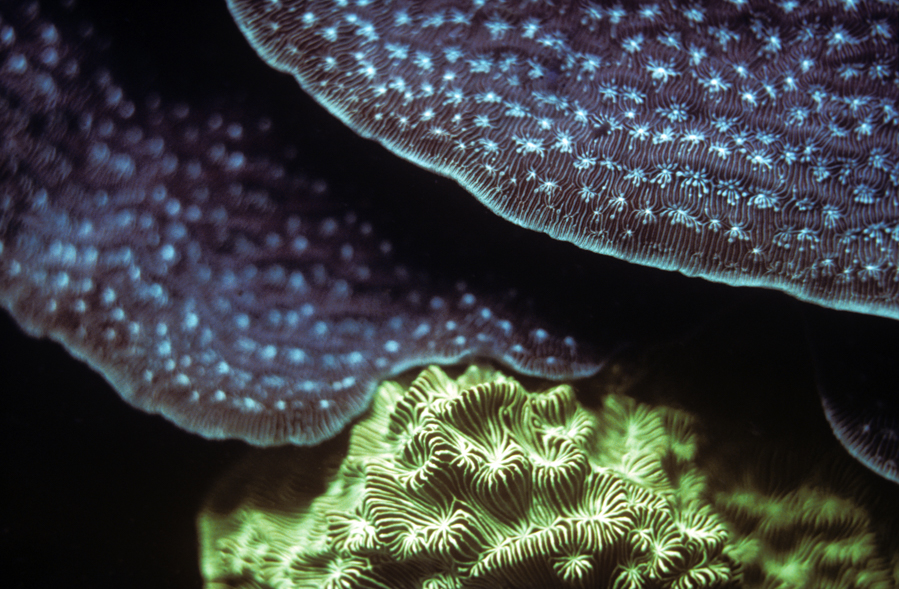
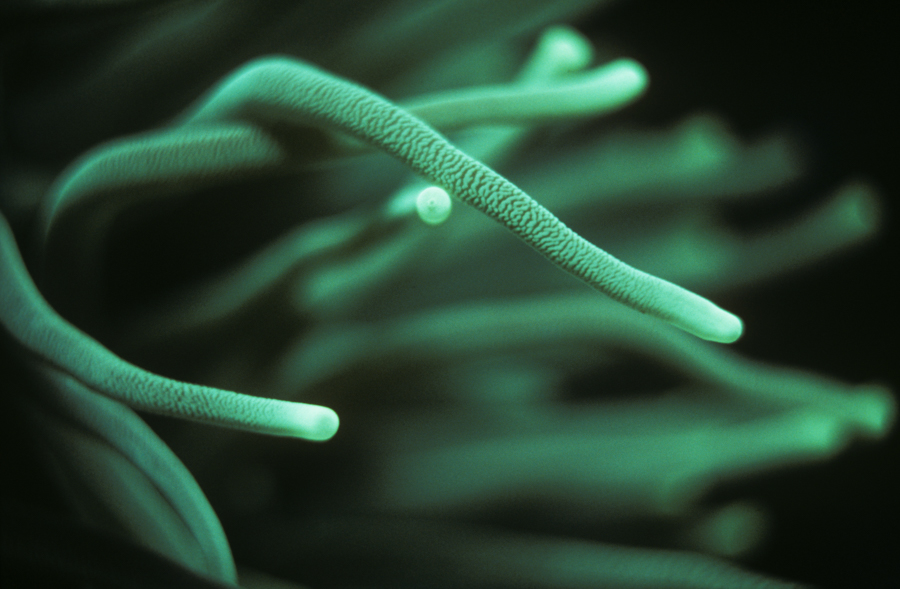
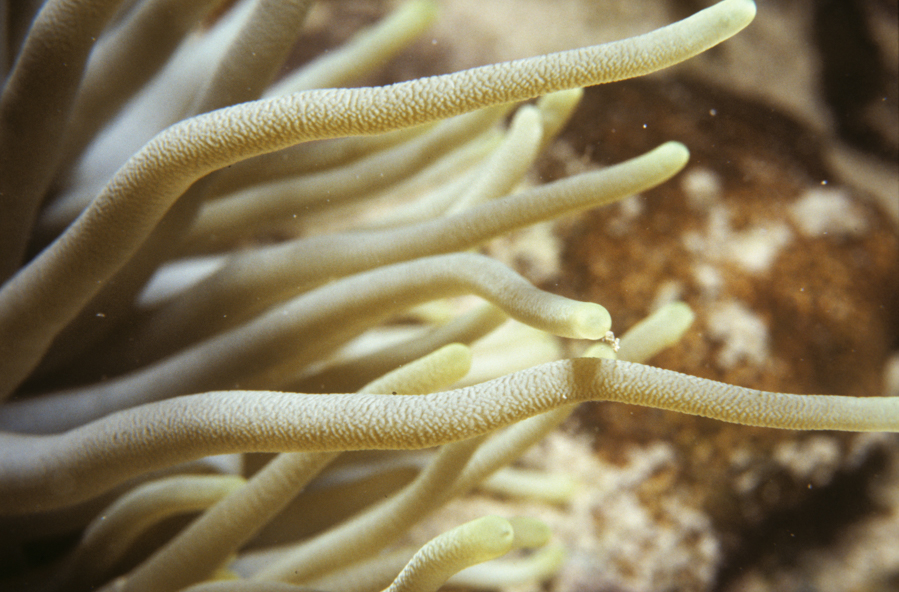
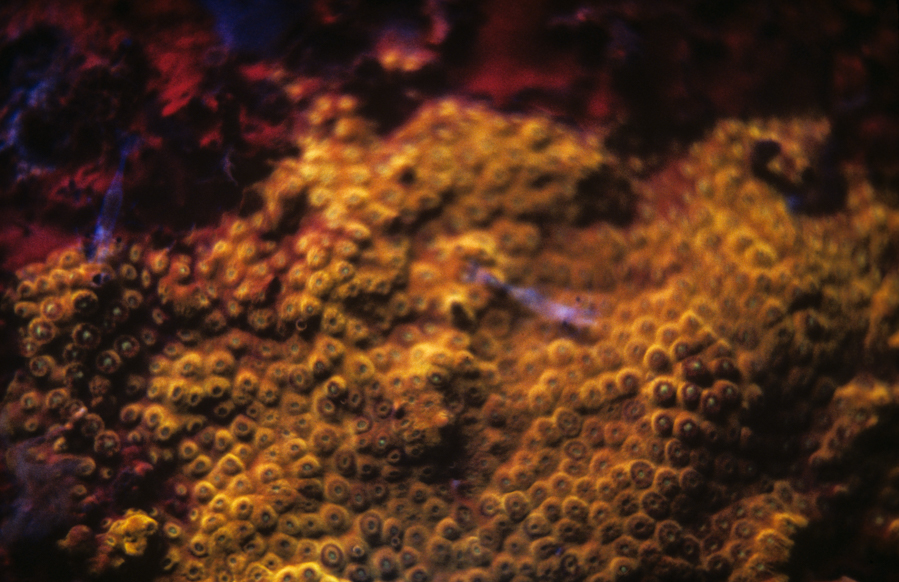
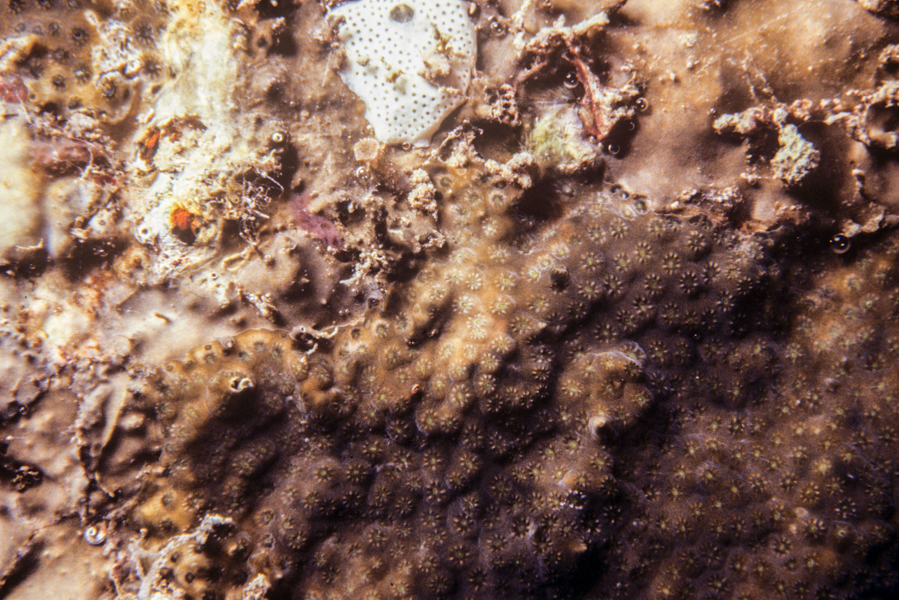
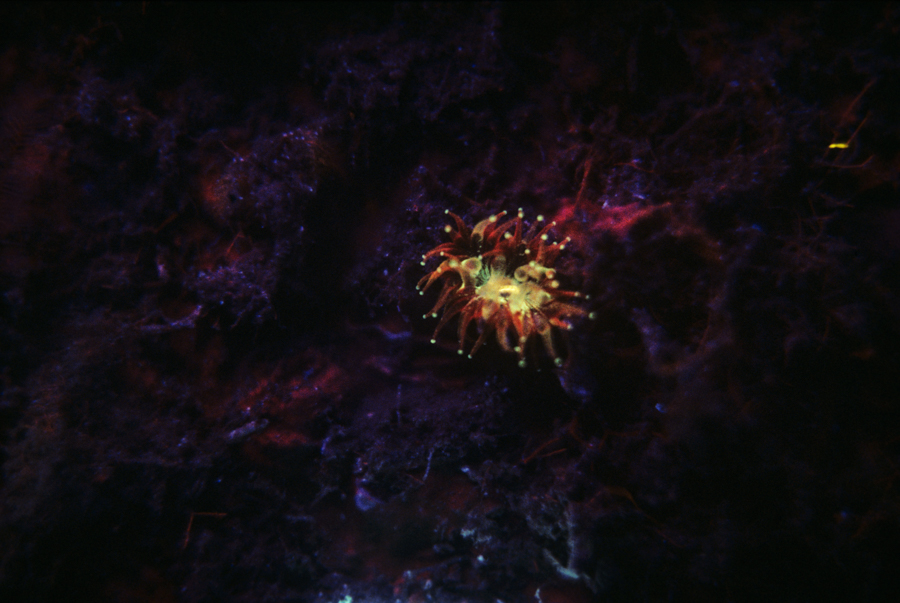
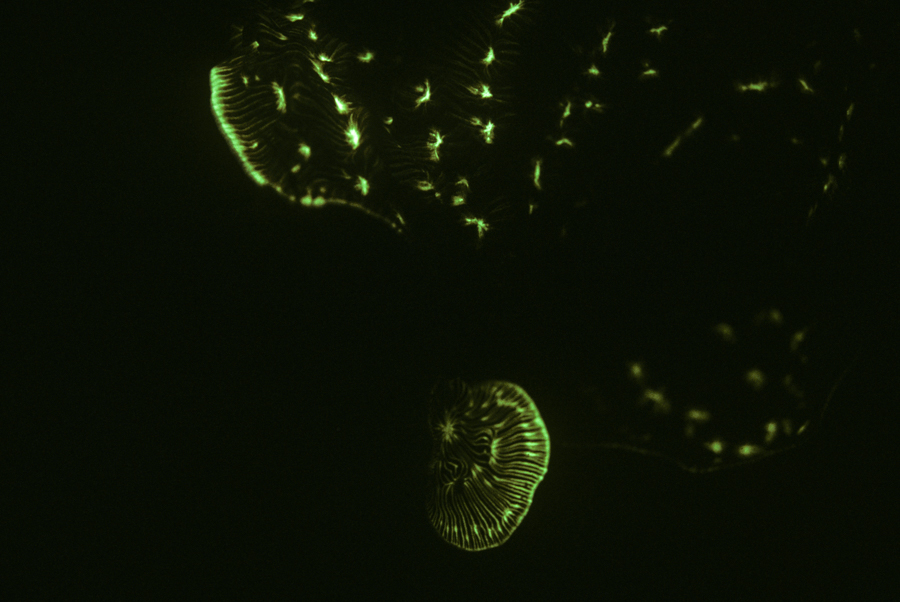
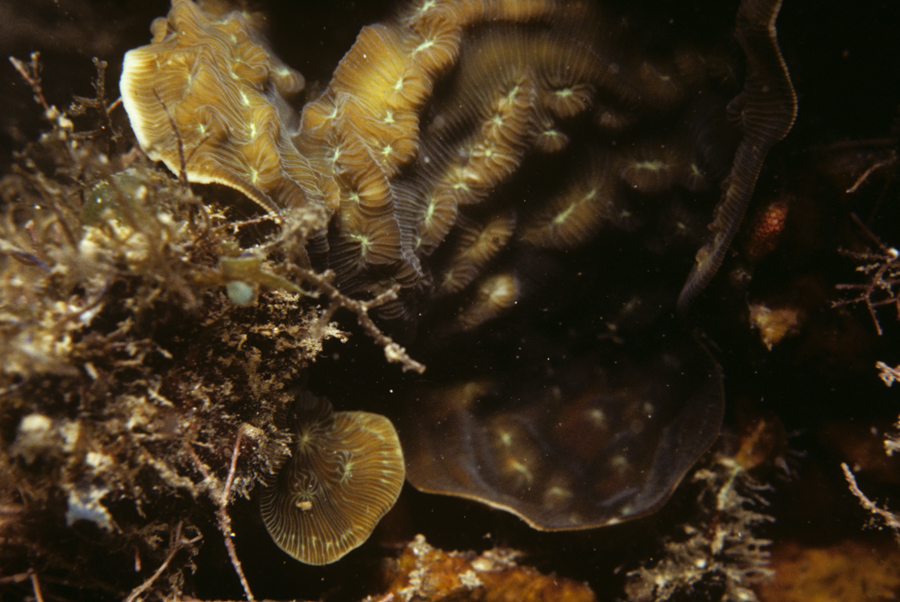
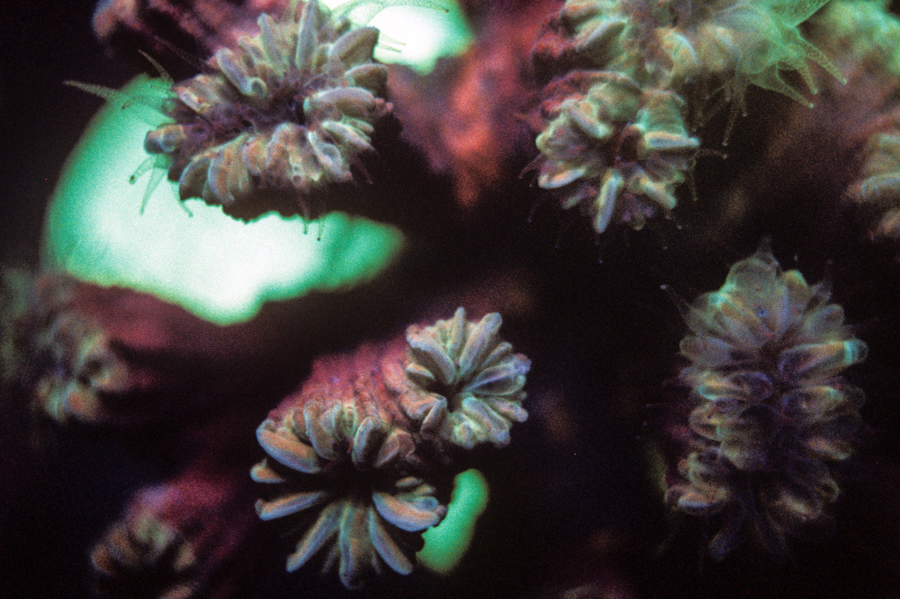
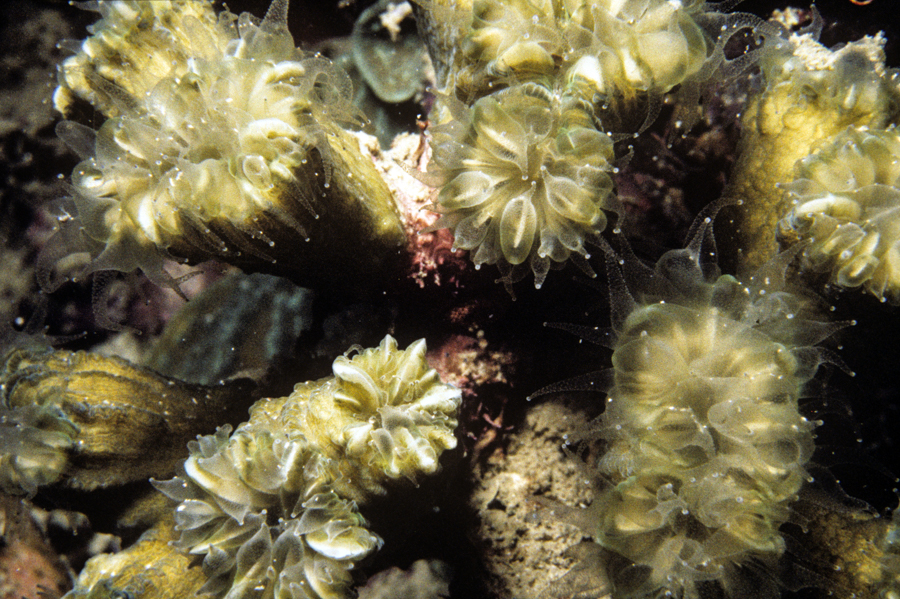
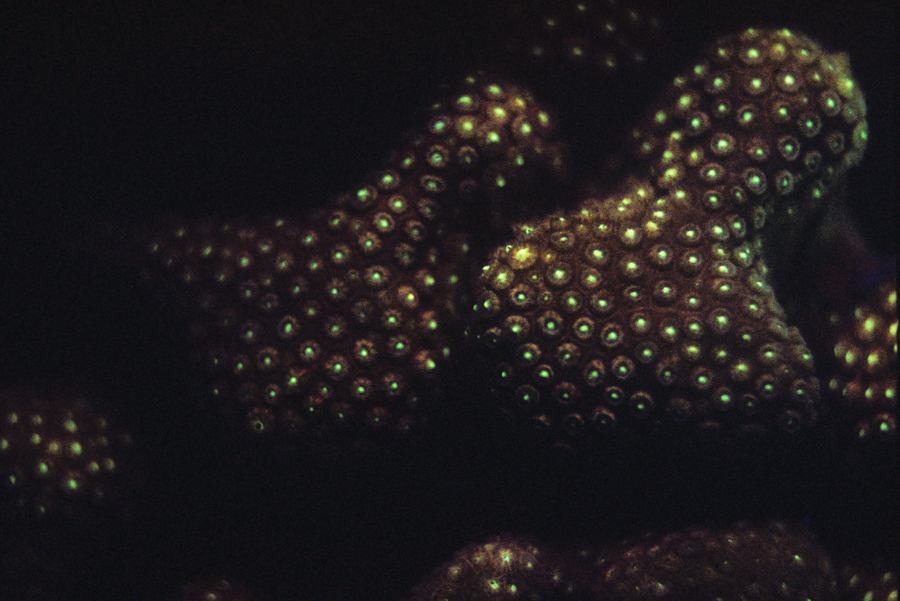
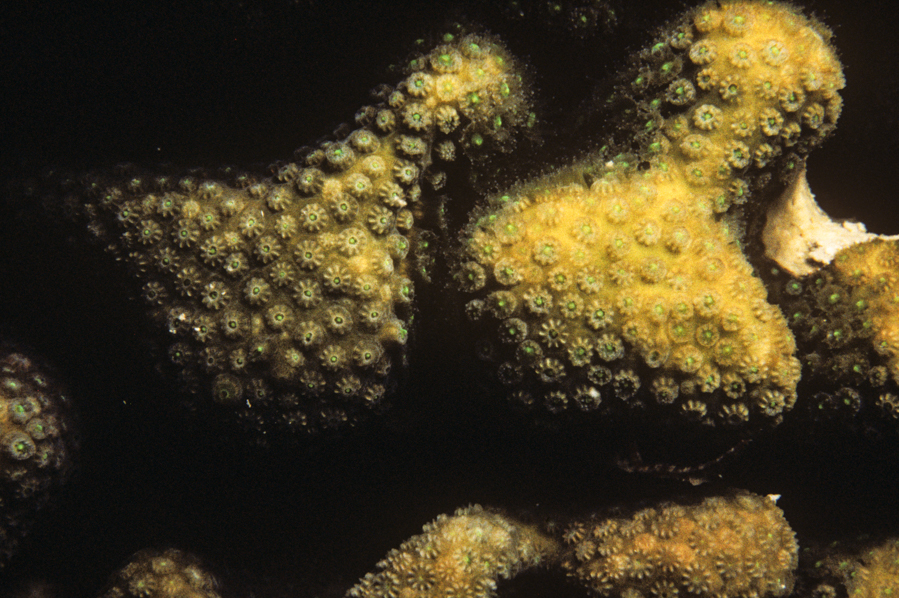
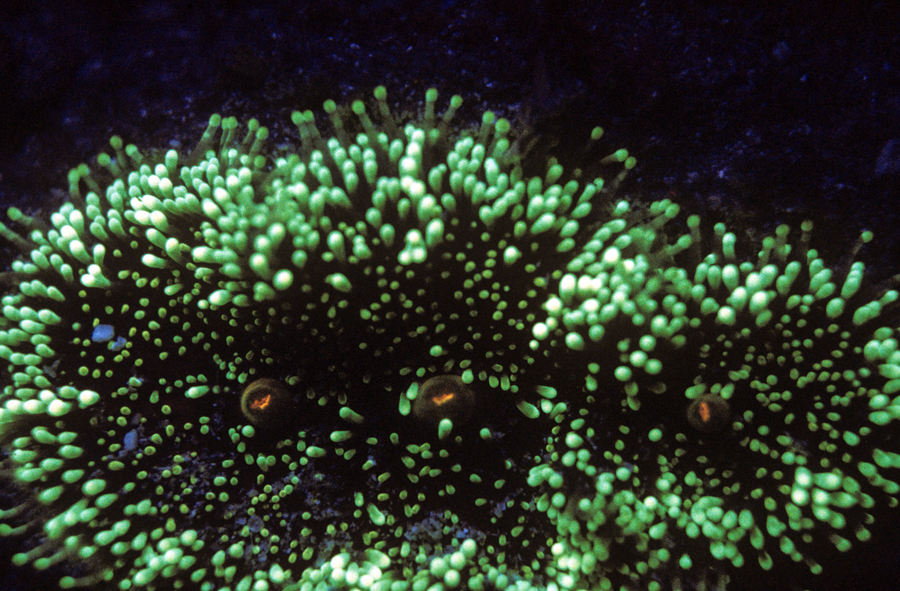
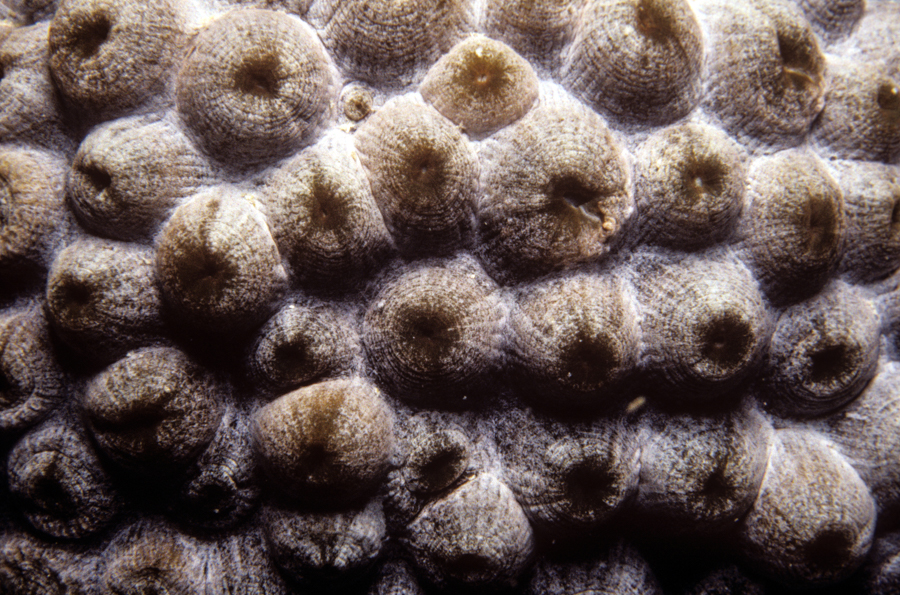
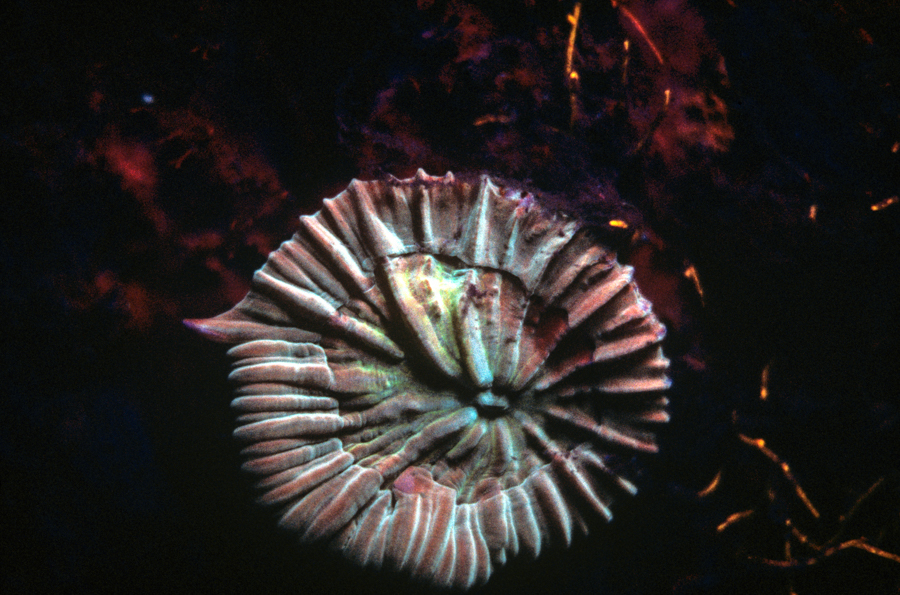
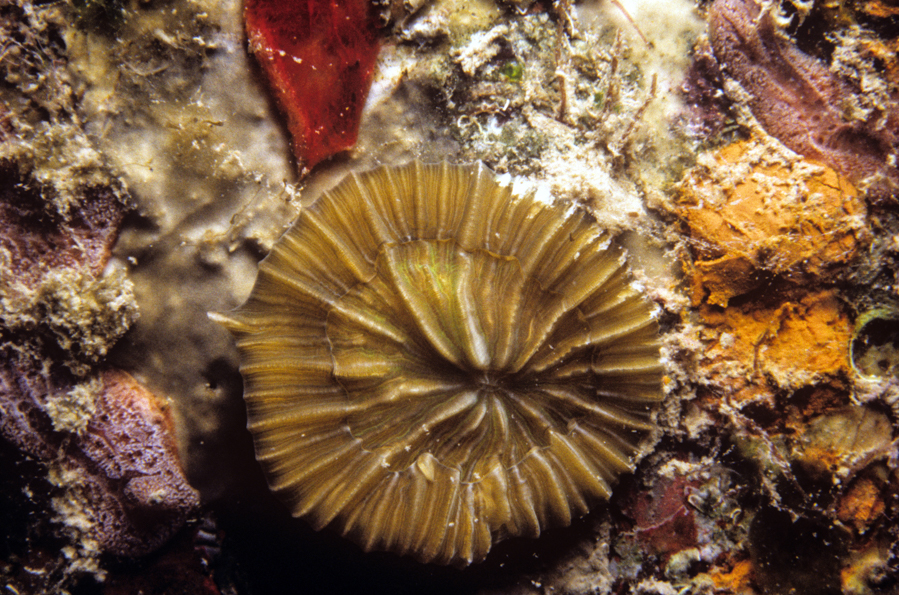
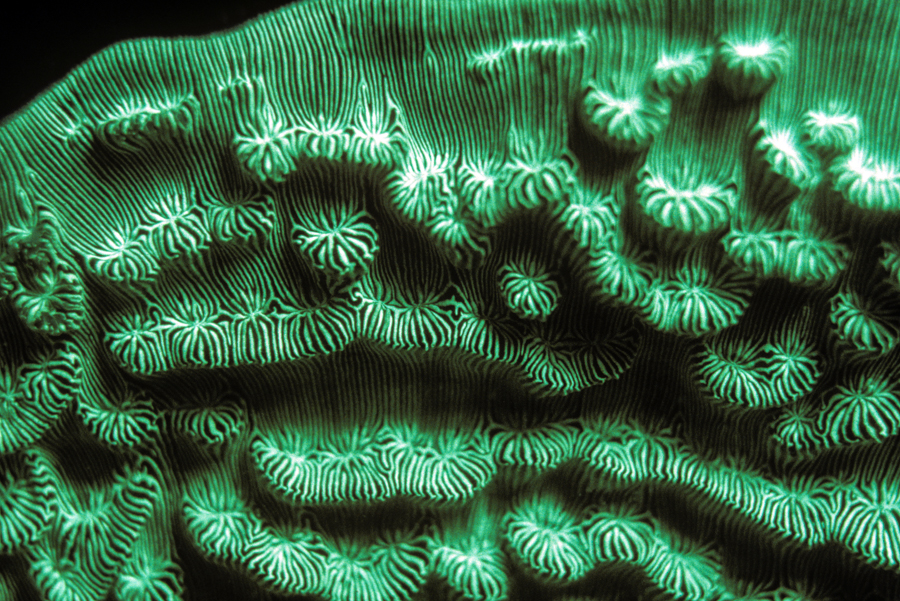
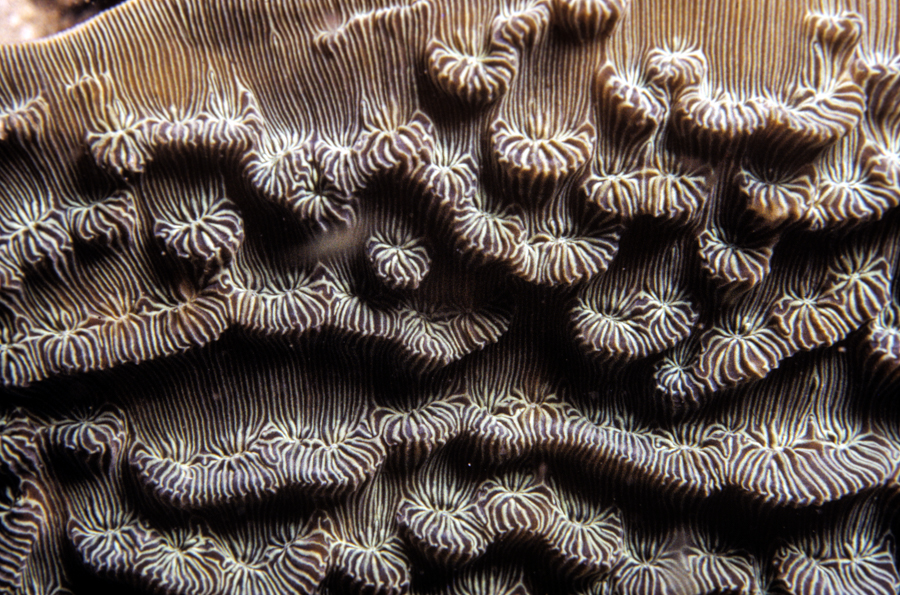
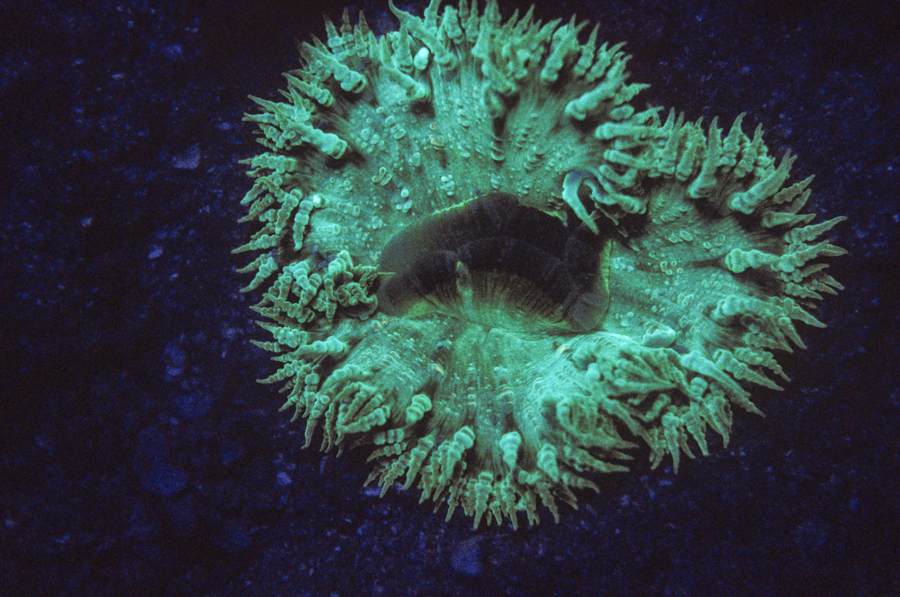
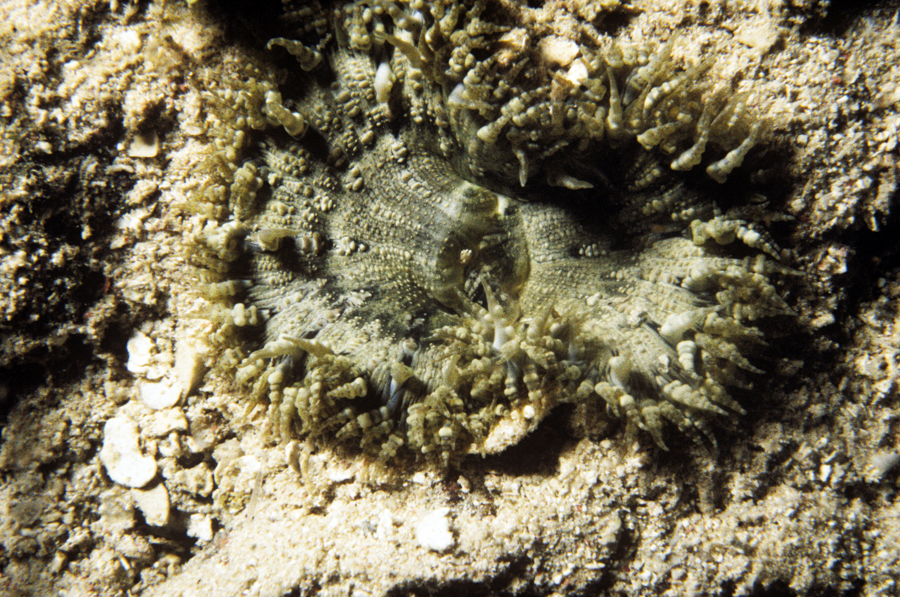
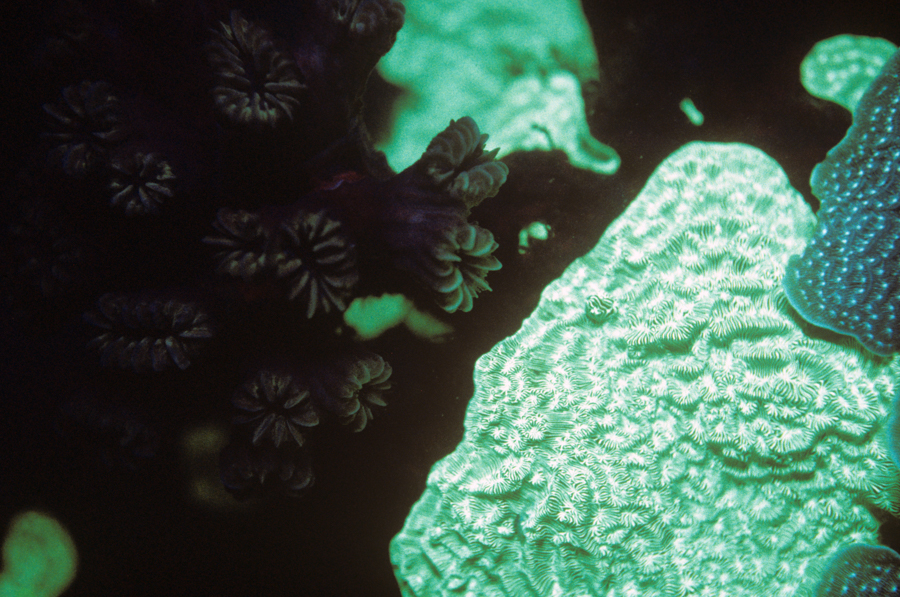
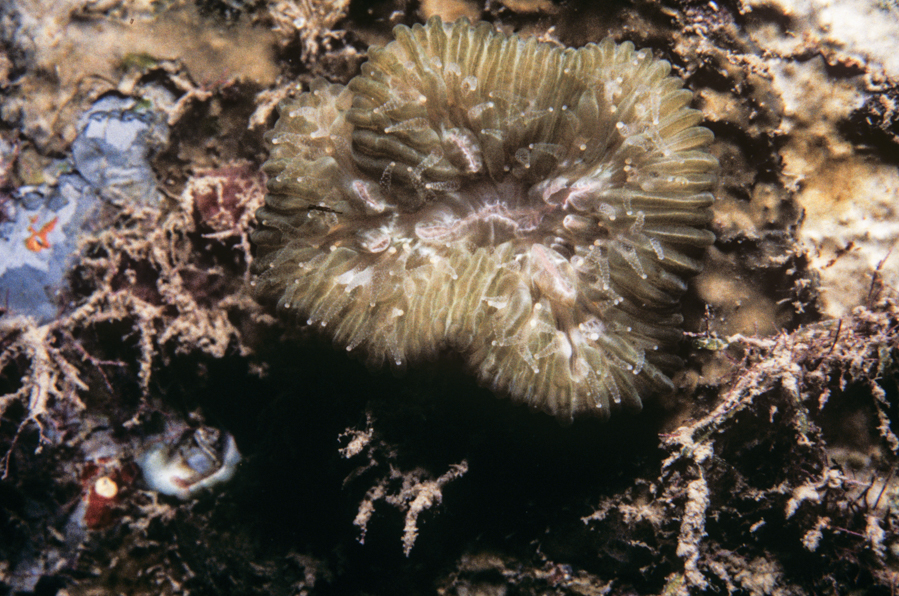
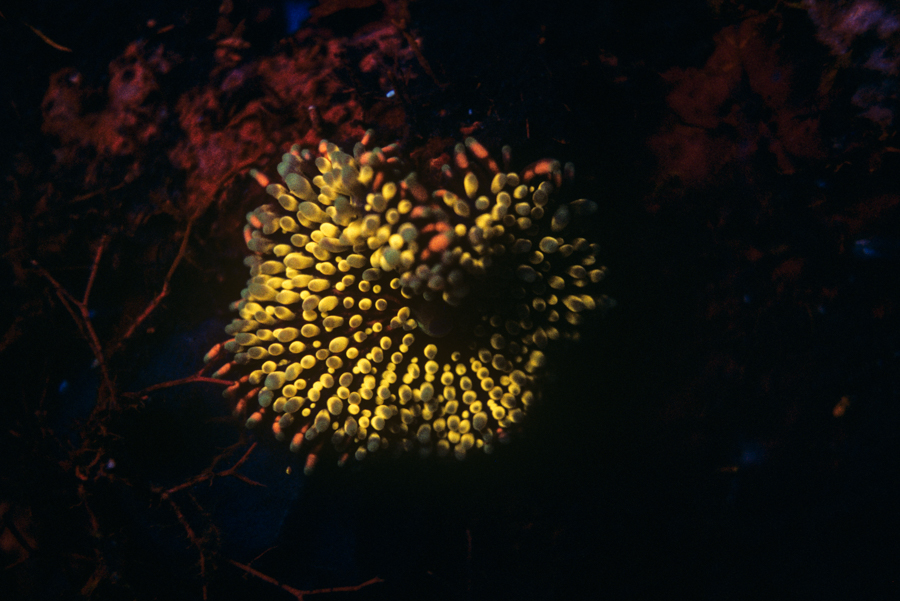
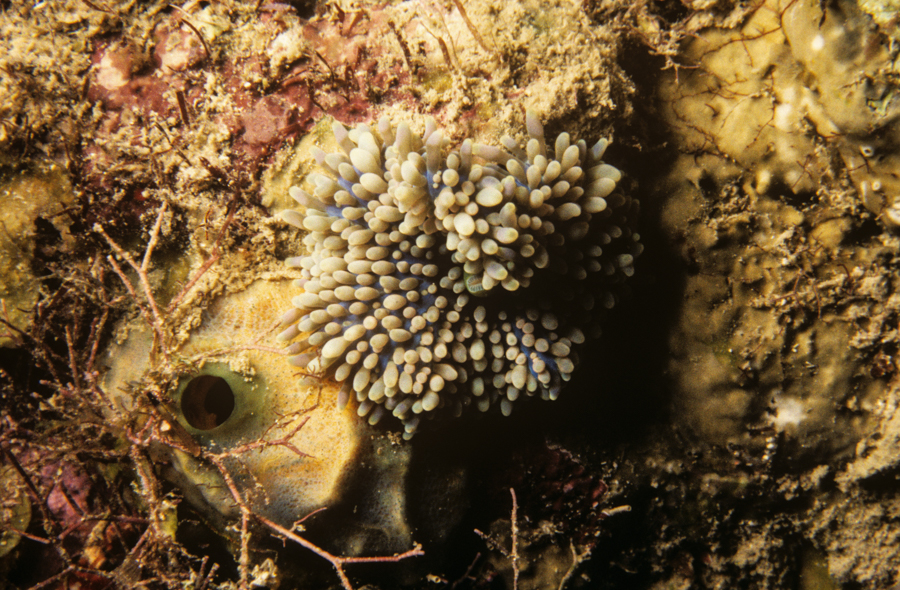
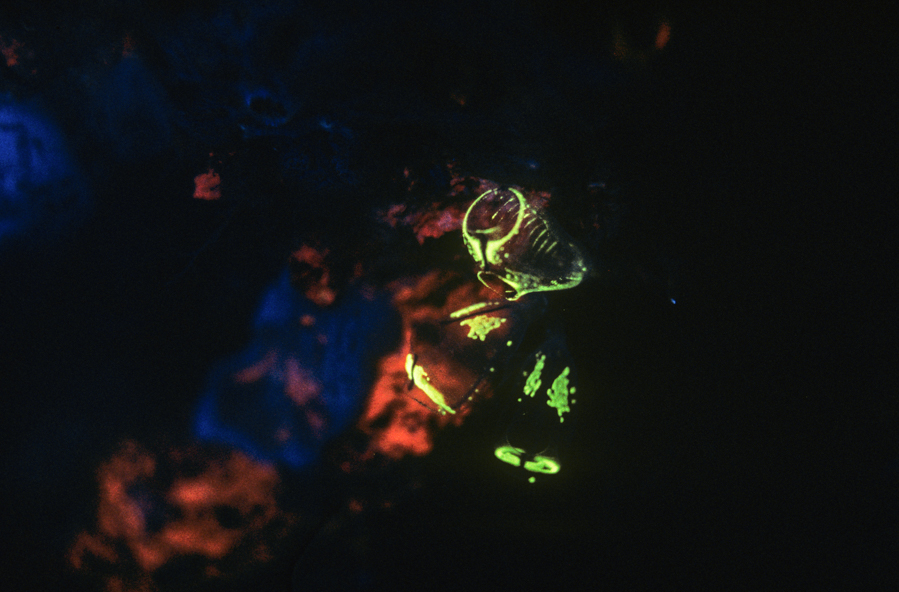
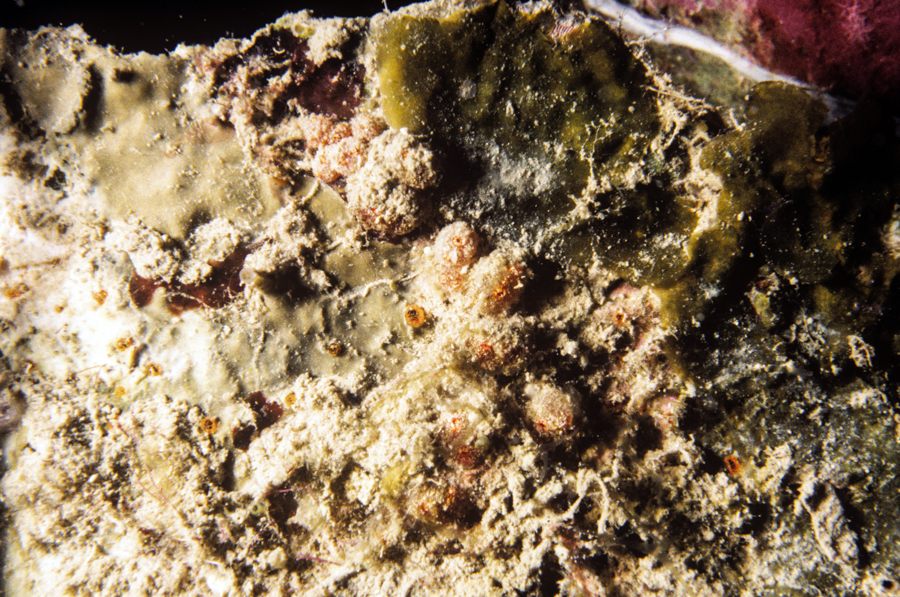
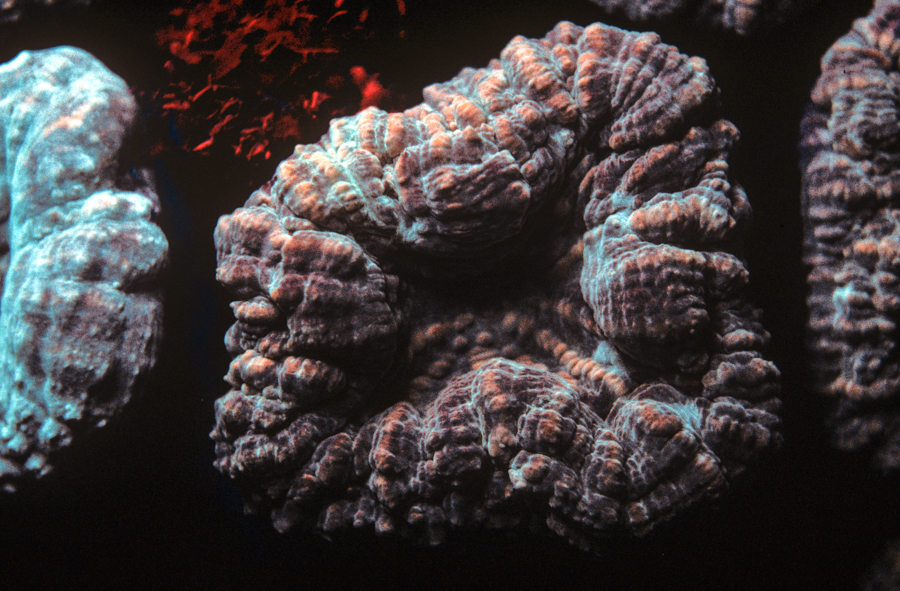
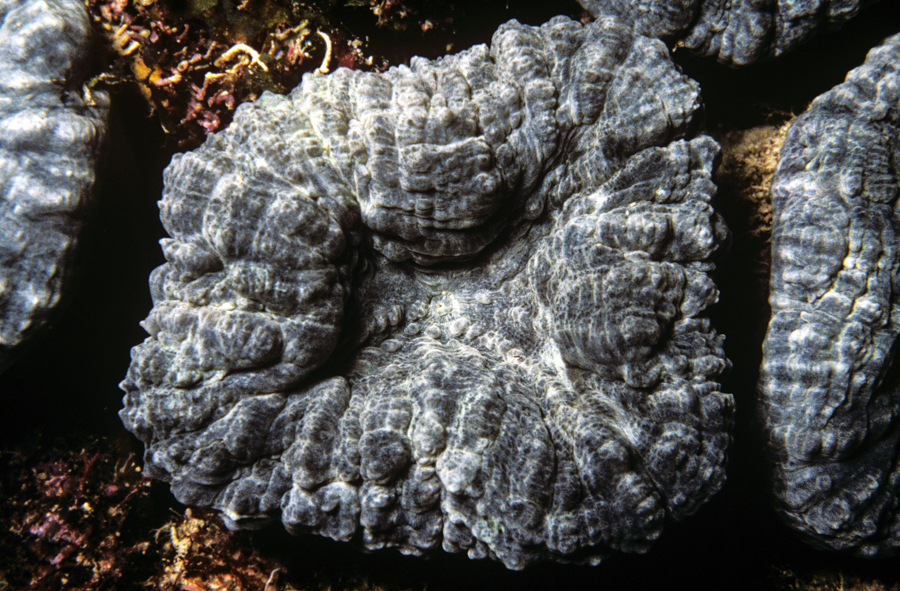
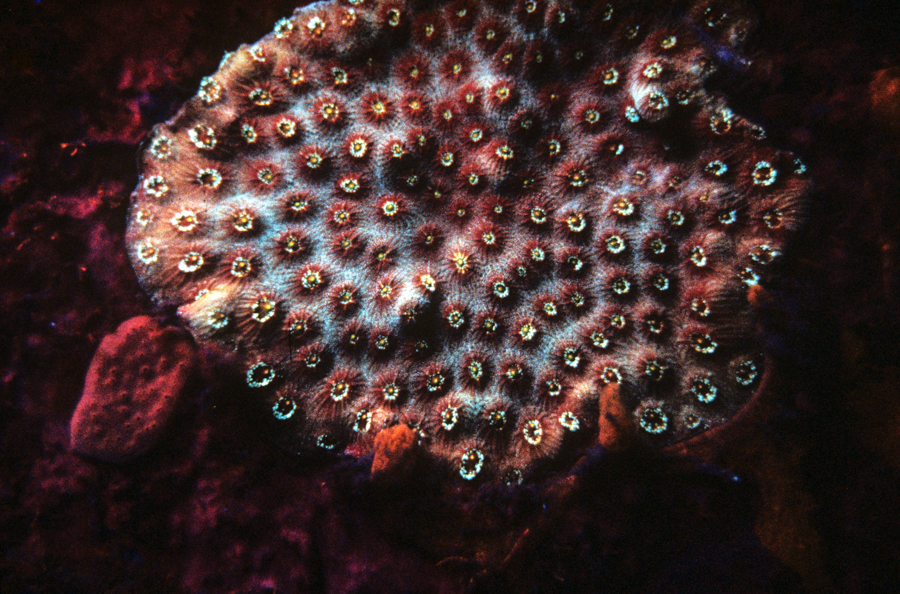
The images in the gallery below were made at Roatan, Honduras, in three separate trips in 1987, 1988, and 1989. So this is all 35mm film work, scanned here. Images first, and for more information scroll down below the gallery. The image names tie to a database that I made as images were made, recording subject/camera/film/exposure info. A list of the photo subjects is at the end of this post.
Additional gallery – Pedro Bank, Jamaica, 1987
(Click any image for larger view and file names.
The ‘R’ in the file names stands for Roatan. The V or F at the end of the filename stands for ‘visible’ (white light) or ‘fluorescence’.)
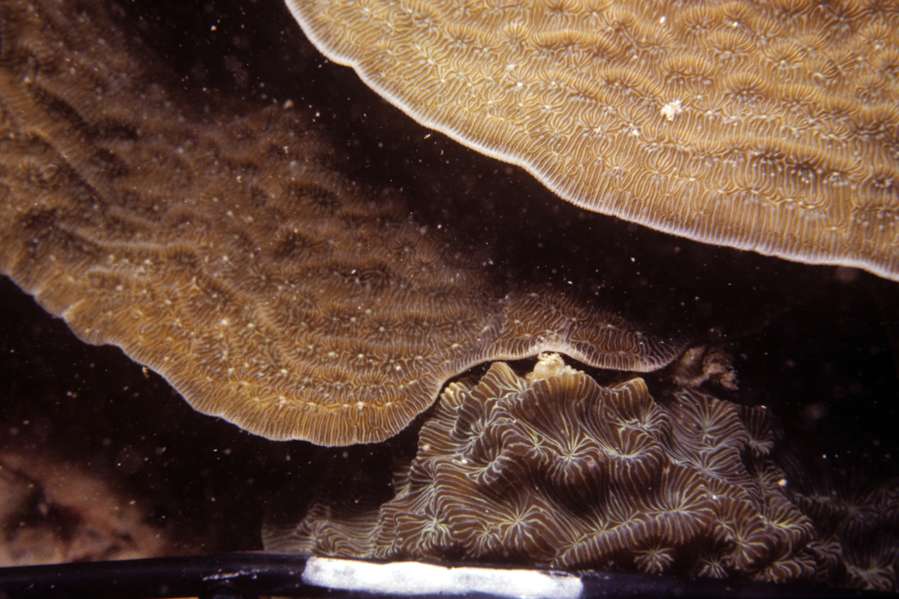

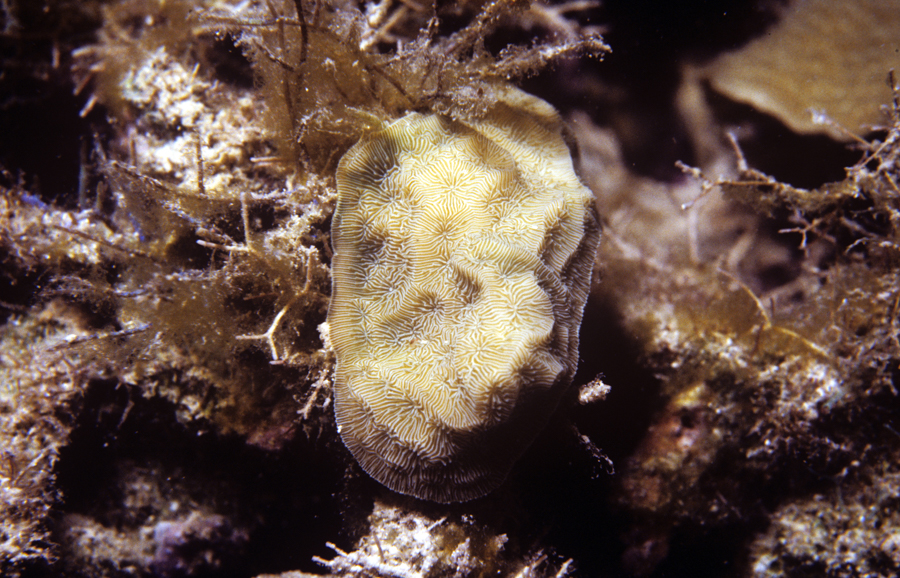
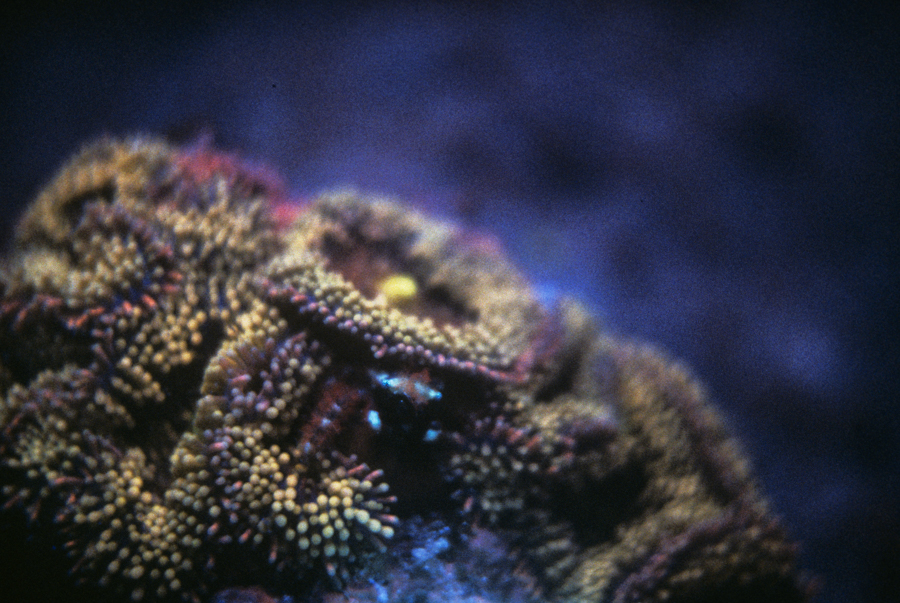
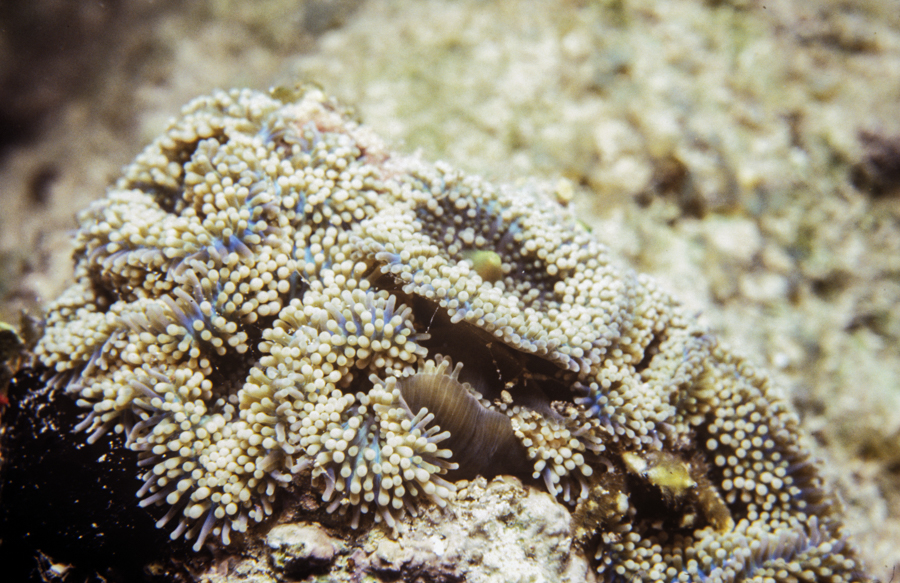
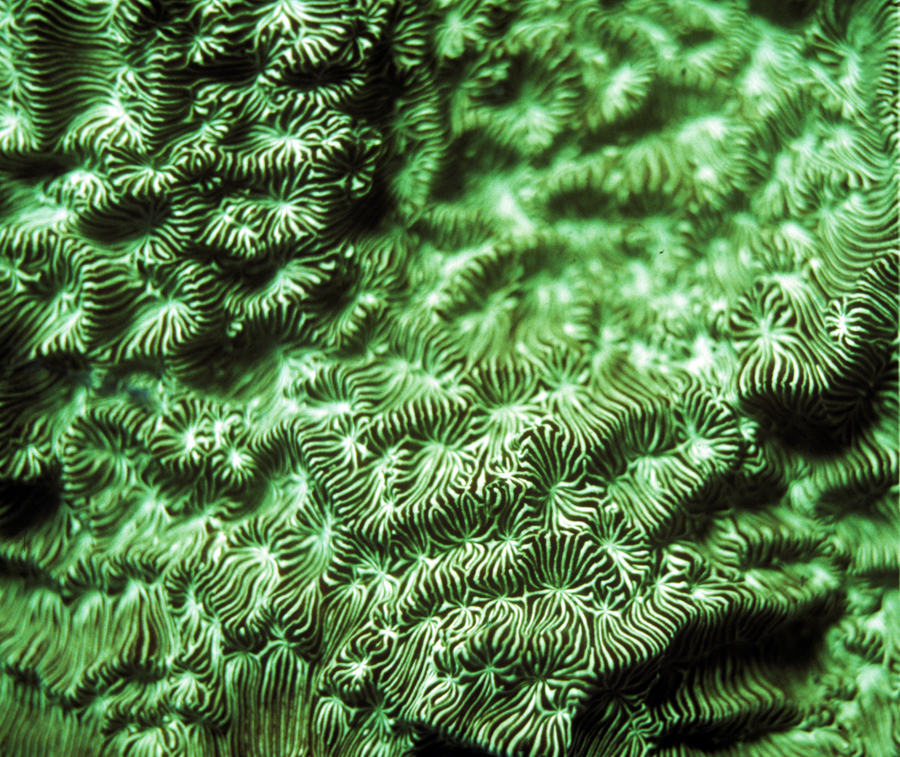
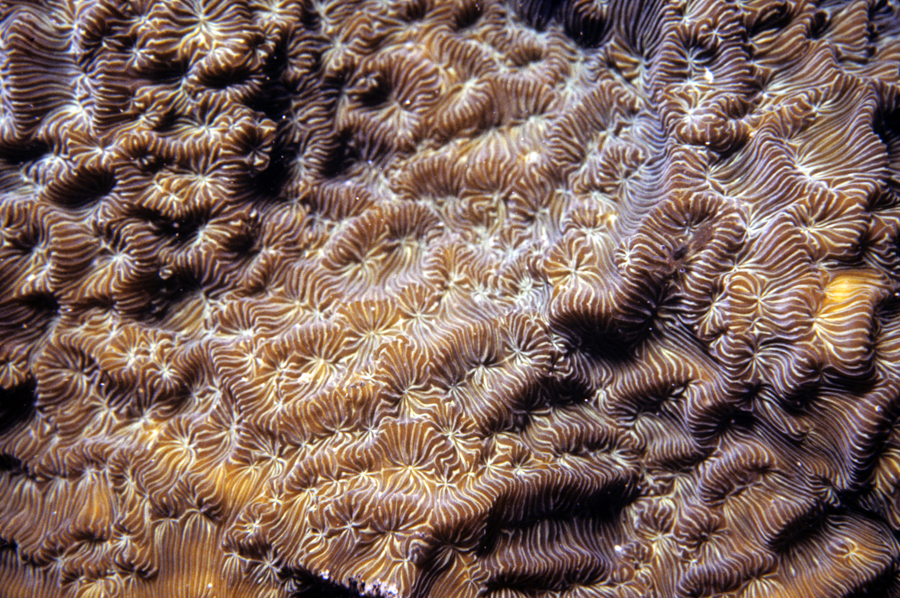
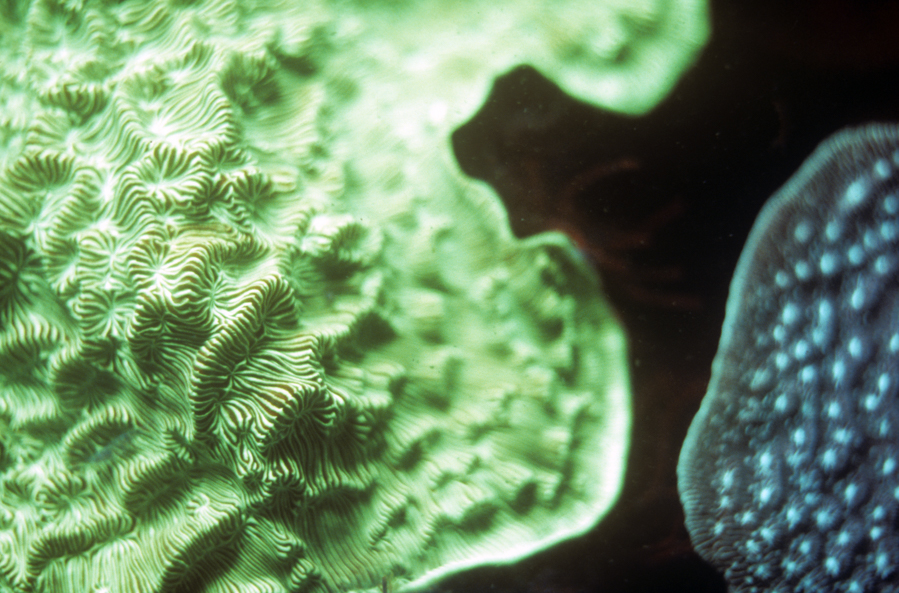
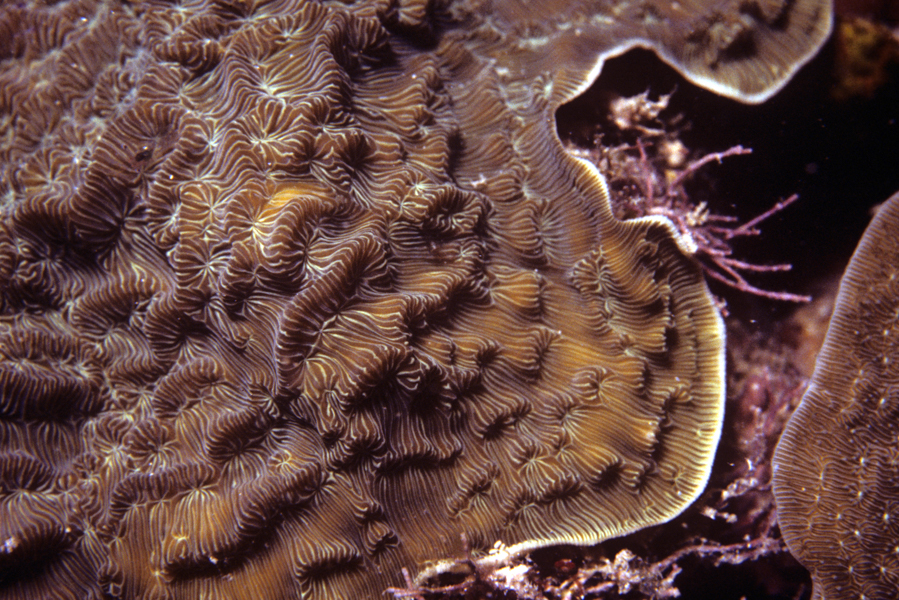
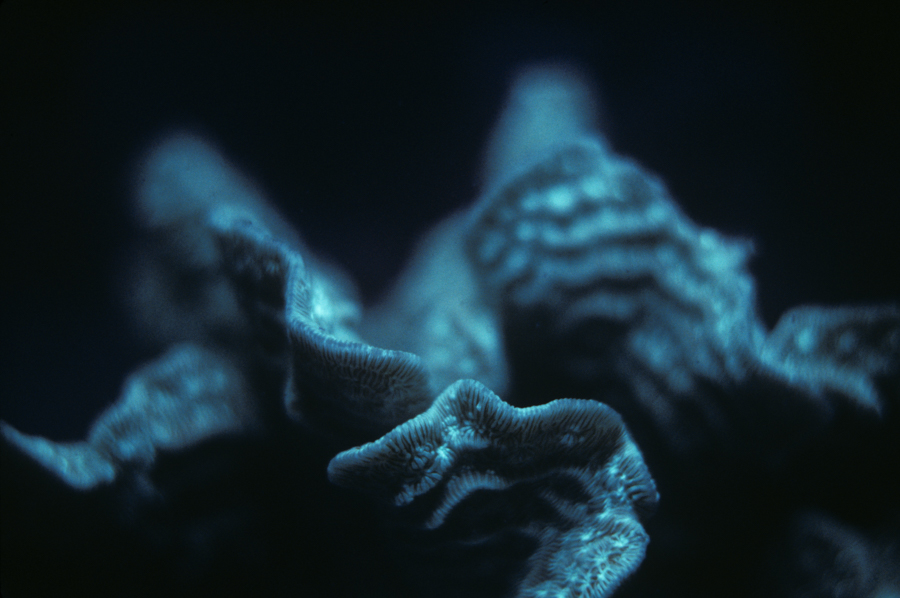
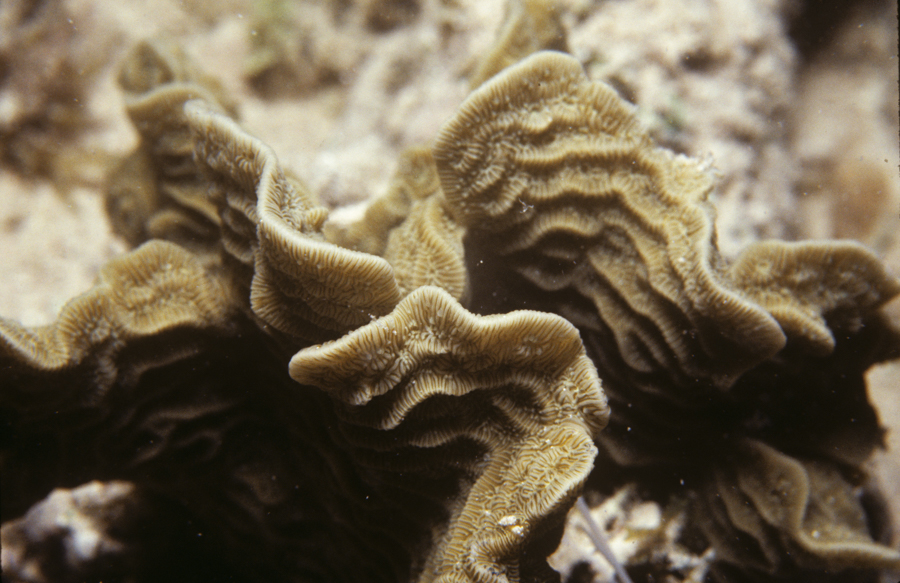
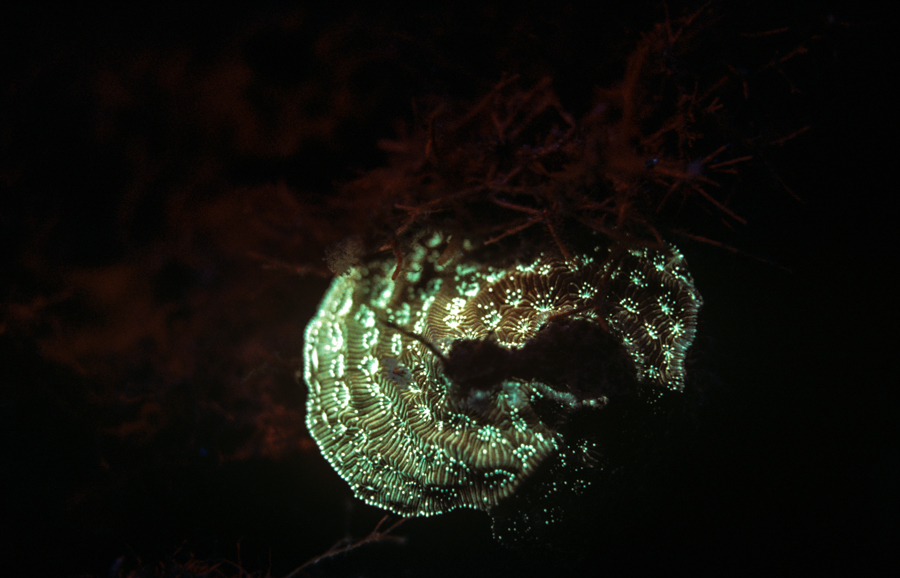
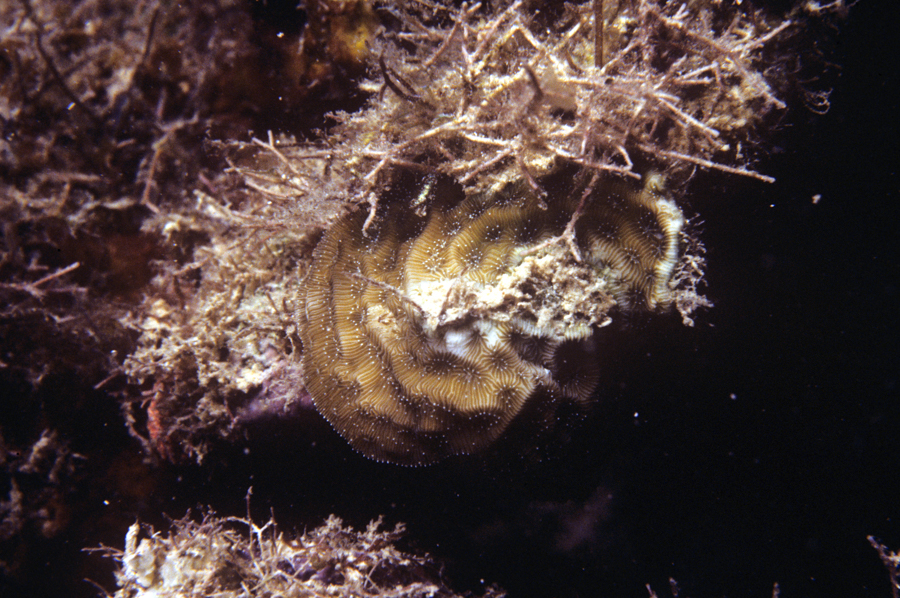
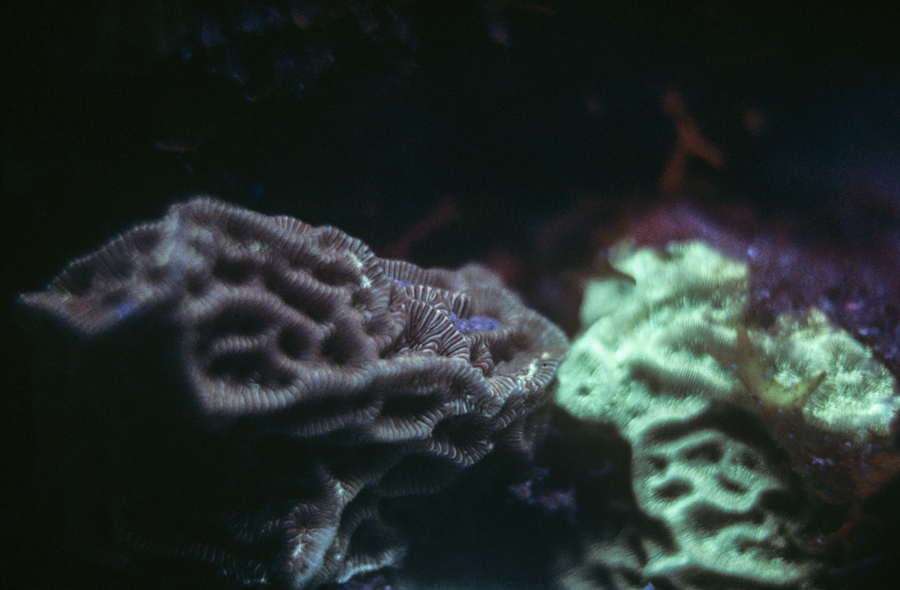
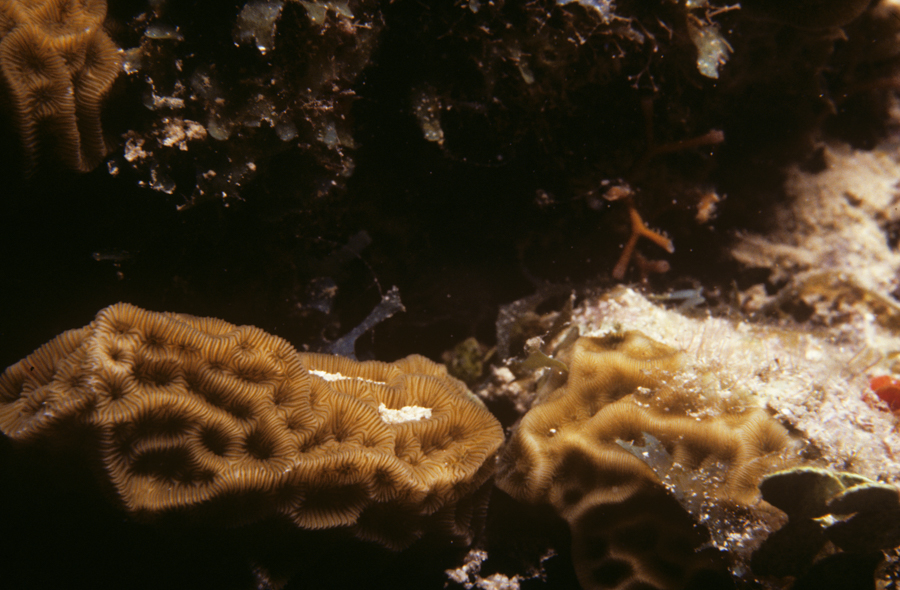
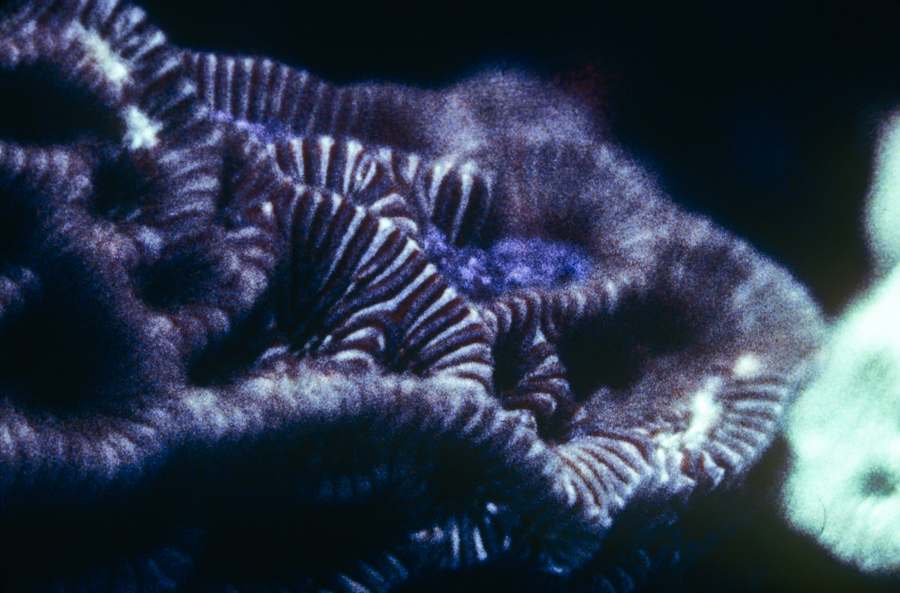
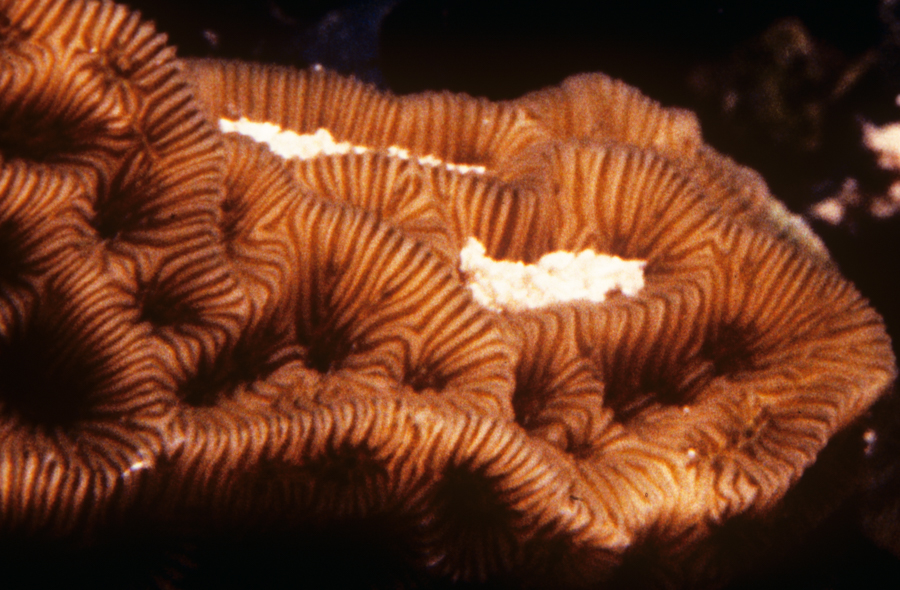

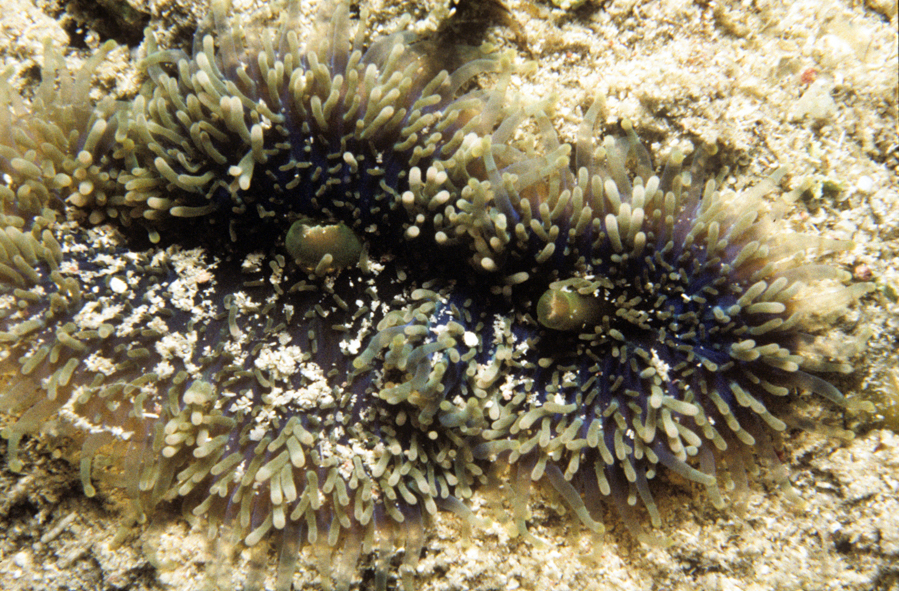

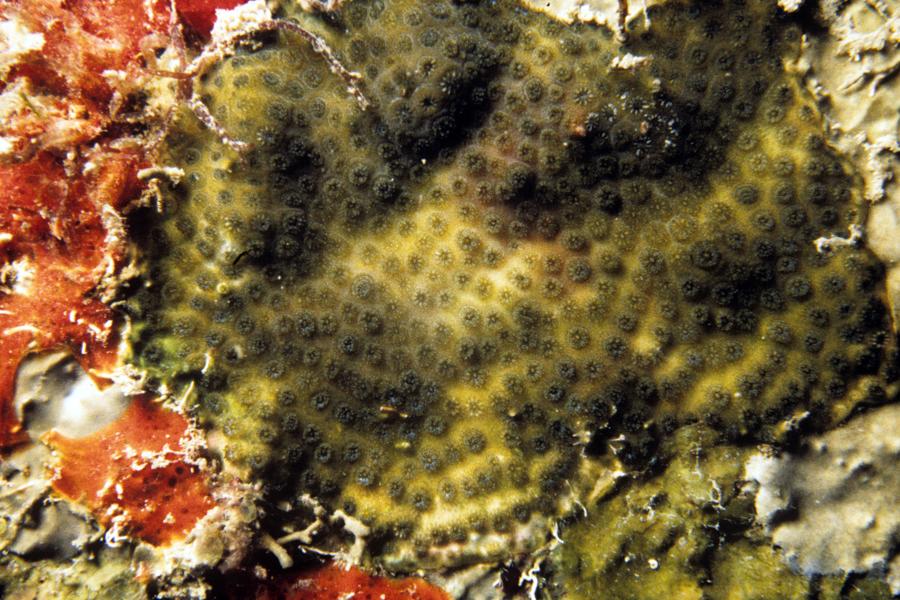
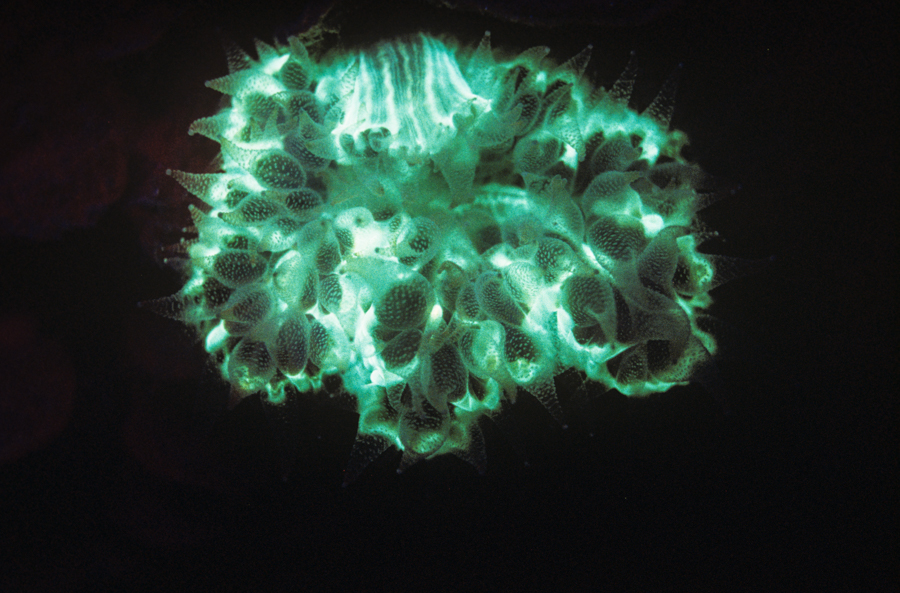
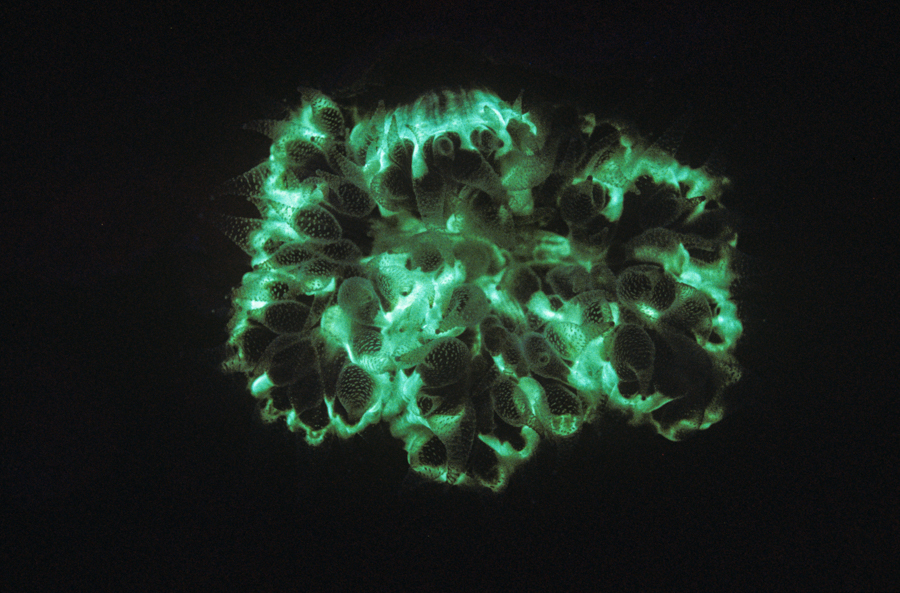
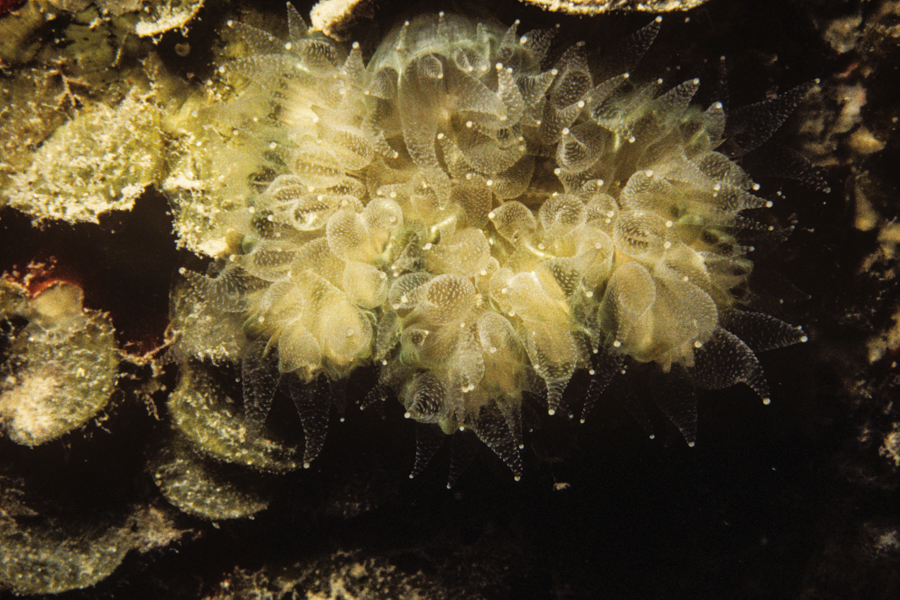
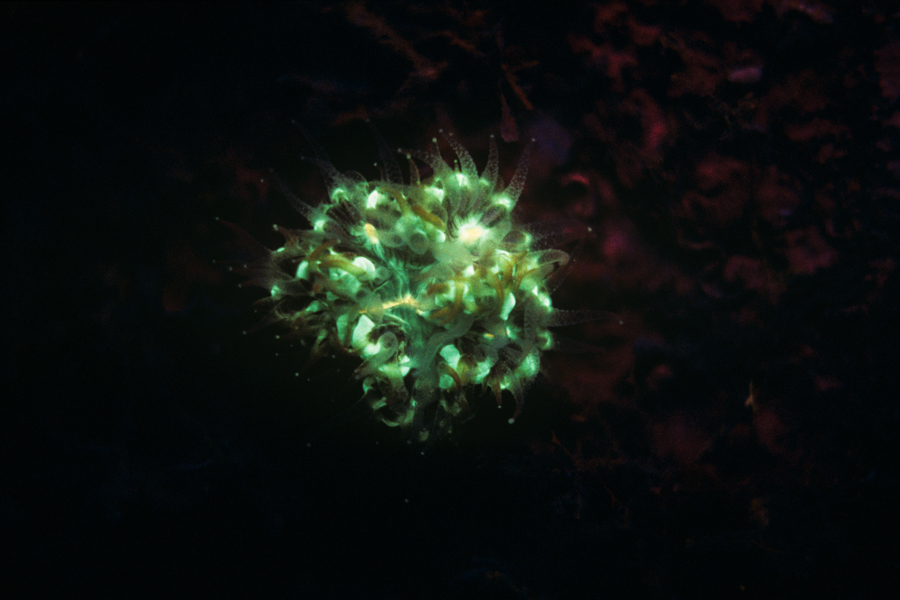
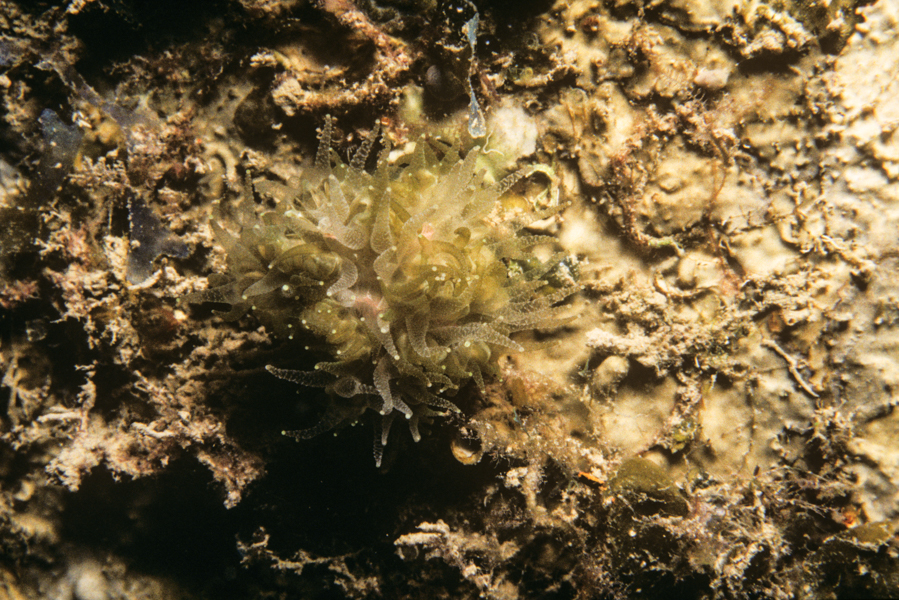
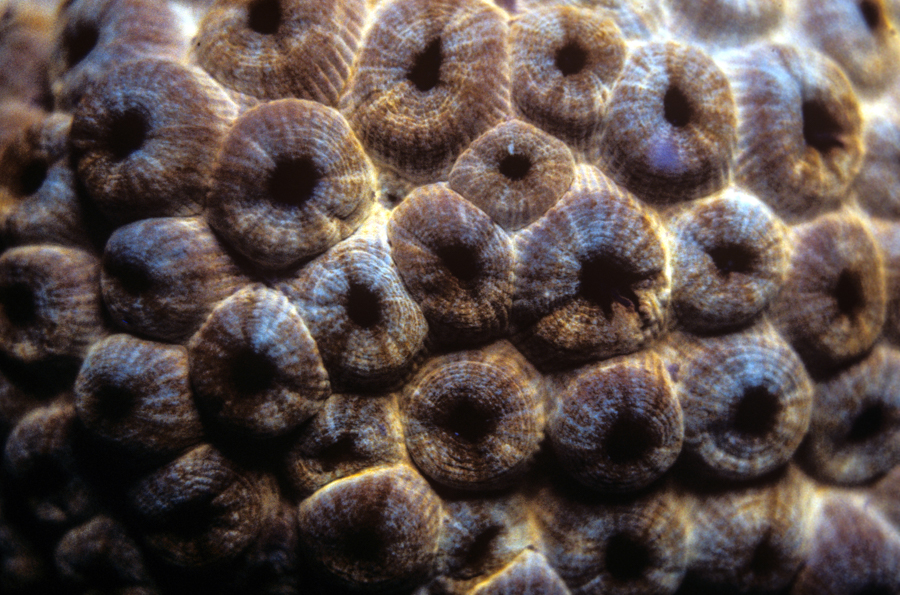
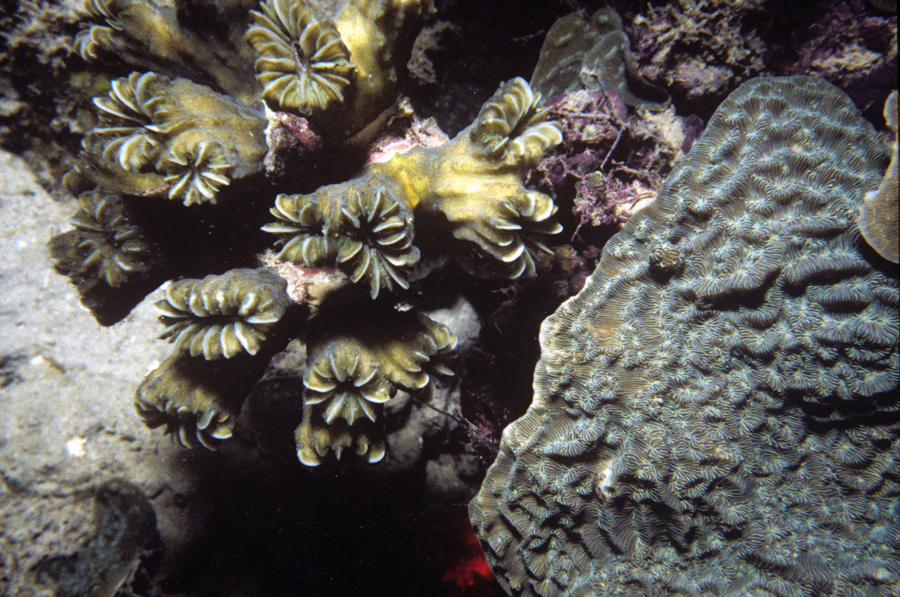
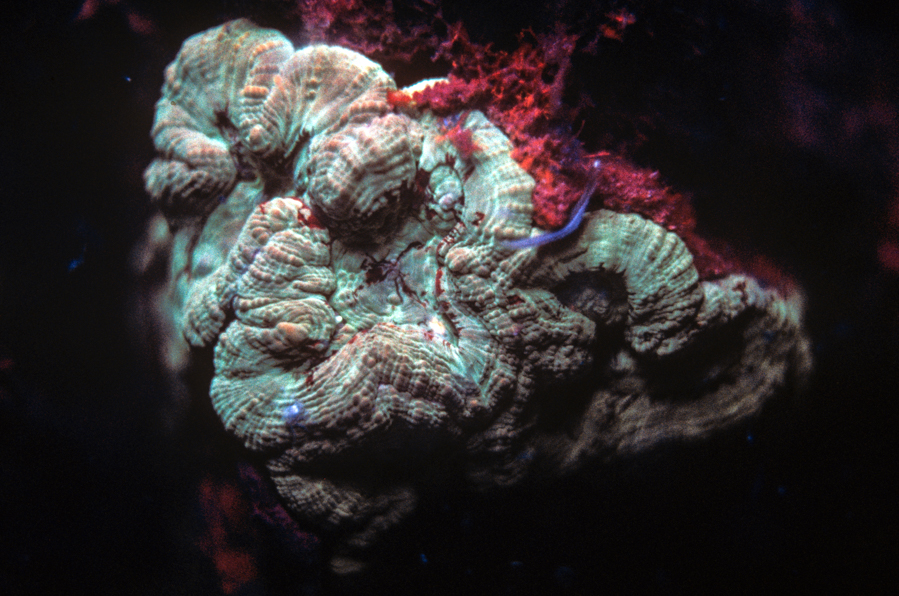
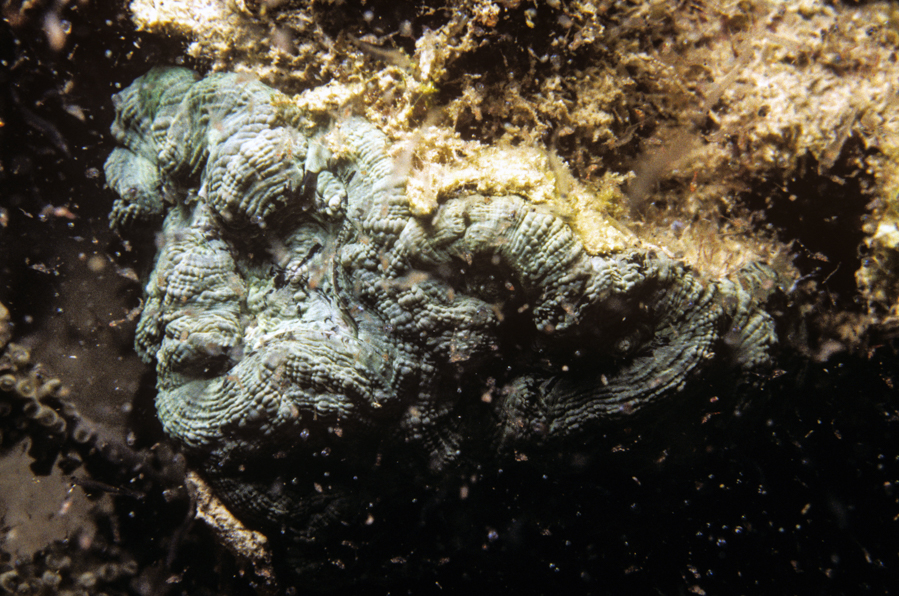
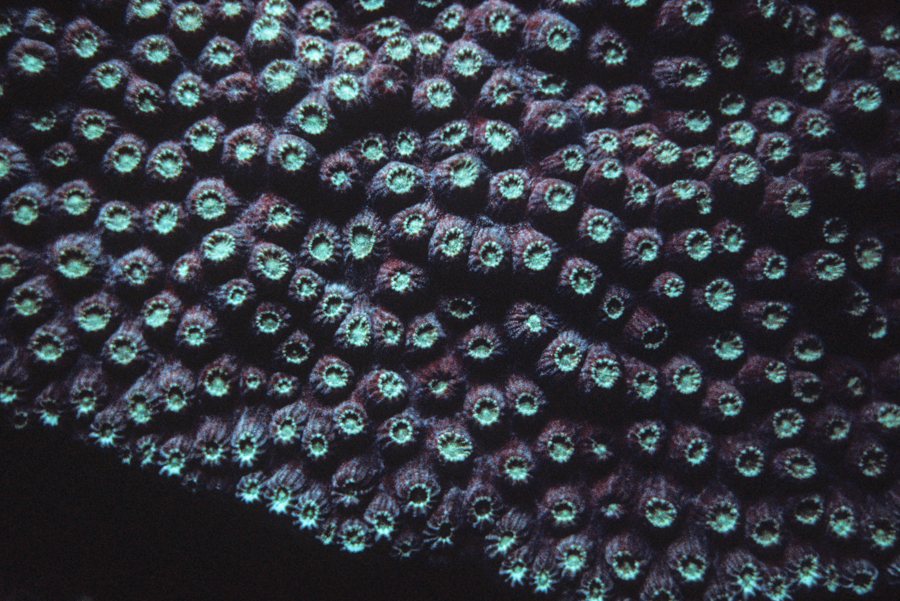
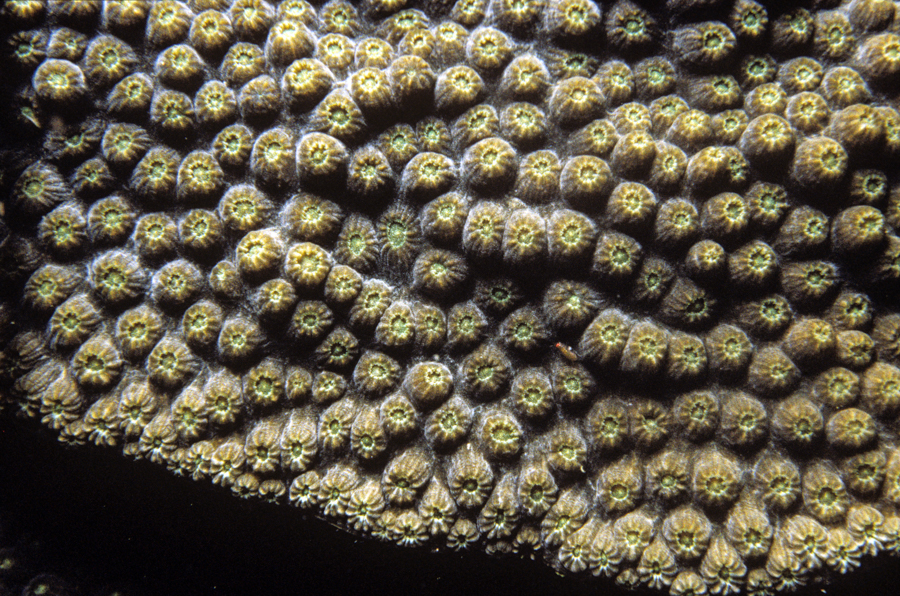

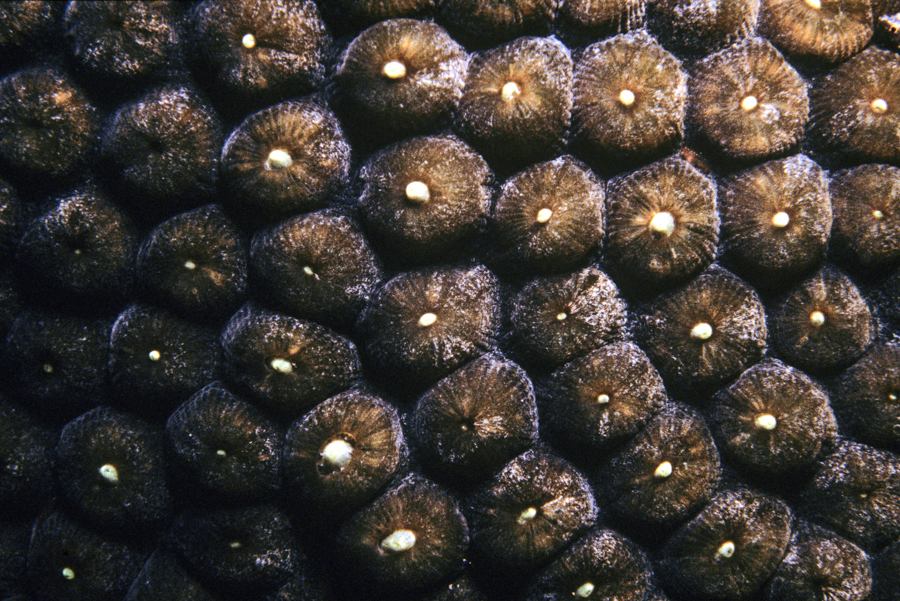

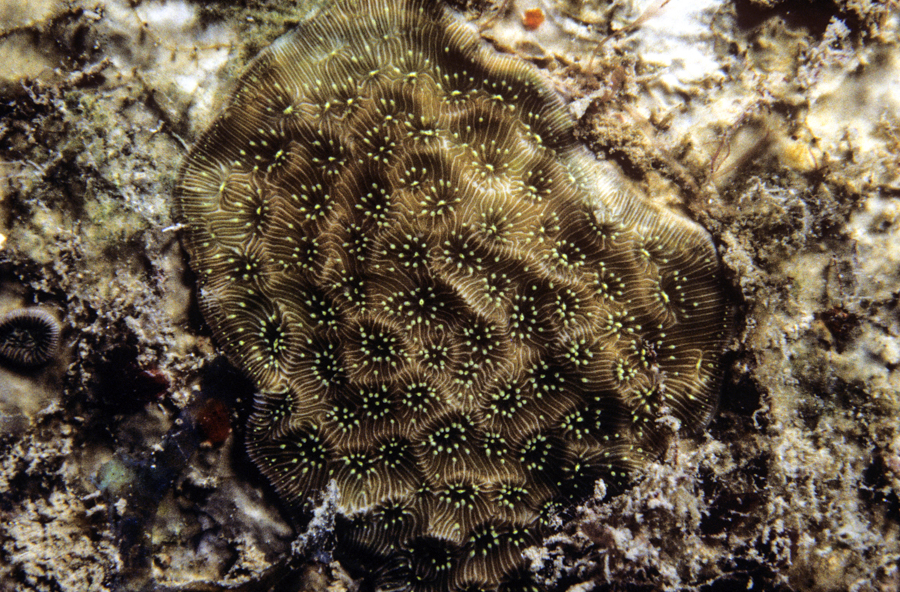
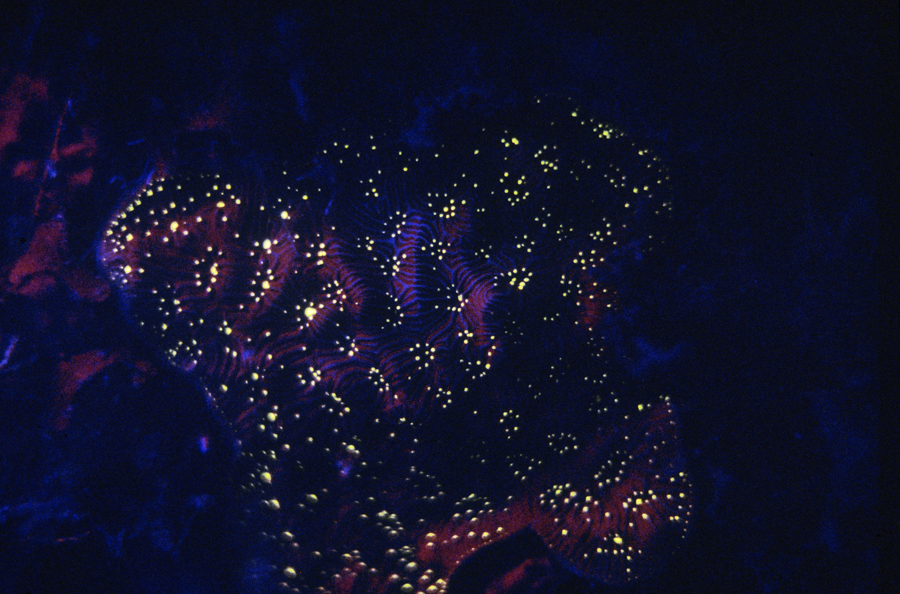
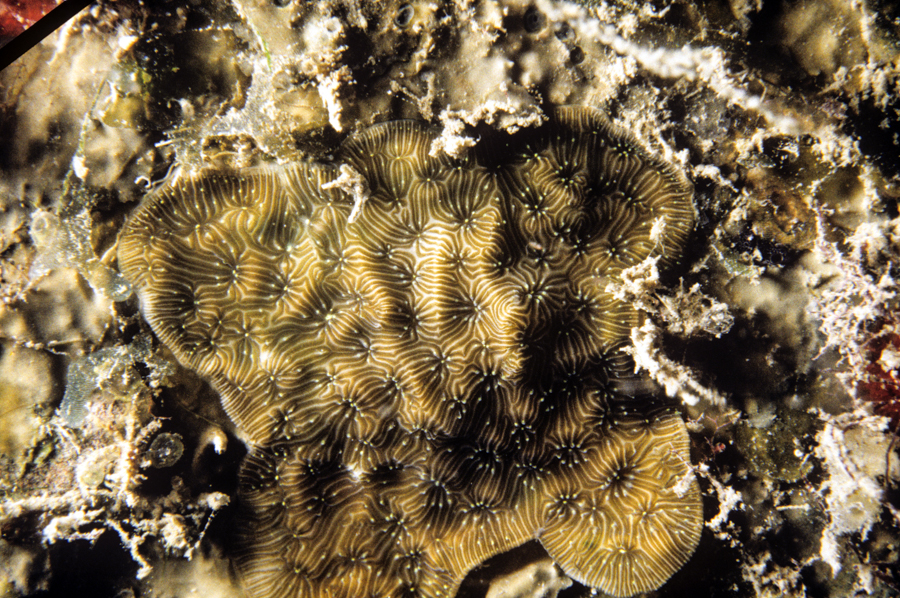
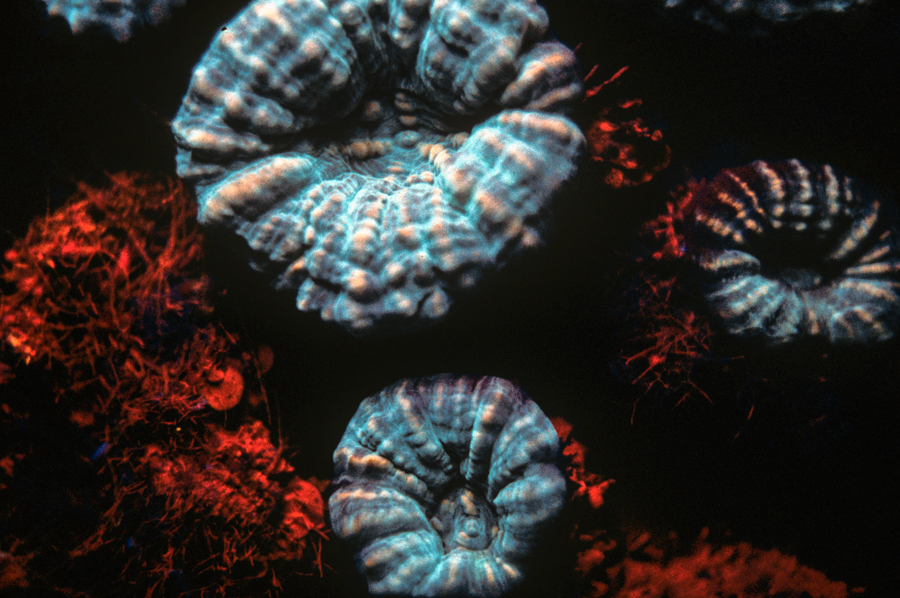
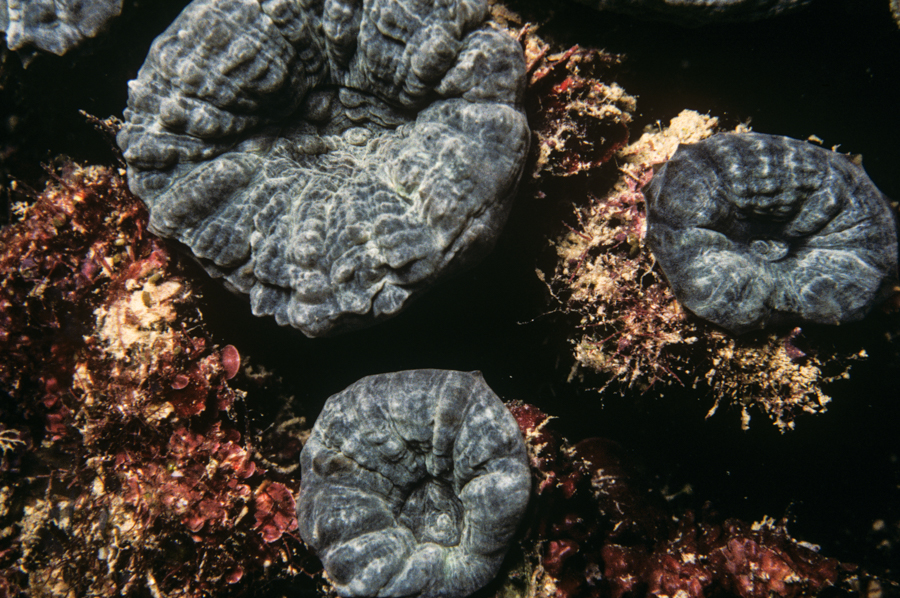
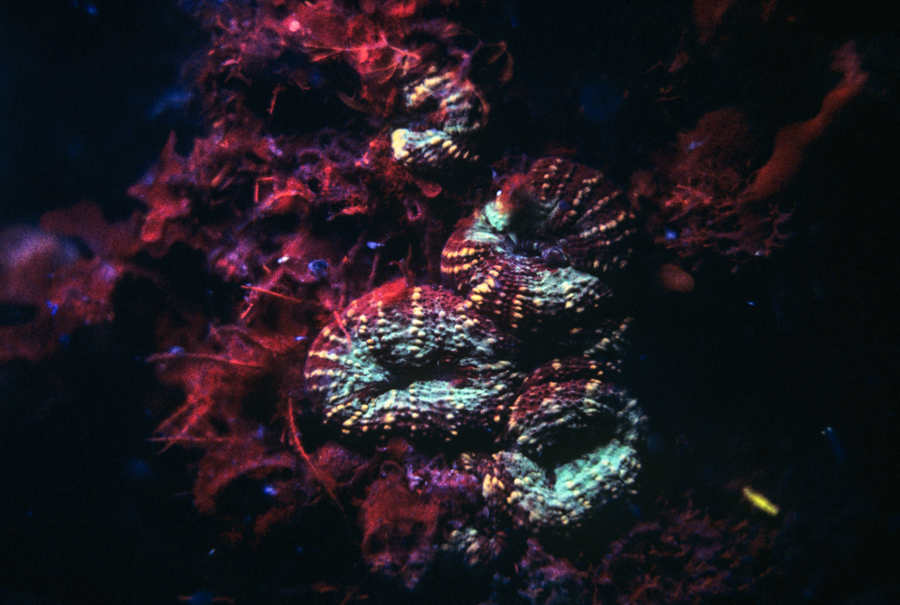
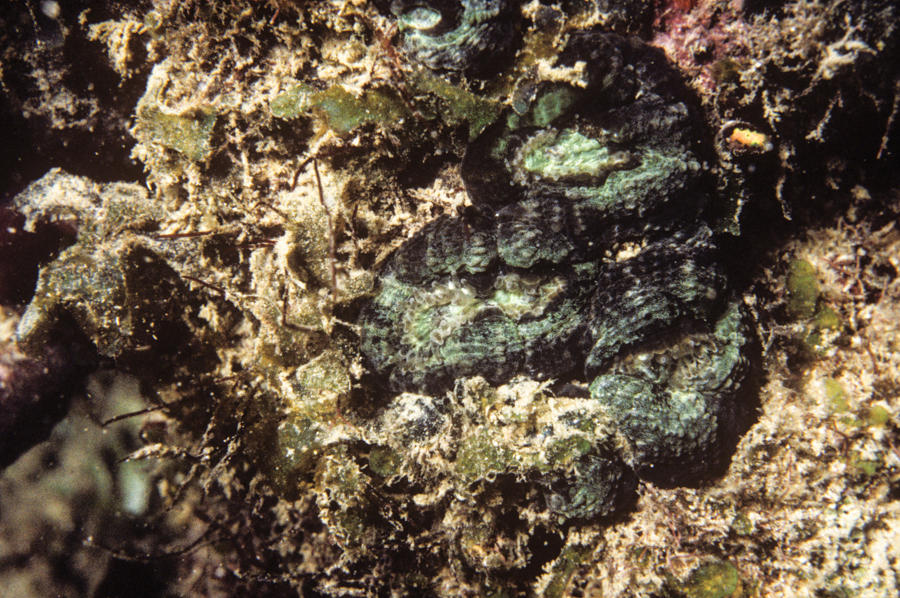
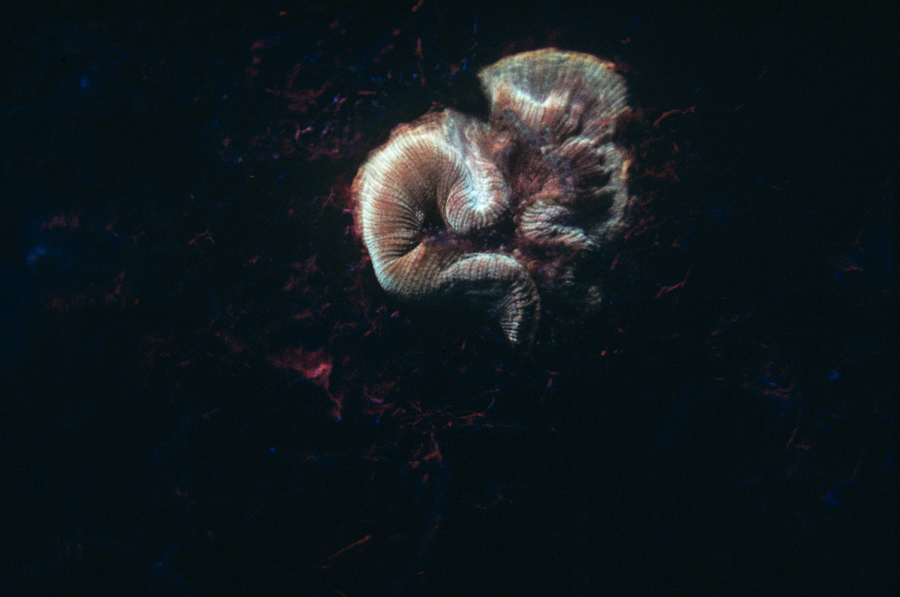
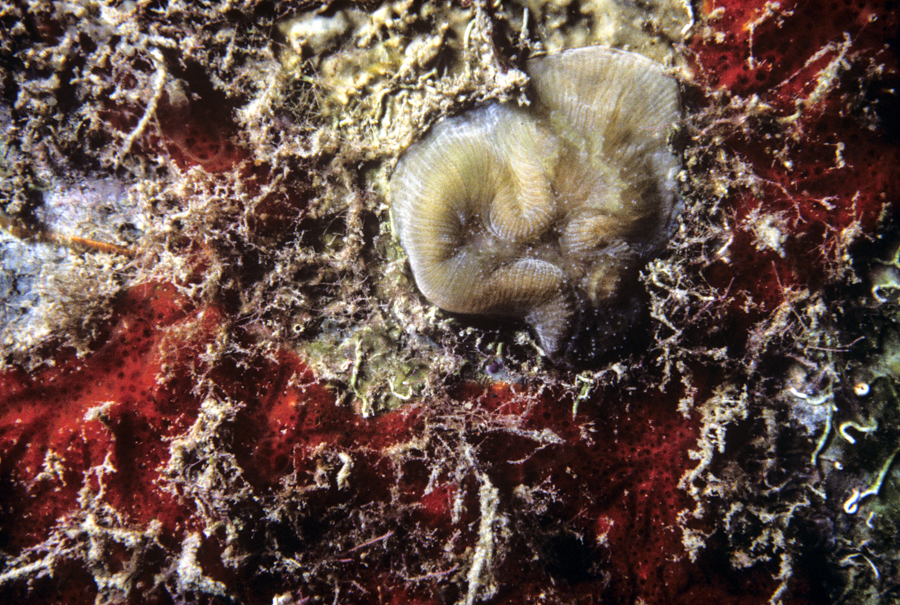
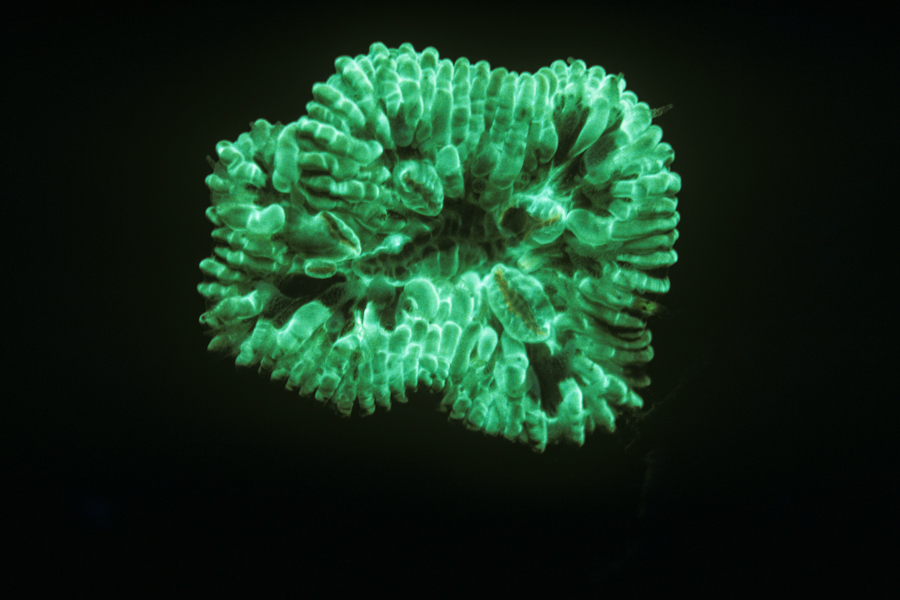
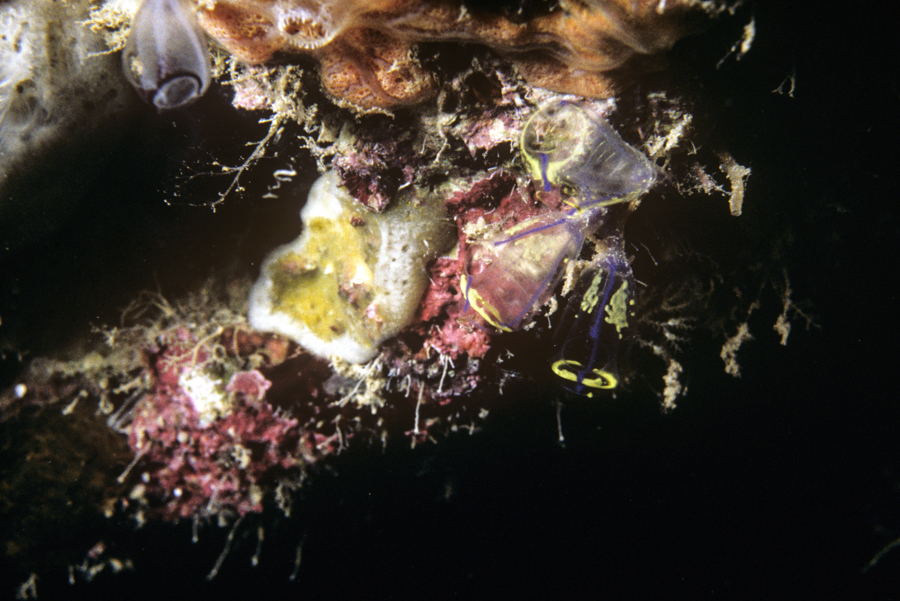
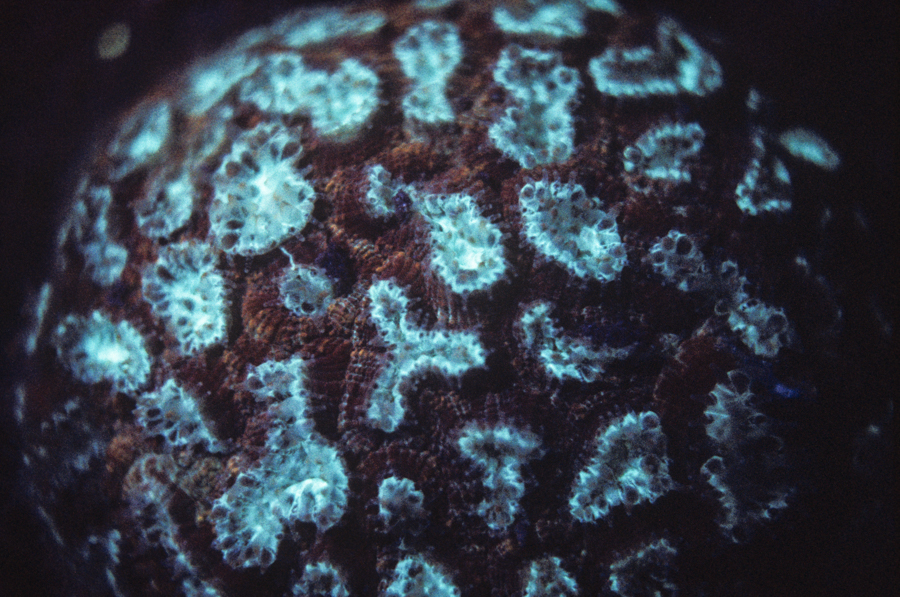
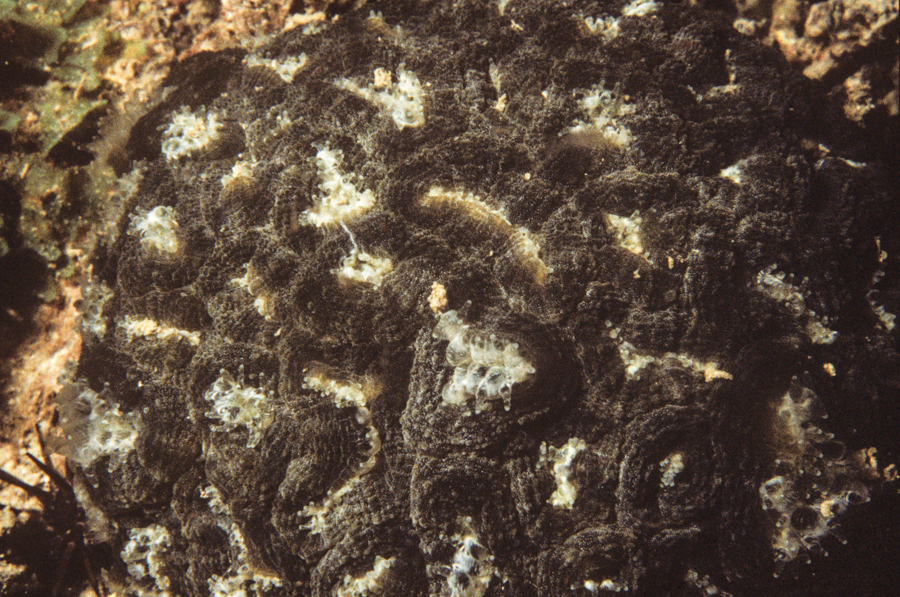
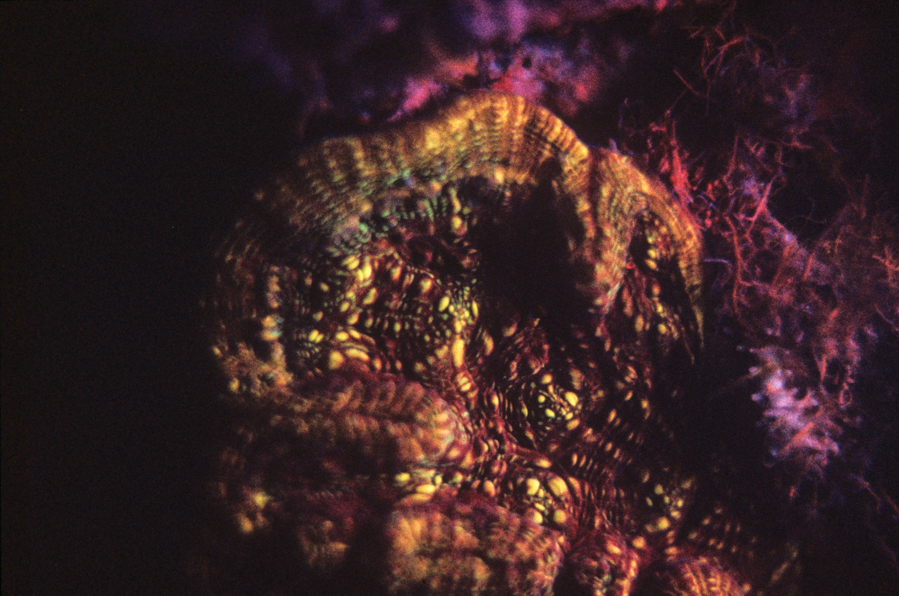
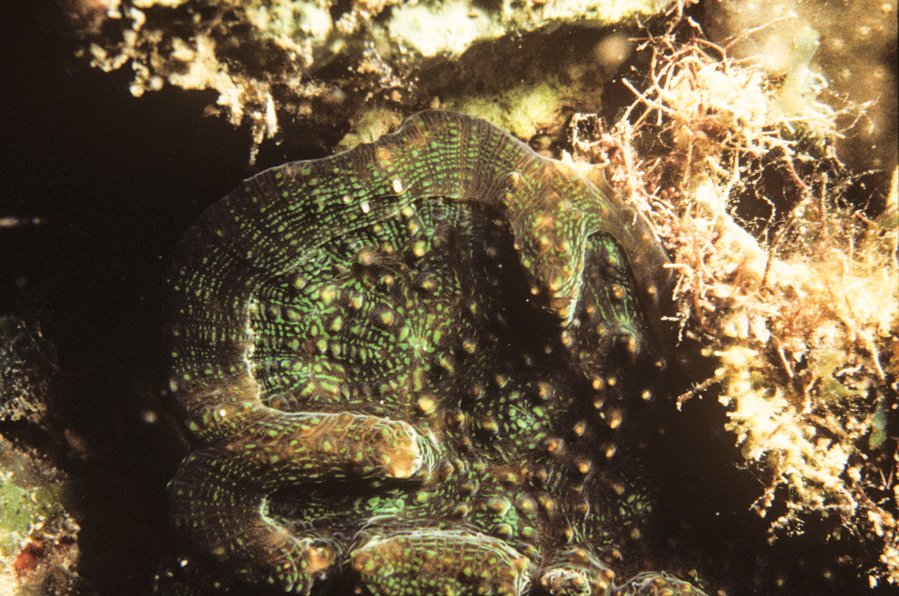
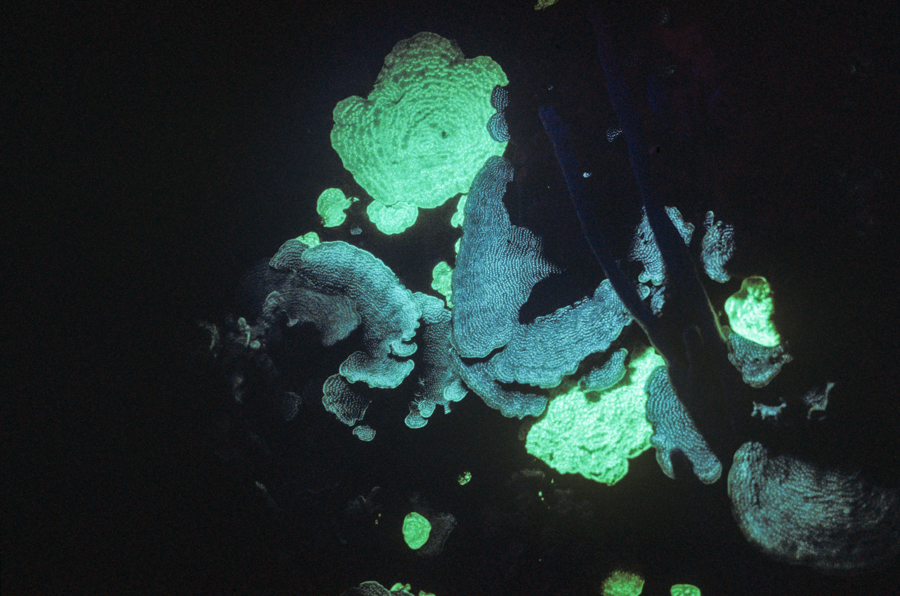
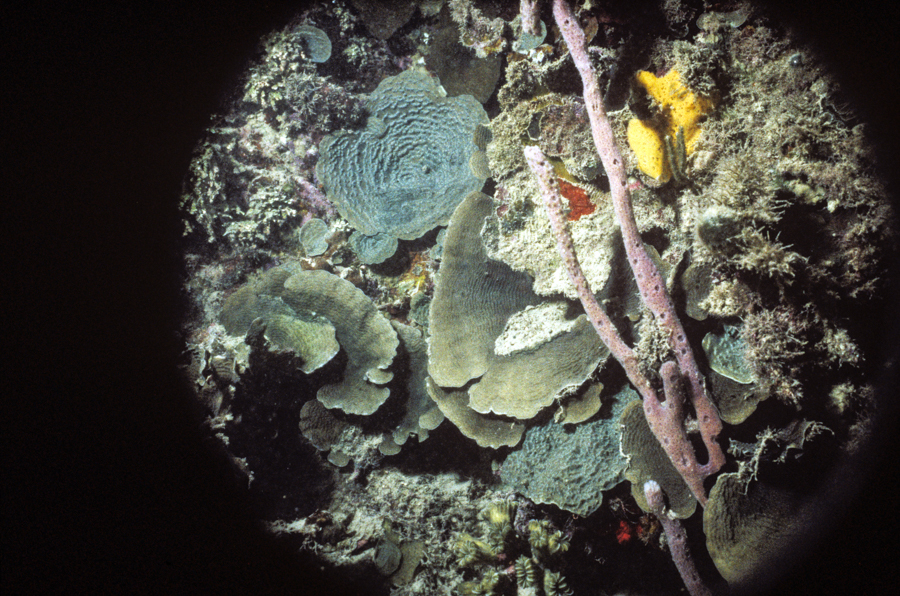
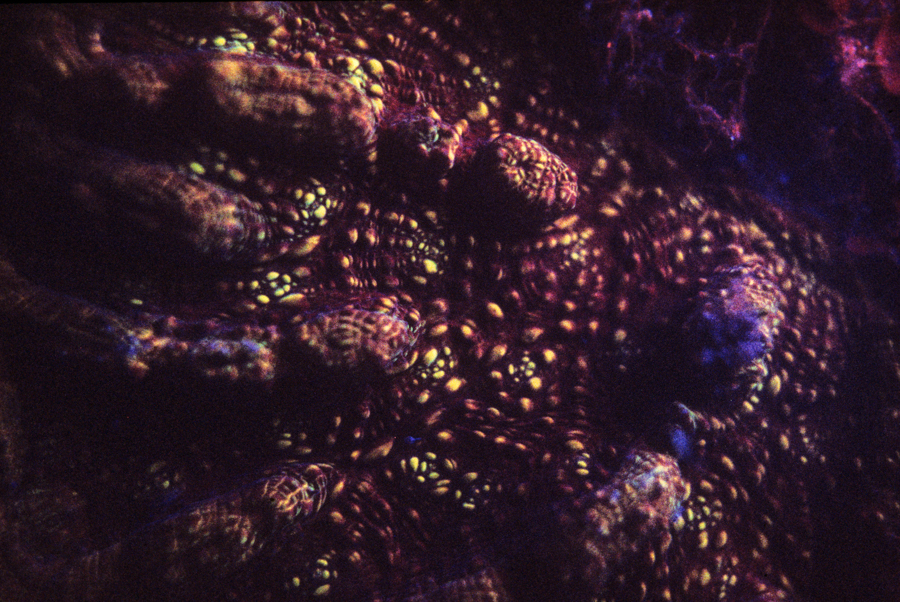
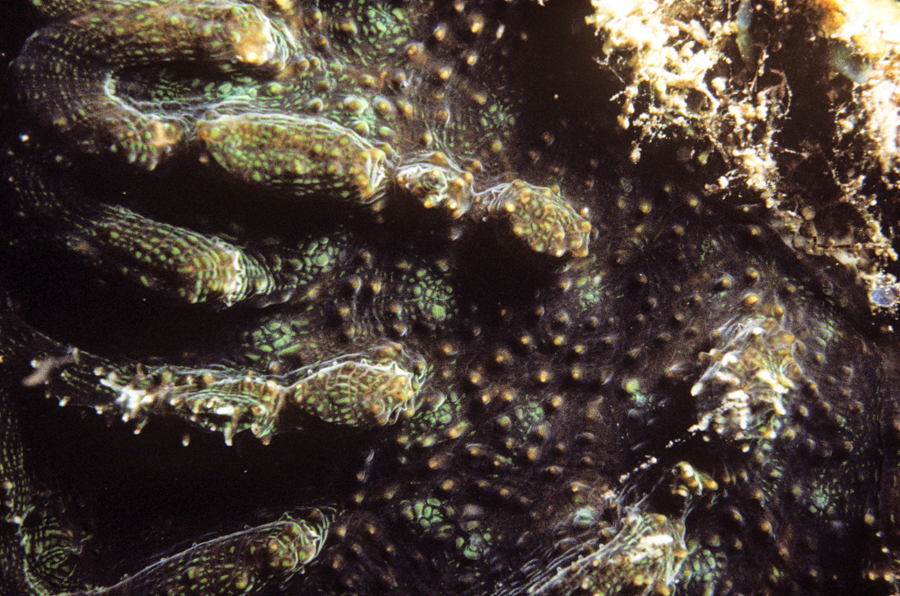
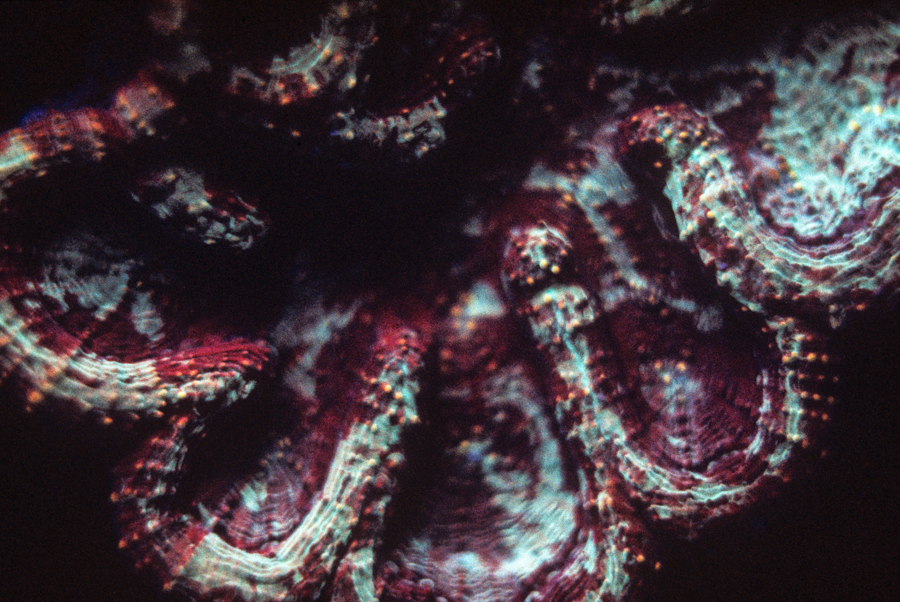
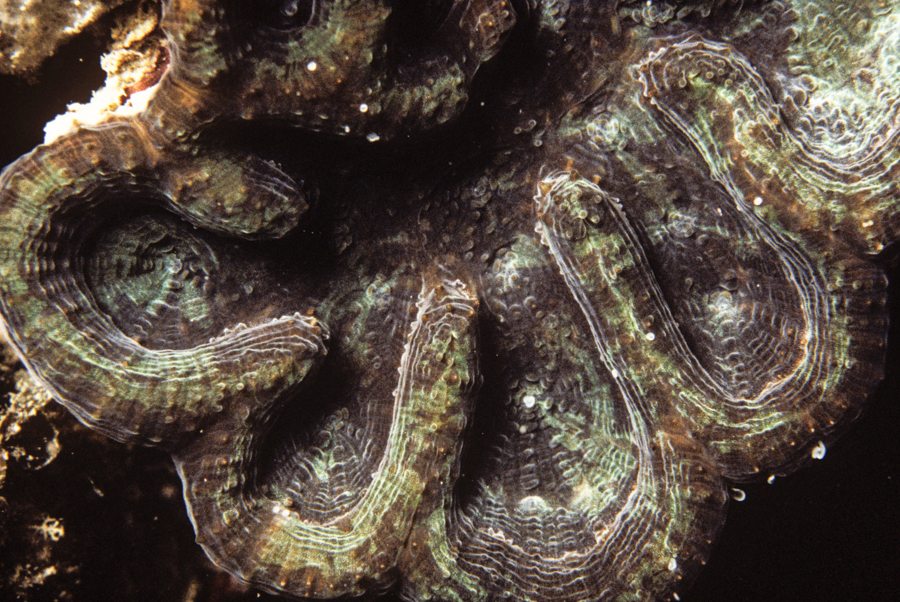
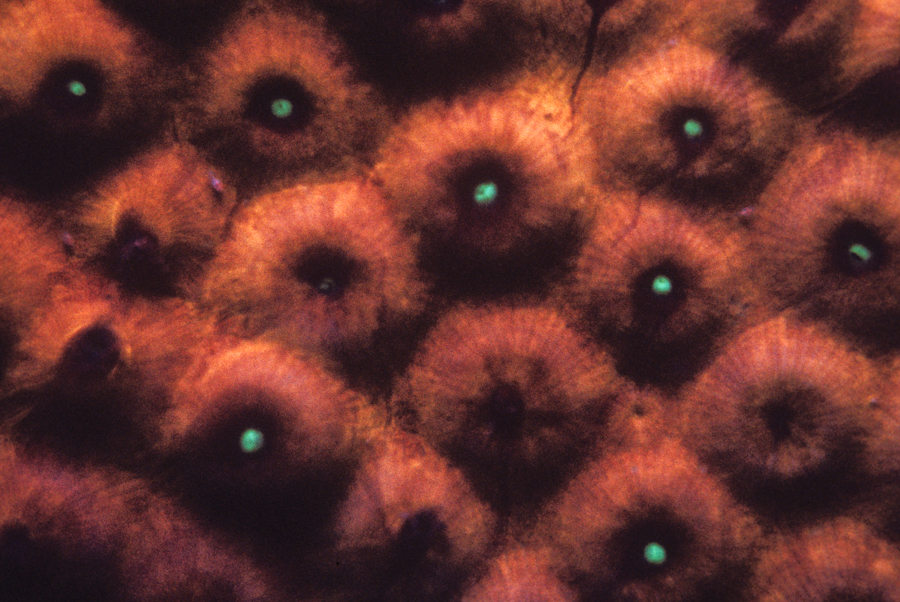
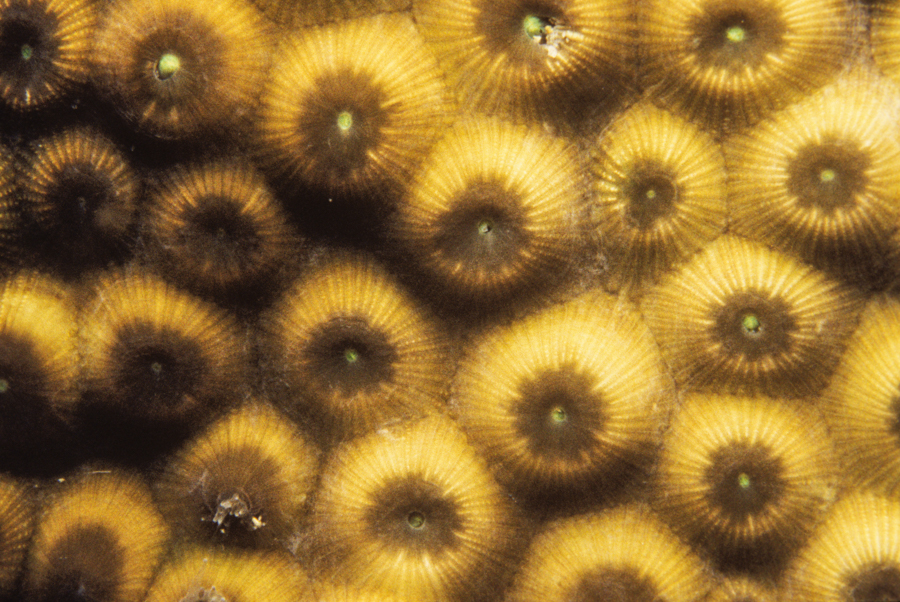
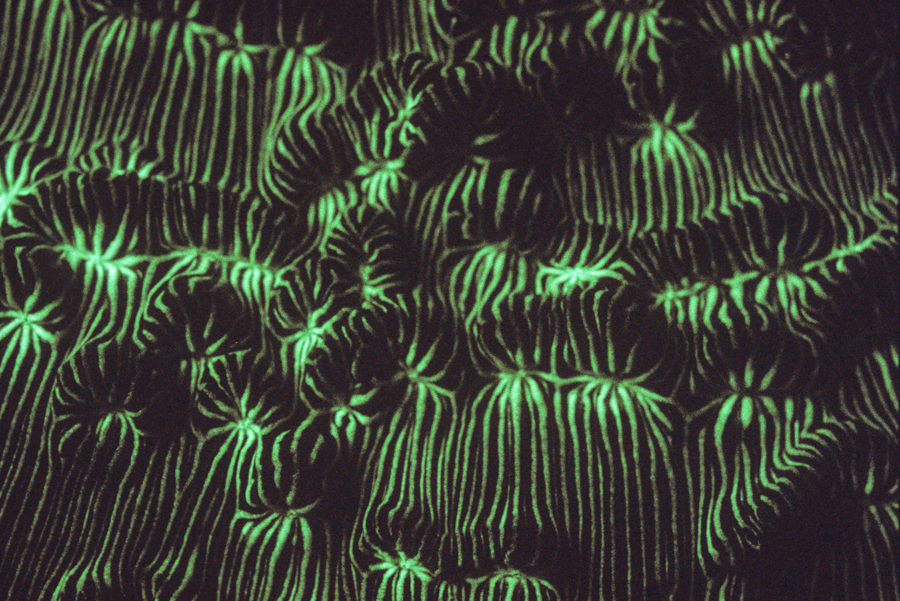
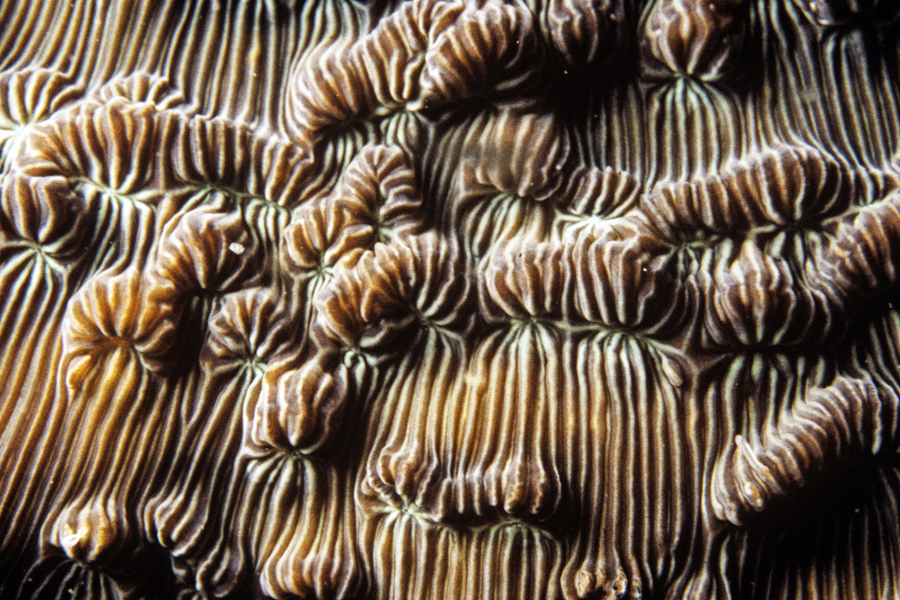
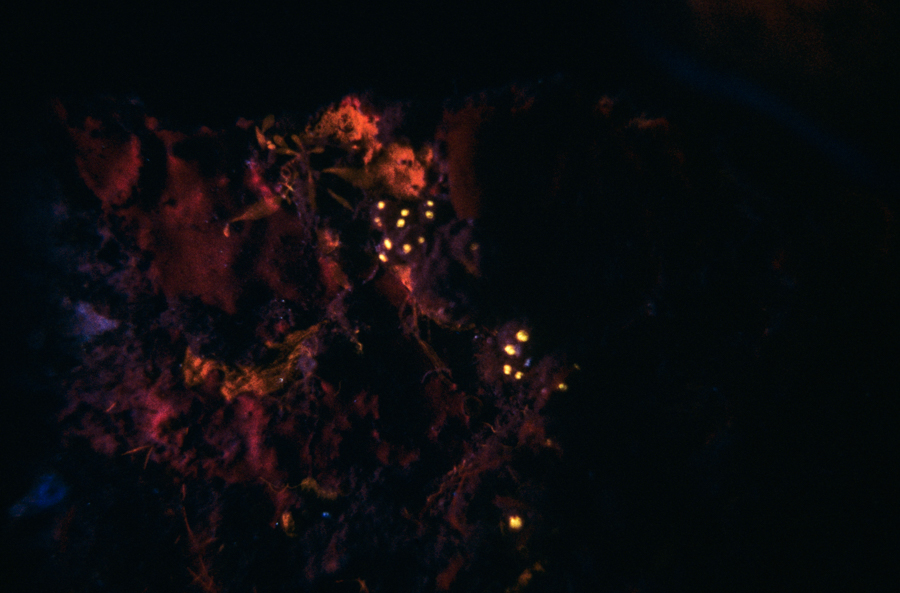
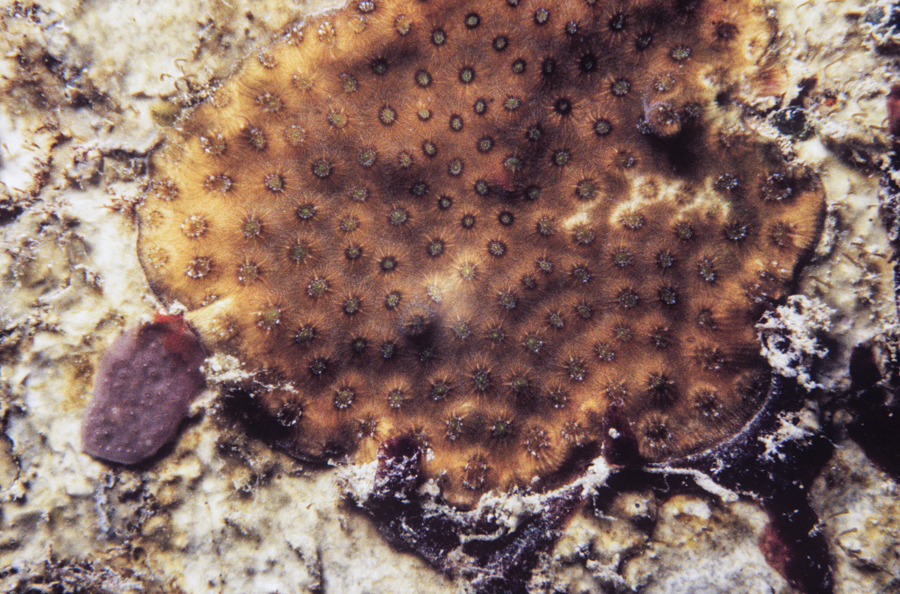
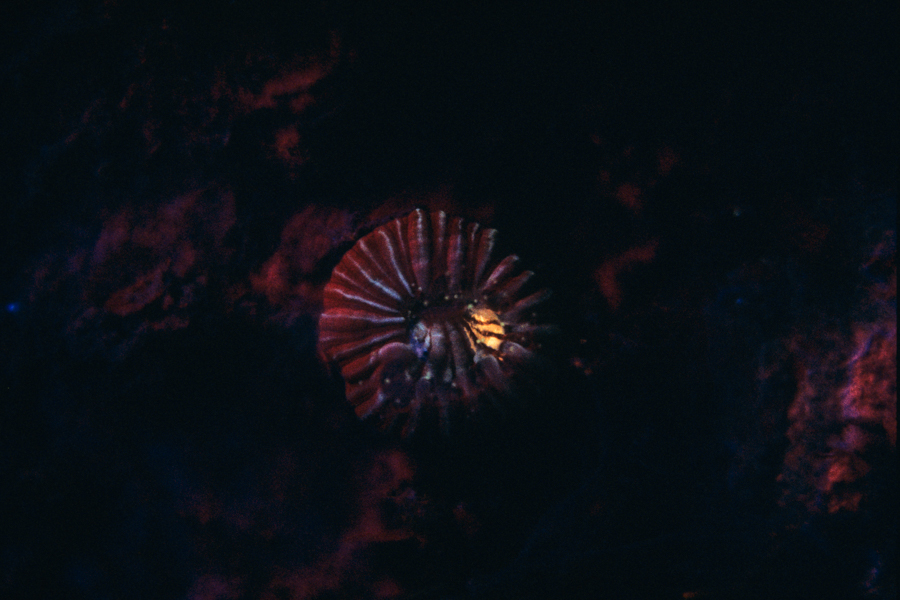
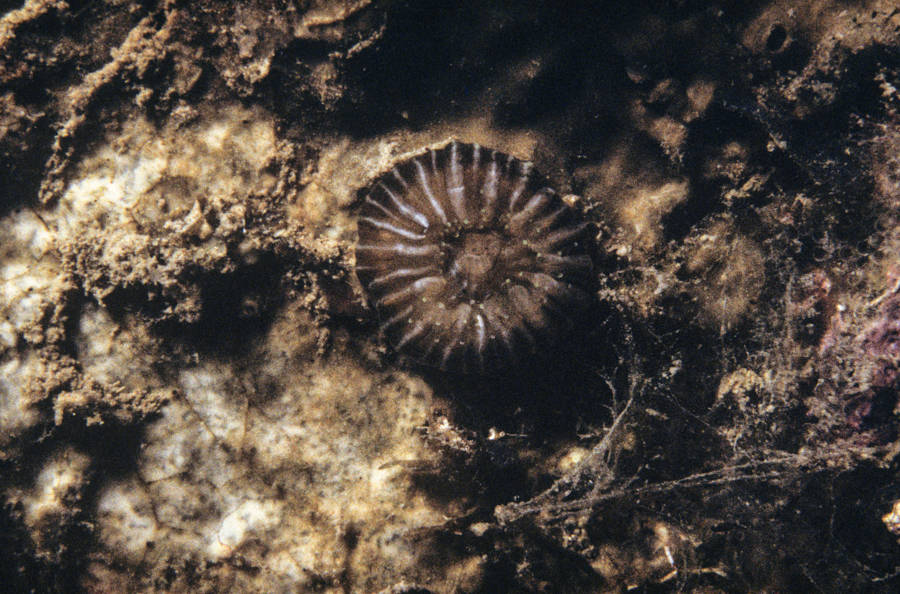
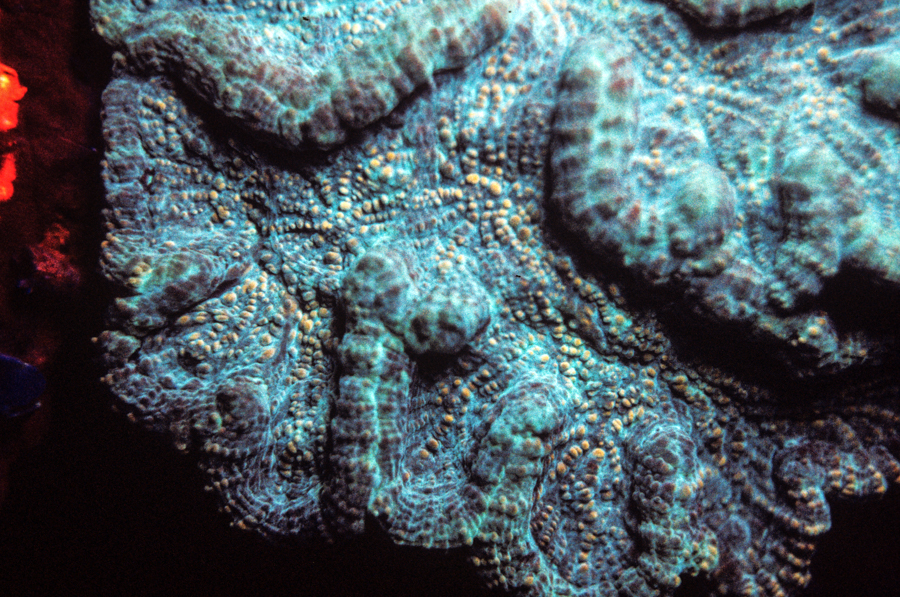

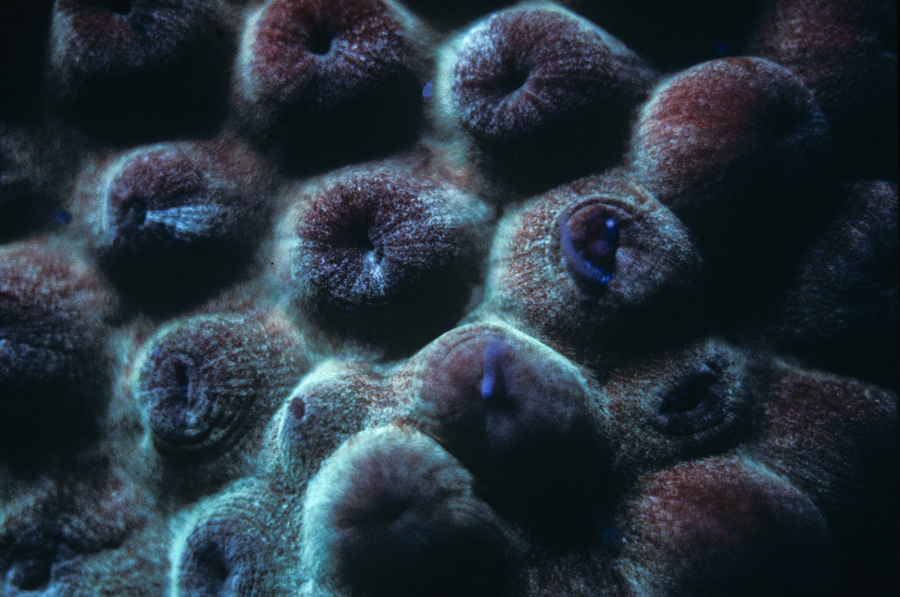
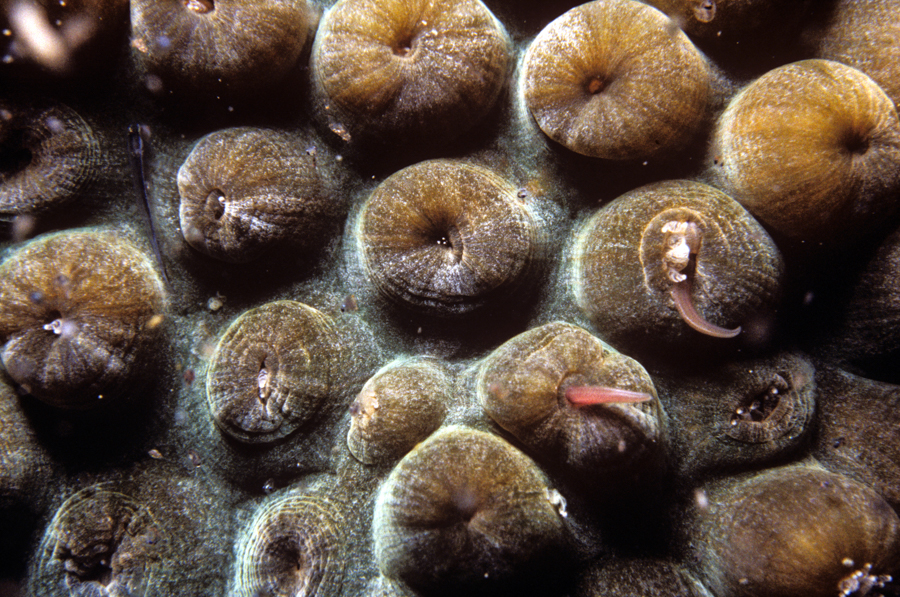
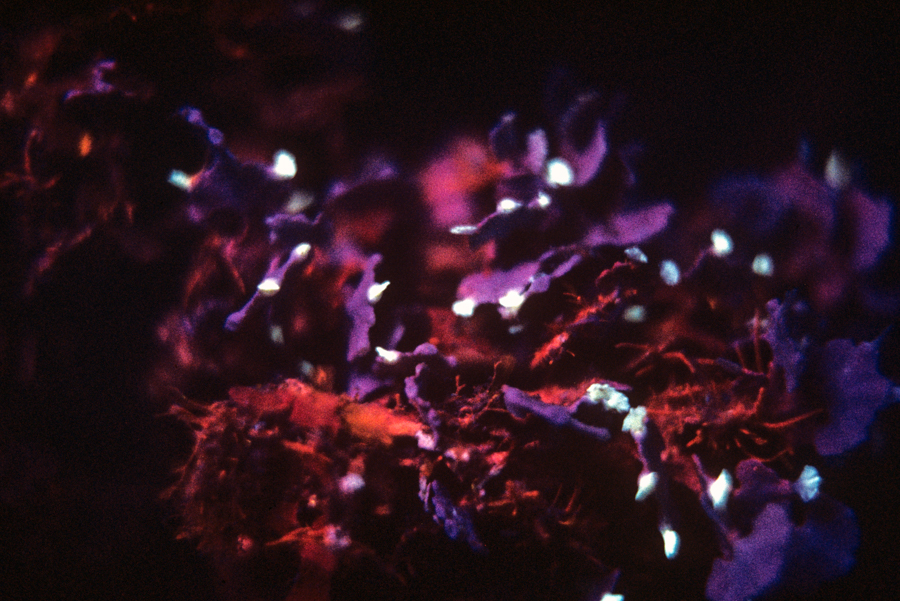
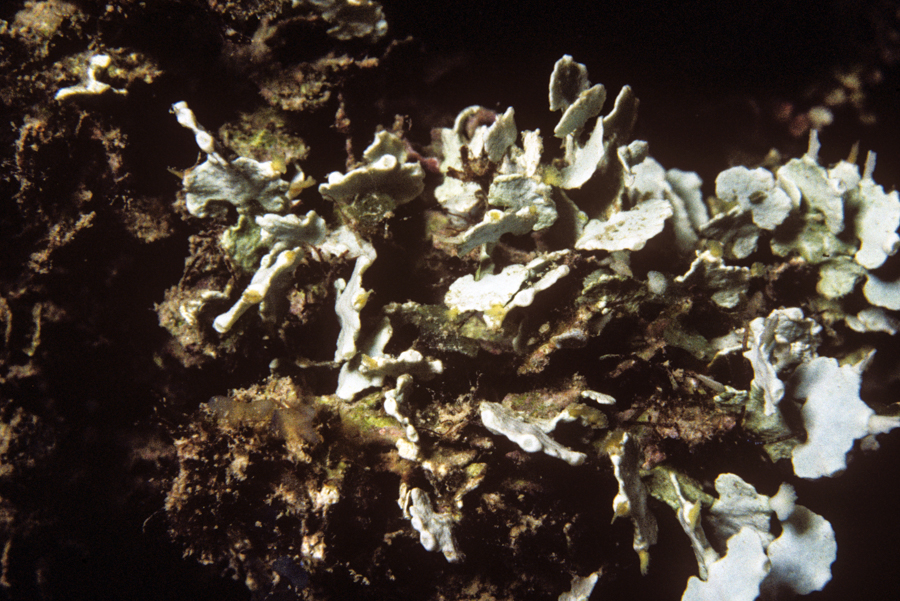
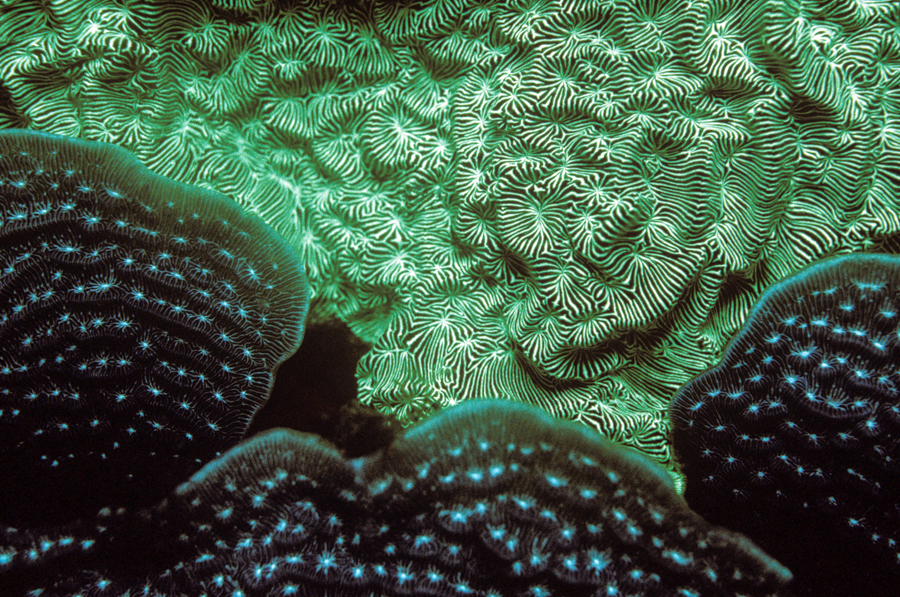
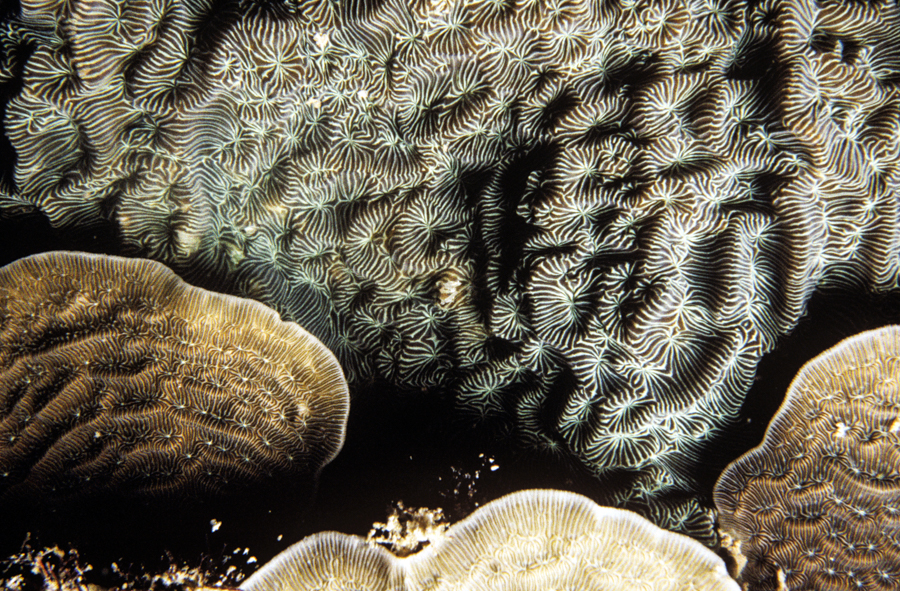
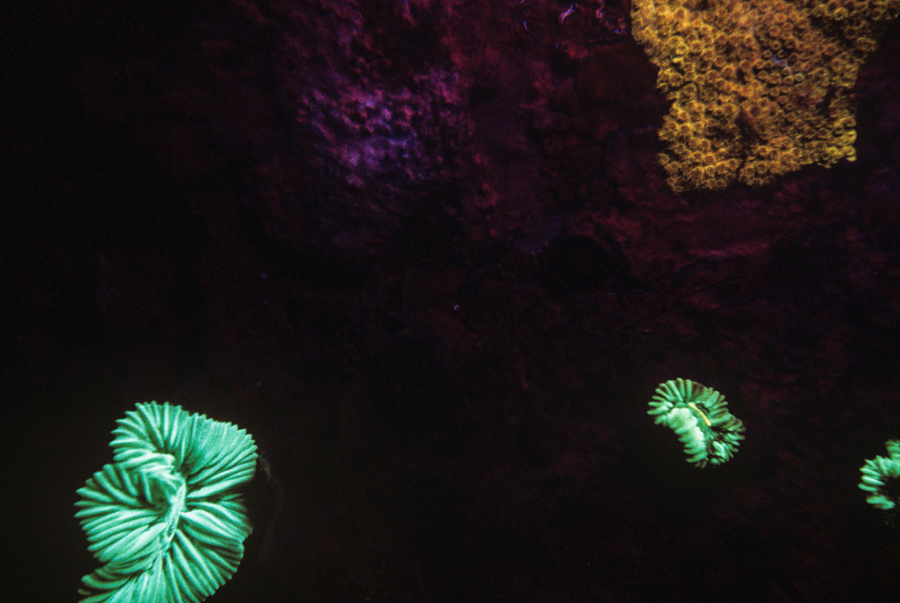
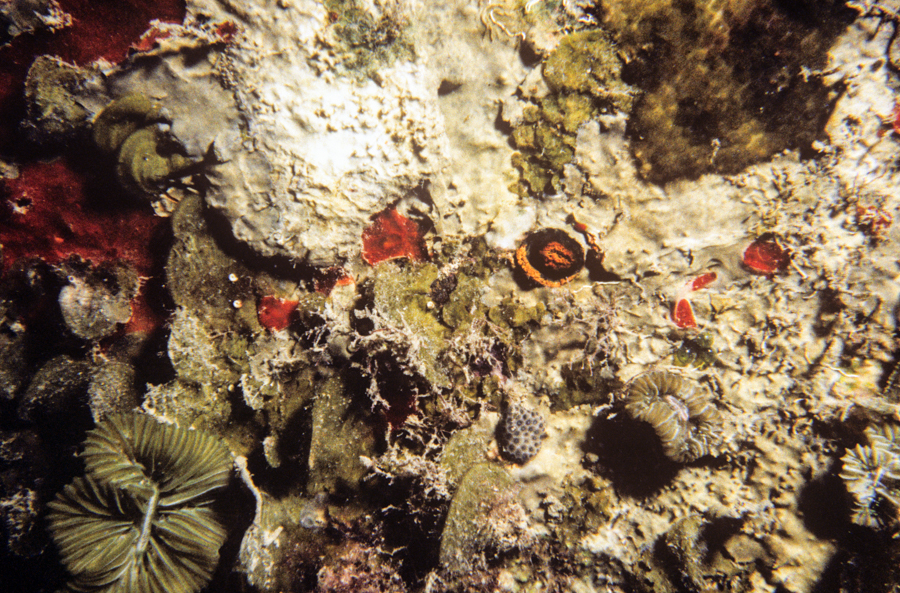
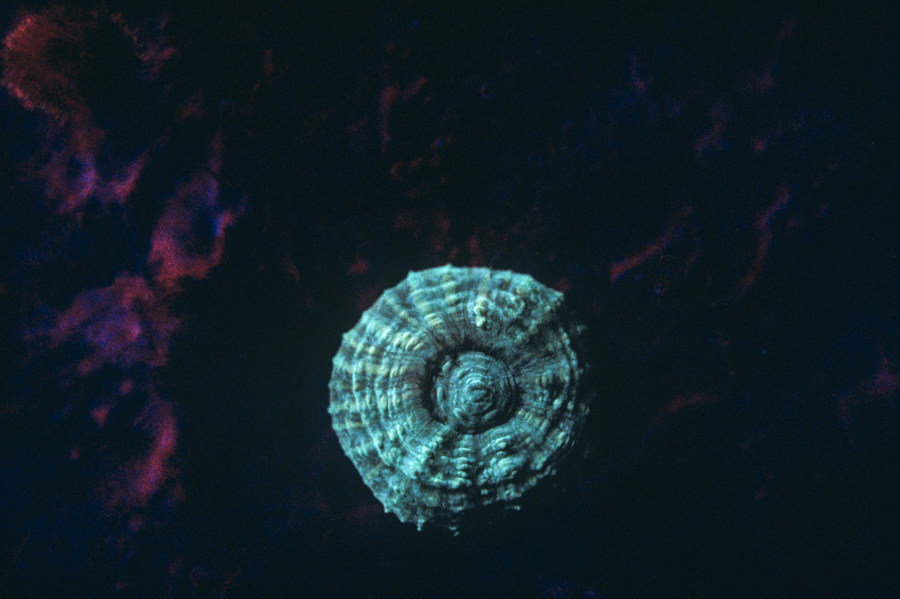
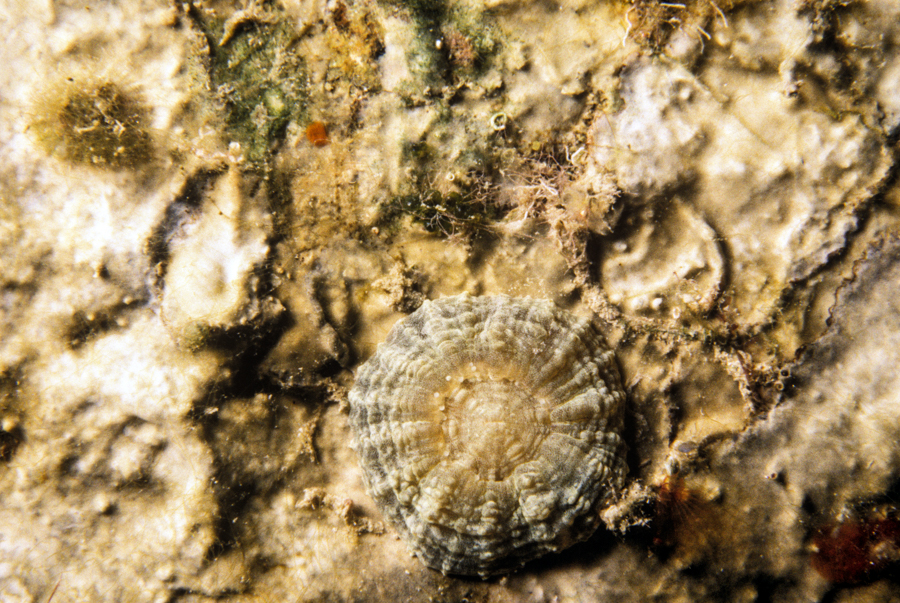
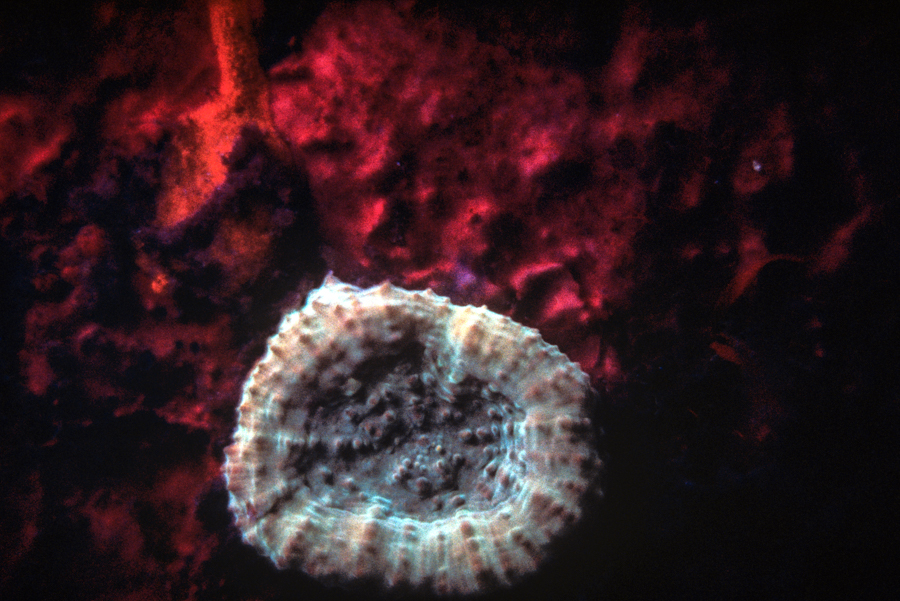
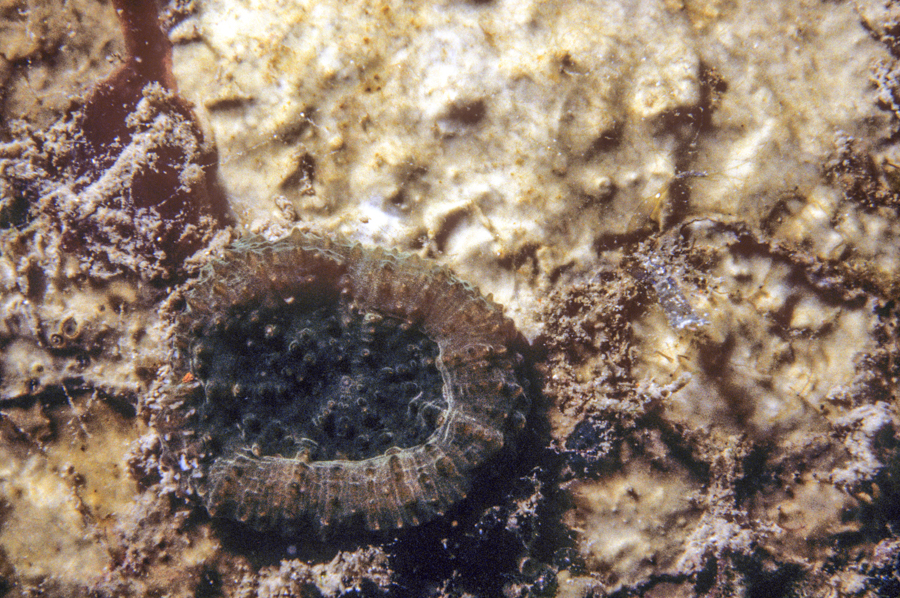
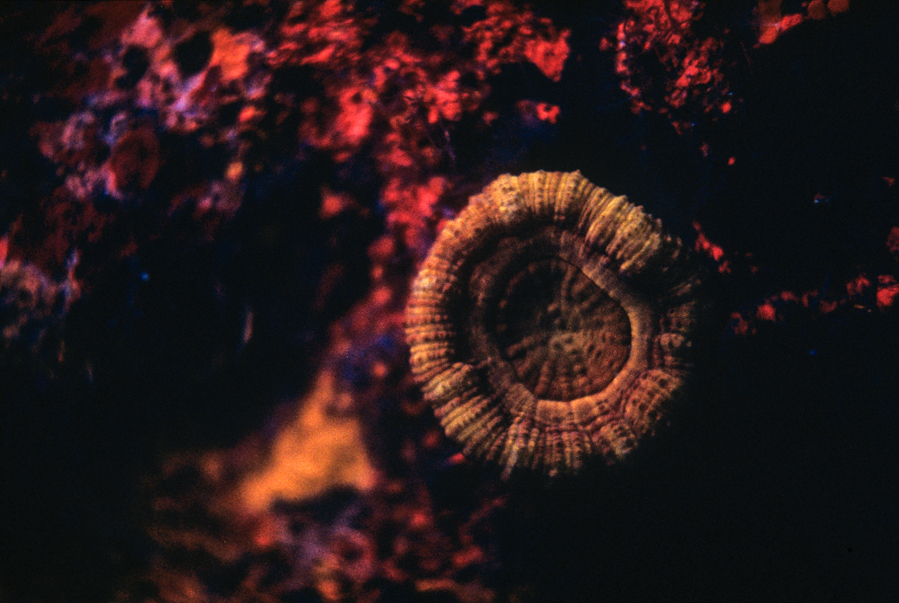

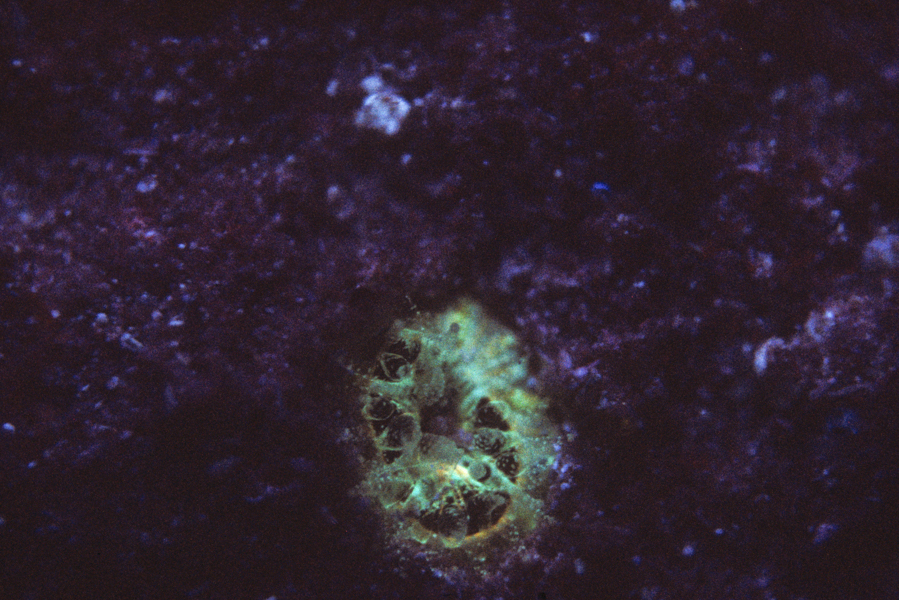
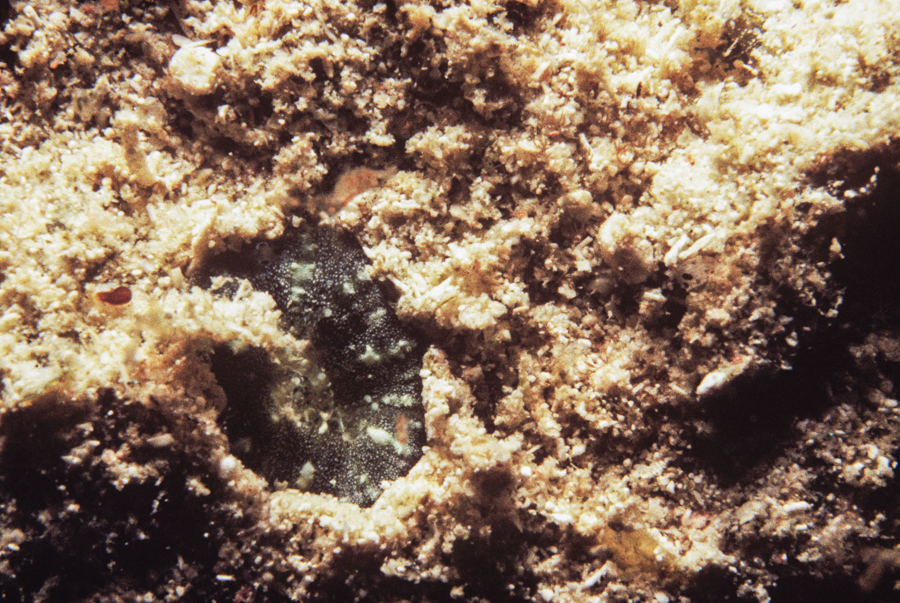

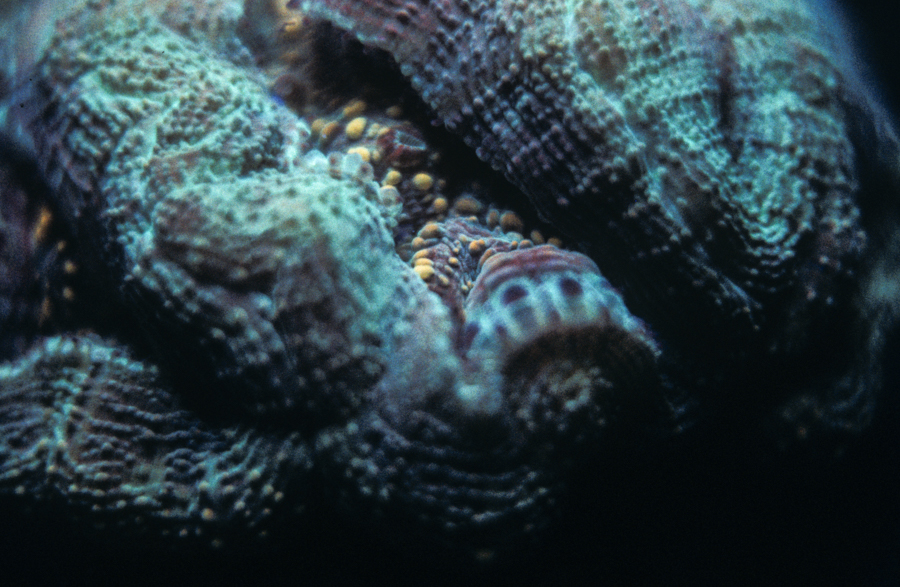
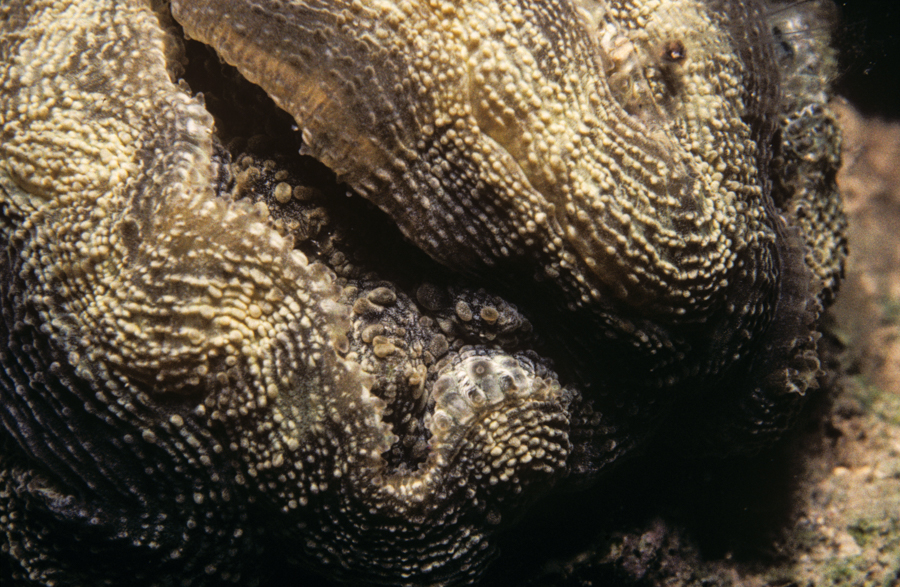
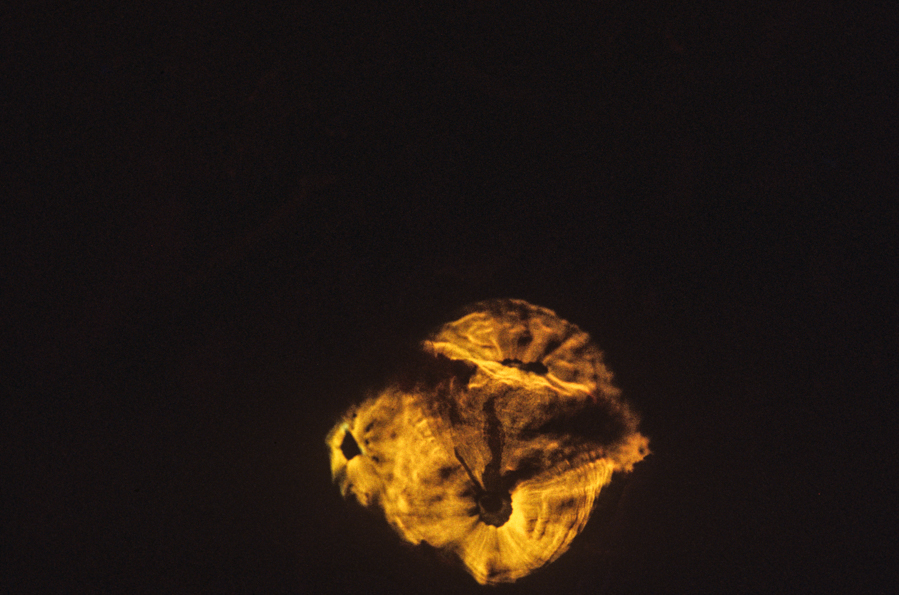
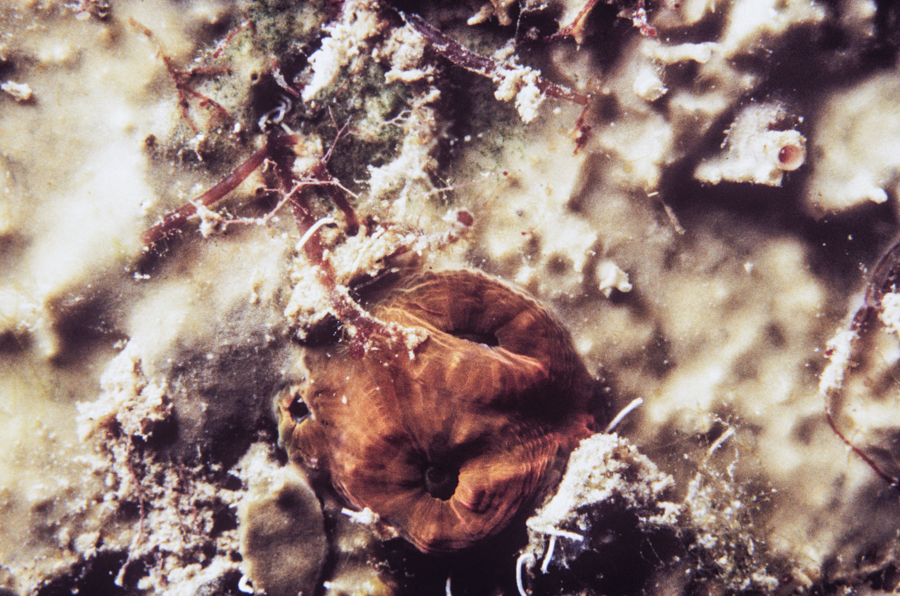
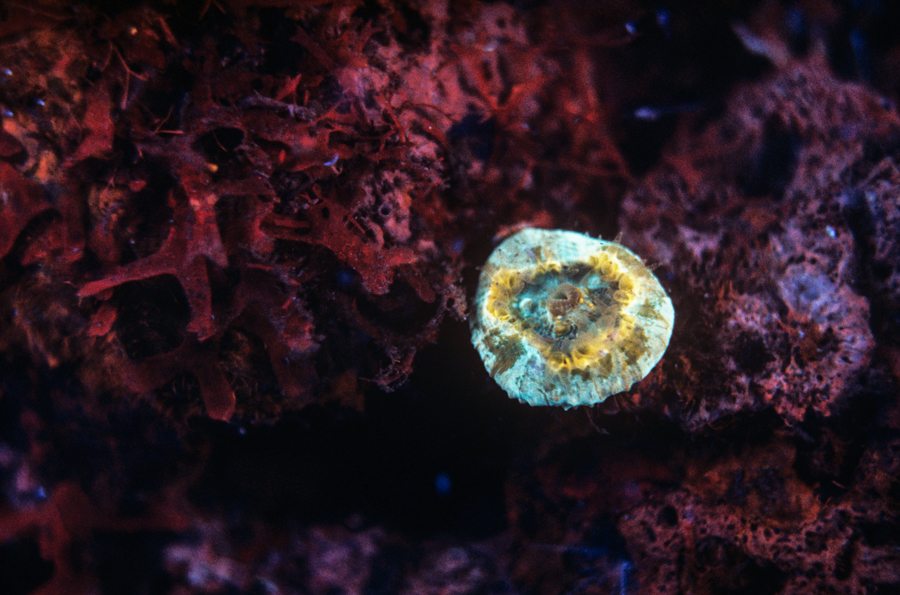
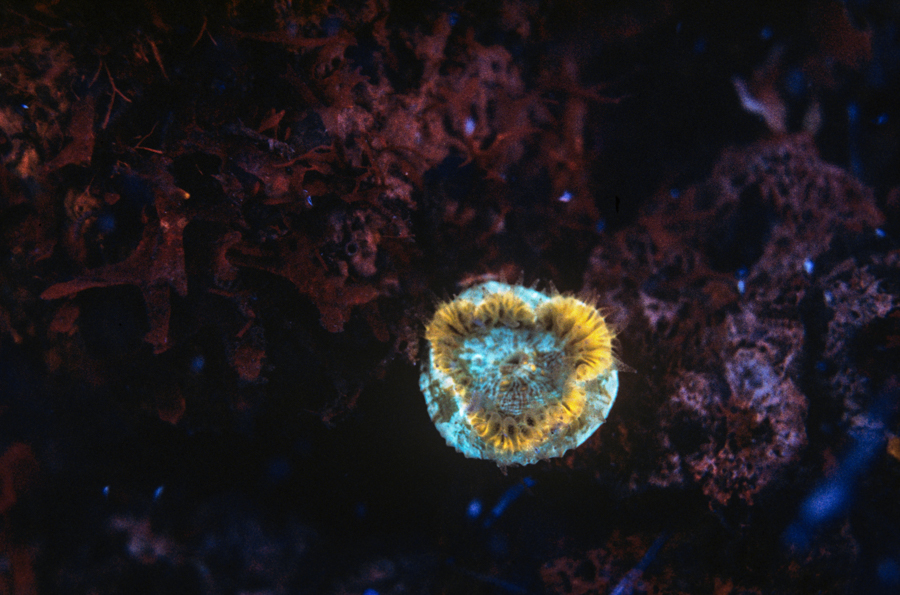
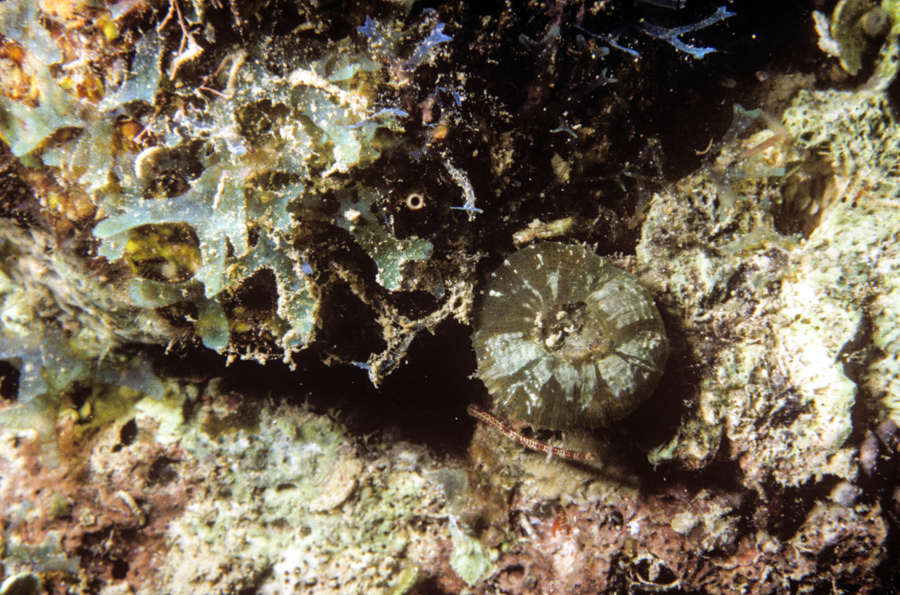
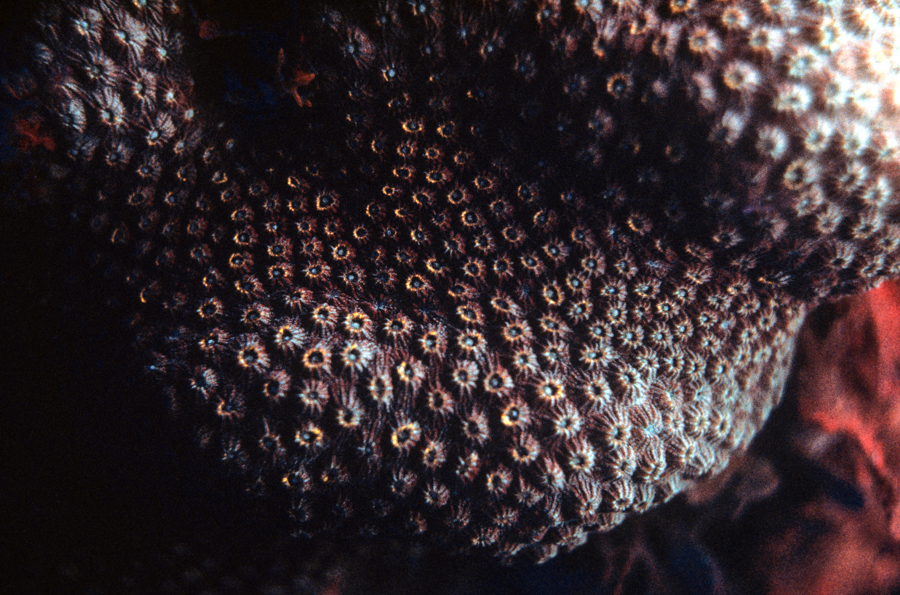
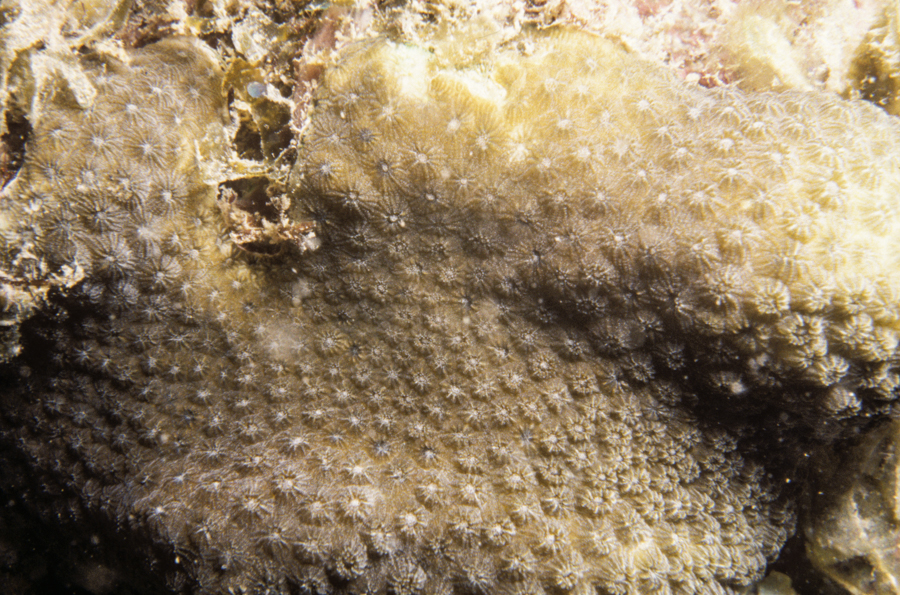
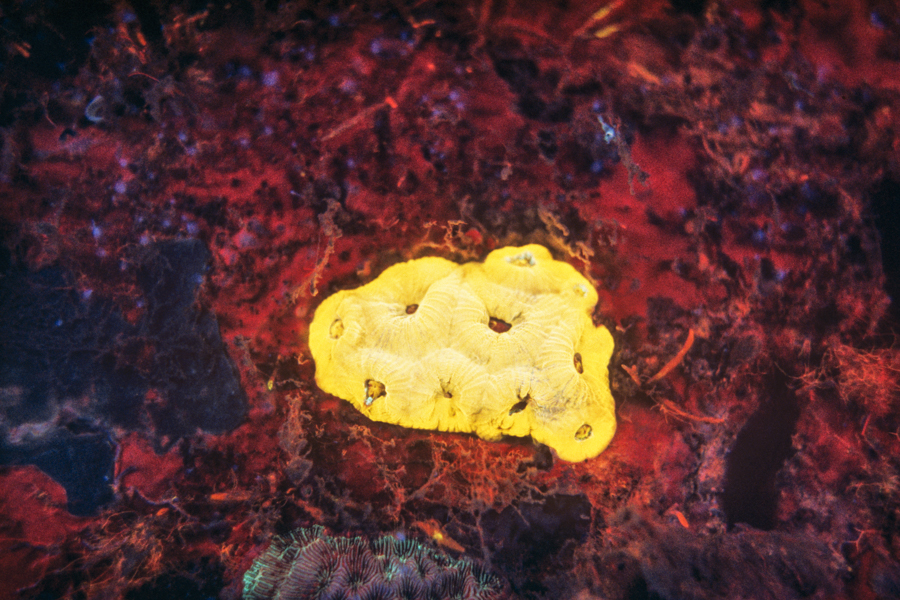
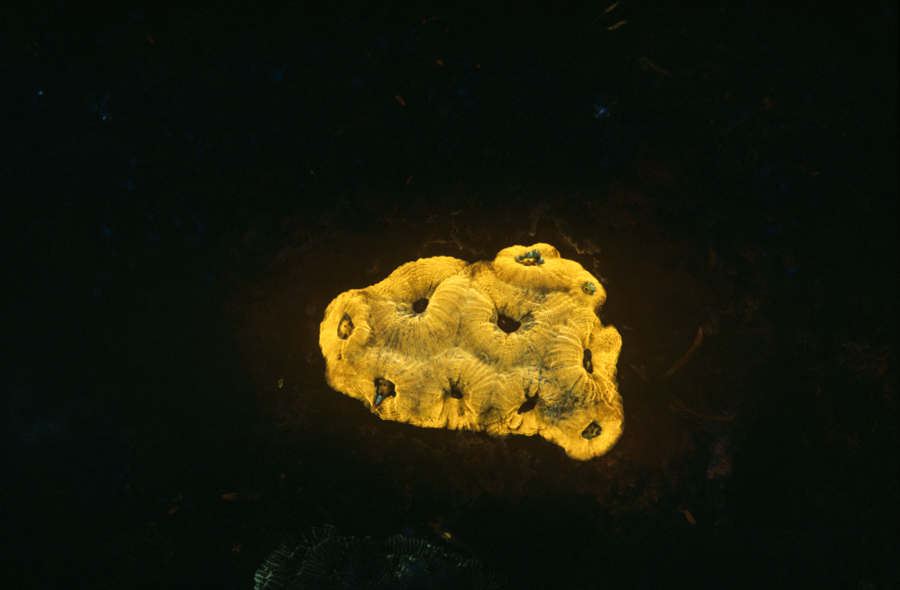
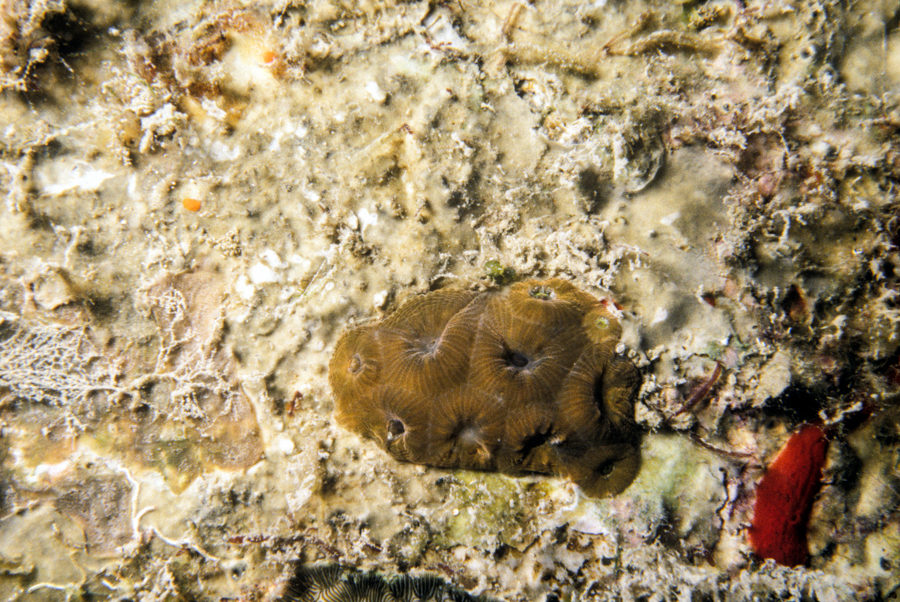

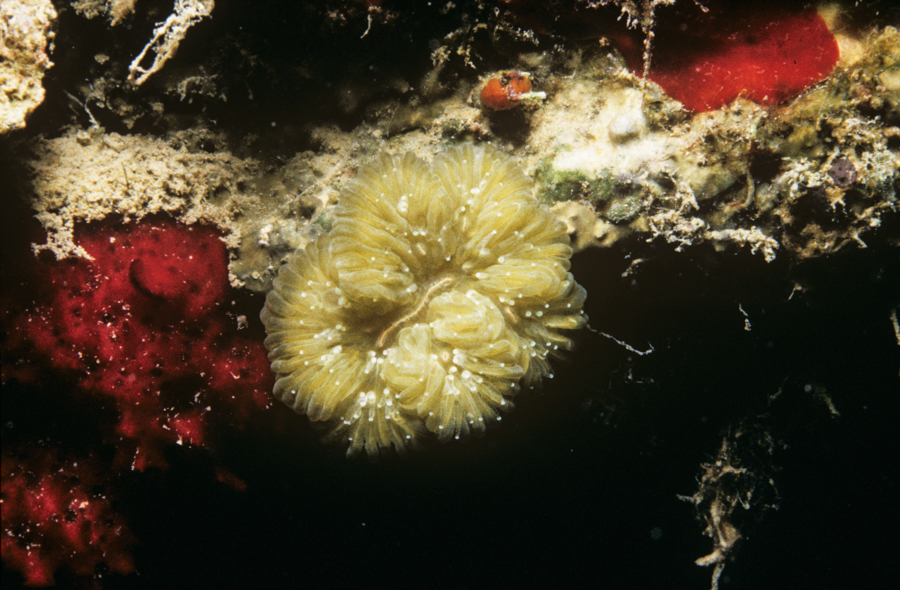
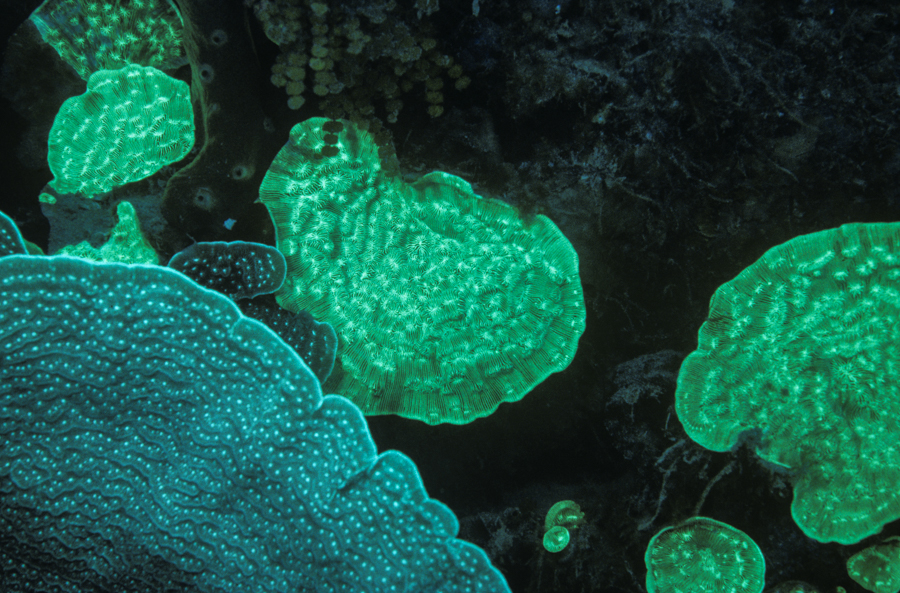
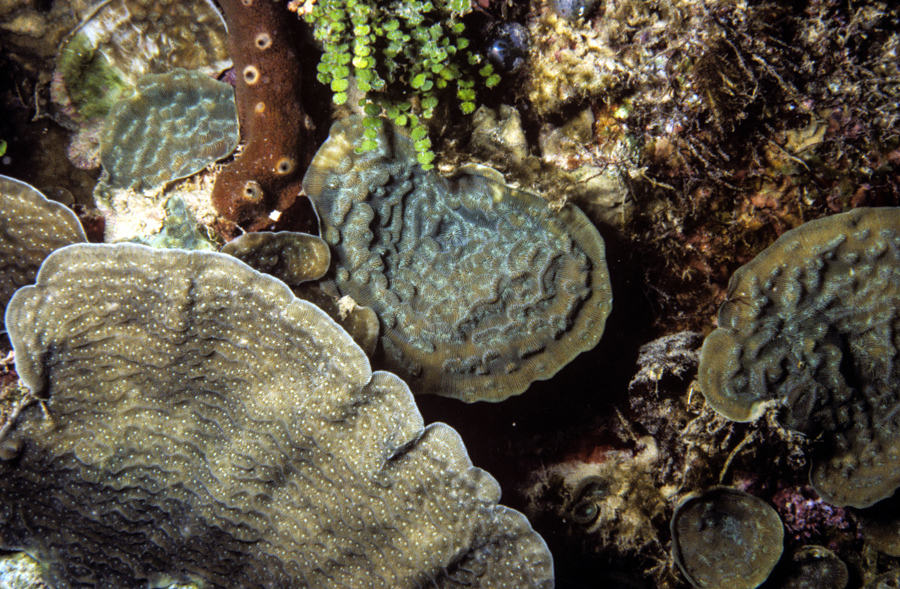
Location
I needed to find a dive facility that could offer the following things:
- Easy access to corals from shore, day or night, with no diving limits;
- Range of accessible depths;
- On-site 24 hour color film processing.
The first two were needed to be able to explore over a range of habitats without having to worry about boat schedules, etc. As for the third, this was in the days of film and I had no idea what my exposures would be. I needed near-real-time feedback, the kind we now take for granted with the displays on our digital cameras. I found a facility that met the criteria – CoCo View Resort on the south coast of Roatan, Honduras. The images here are from trips to CoCo View in 1987, 1988, and 1989.
Equipment
I wanted to be able to swim out on a dive, find fluorescing subjects, and take both fluorescence and normal white-light photographs of them, to document the phenomenal transformation in appearance. You don’t need a tremendous amount of ultraviolet light to search from close distance, but you do need a lot to produce enough fluorescence to take a hand-held photograph. When I was doing this in the mid-1980’s you could not just go buy the equipment you needed, so I made it myself, either from scratch or by modifying existing gear. I needed a steady light for searching and an electronic flash that produced a strong burst of ultraviolet to take the photographs.
SEARCHING FOR FLUORESCENCE
Home-made light source
You can see what is actually an ‘advanced’ version of my early lights in the picture below. When I started exploring I used ultraviolet light. It was not until years later, when I got into the science side of fluorescence, that I discovered that blue light was better than ultraviolet for making more things fluoresce, and more brightly. The light includes:
- Small (4 in/10cm) ultraviolet tube lamp;
- Similar sized white light fluorescent tube;
- Small halogen light taken out of a dive light.
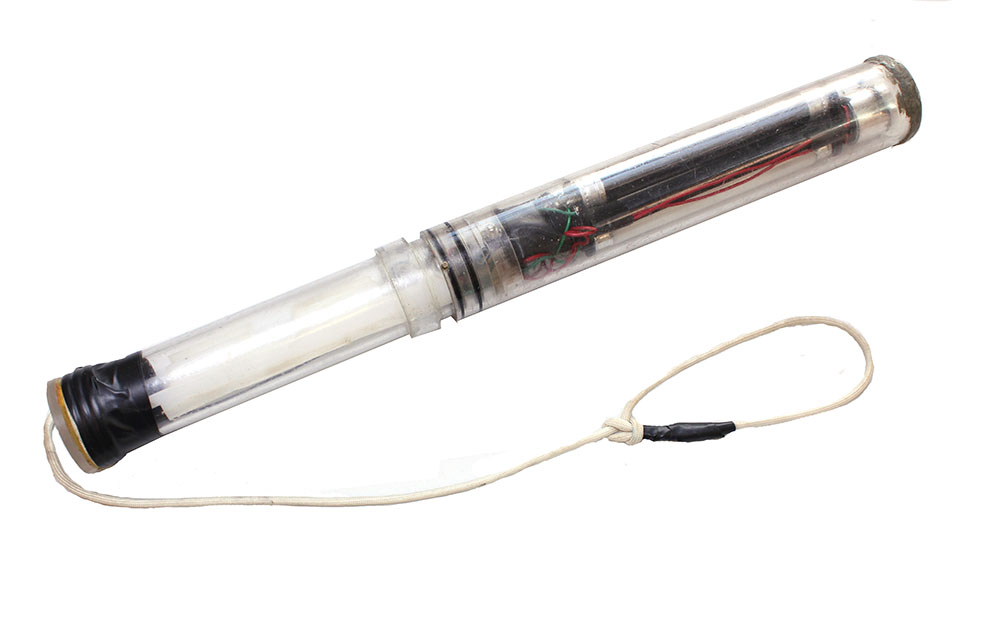
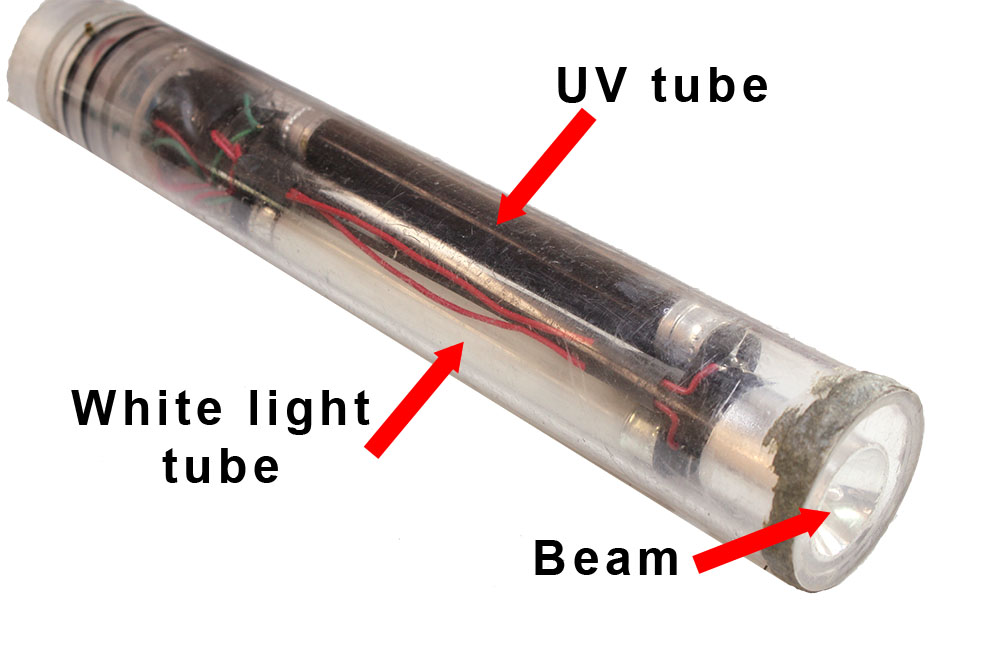
By rotating the handle one way I could energize the ultraviolet light. I would swim around in the dark until I found something glowing under the lamp. It is often just a part of a subject that fluoresces, so to see what you are looking at you want a white light handy. There was a mercury switch (a no-no these days) inside the light, so all I had to do was rotate my hand and the UV tube would turn off and the white tube would turn on. That white light was good for general close-in viewing but it did not throw light very far. By rotating the light handle in the other direction the bulb in the front of the tube would be energized. So this was an all-in-one dive light, ultraviolet searching light, and white viewing light.
PHOTOGRAPHY
Electronic flash
The small ultraviolet tube in the search lamp was far too weak to use as a light source for photography. I purchased what was at that time one of the most powerful underwater electronic flash units available, the Ikelite 150D. Underwater flashes are commonly made of polycarbonate, and it pretty common that these plastics purposely include ultraviolet absorbers to protect against degradation. This was exactly what I did not want, so I took the brand new flash into a machine shop, milled the front dome off the front of the flash body, and glued on a quartz disk.
For fluorescence photography I added a filter that transmits ultraviolet light and blocks the visible. But since I wanted to also take white-light photographs of the same subjects, I mounted the filter so that it was hinged relative to the strobe body, with latches that would hold it in place either in front of or away from the front of the flash.
Filters and exposure settings
White-light and fluorescence photography have VERY different light needs. For fluorescence you want a very strong light source just to produce a moderate response in the subject, while with white-light work, it is easy to have more than enough light. And since I was shooting on film I did not have the luxury of being able to change my ISO between shots as we do now with digital cameras.
For the fluorescence work I used a good UV-blocking, the Tiffen Haze 2A. The common ‘ultraviolet filter’ that many photographers buy either for sky contrast enhancement or just to protect their lens does not actually do a good job of blocking a very intense ultraviolet light source. And if you don’t block it well, the ultraviolet will produce a purple/magenta cast over the whole image. Good fluorescence exposures were achieved at about f2.8 to f4 on ISO 800 or 1600 film, with the strobe positioned as close as possible to the subject.
The Haze 2A is essentially clear, so I could leave it in place for the white-light shots. But the strobe did not have a variable output, so there would be WAY too much light for the white-light shots. So I added an ND4 filter just to knock down the intensity. White-light exposures were at about f16 to f22, and I would hold the flash further away from the subject to further reduce the intensity.
It was easy to forget to change a setting or add/remove a filter when switching between photo types, so I had to pay attention to avoid wasting precious shots.
The ‘R’ in the filenames below stands for Roatan. The V or F at the end of the filename stands for ‘visible’ or ‘fluorescence’.
R0001 – R0020 – March, 1987; Nikonos III camera; 35mm lens with Ikelite 1:2 extension tube; Ikelite 150D flash; Ektachrome 200
R0039 – R0088 – January 1988; Nikonos II, III and V cameras; Ikelite, Oceanic, and AquaCraft 1:2 and 1:3 extension tubes; Ikelite 150D flash; Fujichrome 800/1600
R0089 – R00984 – January 1989; Nikonos III with 35mm lens and AquaCraft 1:3 extension tube; Nikon F2A in Ikelite housing, 55mm Micro Nikkor; 2x Ikelite 225 flash; Fujichrome 800
This image (R0044F, above) shows a diver in the act of taking a fluorescence photograph, from the 1988 trip. Follow this link for a description of how this photo was made.
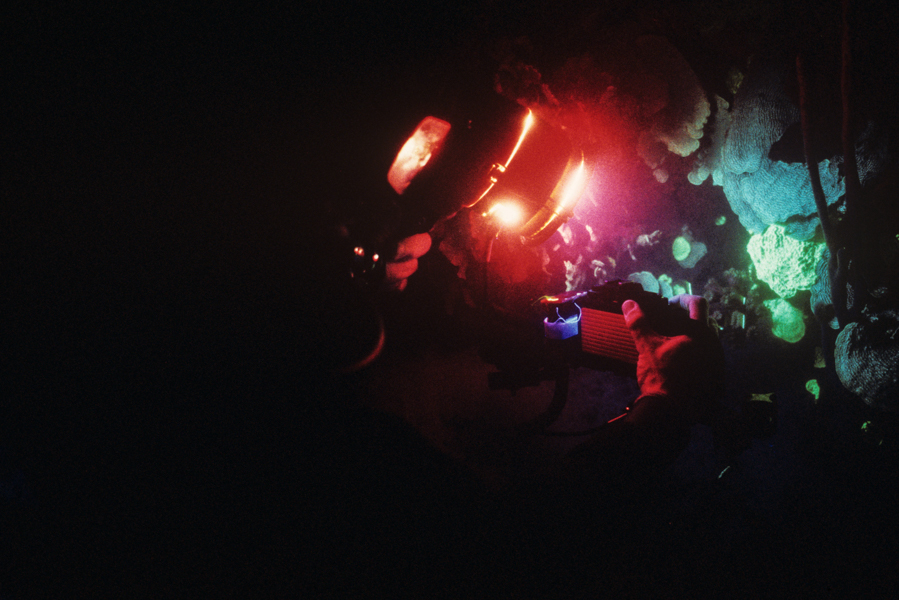
Diver in the act of taking a fluorescence photograph, 1988
Photo subjects
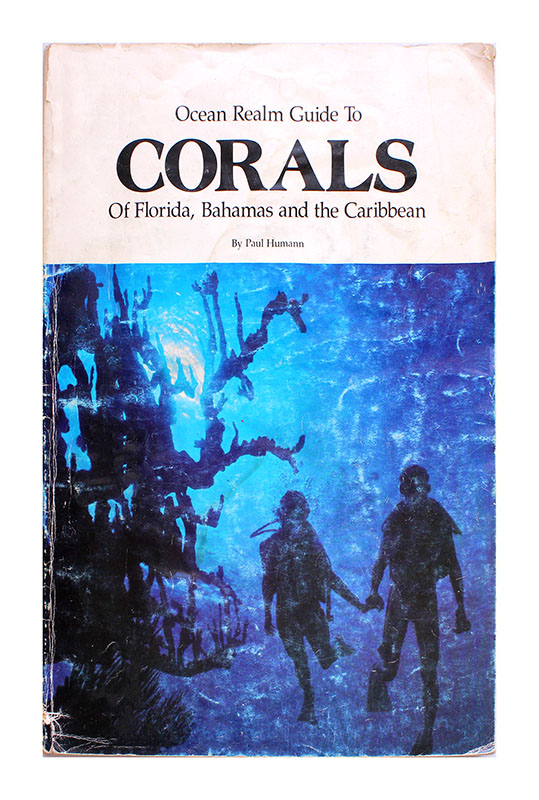
When I made the first trip, in 1987, I did not know anything about coral identification. I first thought I just needed to learn the common names, but I quickly realized that there was a lot of ambiguity in that. So I armed myself with Paul Humann’s excellent Ocean Realm Guide to Corals of Florida, Bahamas and the Caribbean (1983) and did my best at matching what I was seeing underwater to the images and descriptions in the book. The species identifications are: (a) those of an amateur at the time, and potentially incorrect; and (b) possibly outdated – the classifications of some corals has changed over time, leading to changes in the genus and/or species names. The names here are from my original identifications from the field and the photographs.
R0001
Ricordea florida
green corallimorpharian
R0002
Ricordea florida
green corallimorpharian
R0003
Eusmilia fastigiata
flower coral
R0005
Agaricia lamarcki + Leptoseris cucullata
sheet and sunray plate coral
R0006
Agaricia agaricites (juvenile)
coral
R0007
Ricordea florida, Mithrax cinctimanus
green corallimorpharian, anemone crab
R0009
Leptoseris cucullata
coral
R0011
Agaricia sp.
coral
R0012
Agaricia agaricites
lettuce coral
R0013
Agaricia lamarcki (juvenile)
sheet coral
R0014
Agaricia sp.
coral
R0016
Condylactis gigantea
giant anemone
R0017
Madracis sp.
R0018
Agaricia lamarcki + ?
R0019
coral, unidentified
R0020
Leptoseris cucullata
saucer coral
R0039
Eusmilia fastigiata
flower coral
R0040
Madracis decactis
green cactus coral
R0041
Ricordea florida
green corallimorpharian
R0042
Madracis sp.
R0043
Manicina areolata
rose coral
R0044
CHM at work
R0045
Meandrina meandrites
tan or butterprint brain coral
R0046
Montastrea cavernosa
large star coral
R0047
Scolymia sp.
R0048
Leptoseris cucullata
sunray lettuce coral
R0049
Phymanthus crucifer
speckled anemone
R0050
Agaricia, Leptoseris, Eusmilia
R0051
Mussa angulosa
large flower coral
R0052
Montastrea annularis
common star coral
R0053
Montastrea cavernosa
star coral
R0054
Agaricia sp. (fragilis?)
R0055
Agaricia sp. (fragilis?)
R0056
Mussa angulosa
large flower coral
R0057
Mussa angulosa
large flower coral
R0058
Manicina areolata
rose coral
R0059
Meandrina meandrites
tan or butterprint brain coral
R0060
Ricordea florida
green corallimorpharian
R0061
Clavelina picta
light bulb tunicate
R0062
Isophyllastrea rigida
polygonal coral
R0063
Mycetophyllia danaana
fat fungus coral
R0064
Agaricia, Leptoseris
general shot, wide angle
R0065
Mycetophyllia danaana
fat fungus coral
R0066
Mycetophyllia danaana
fat fungus coral
R0067
Montastrea cavernosa
large star coral
R0068
Leptoseris cucullata
sunray leaf coral
R0069
tunicate (?)
R0070
Mussa angulosa
large flower coral
R0071
Stephanocoenia michelinii
blushing star coral
R0073
Scolymia or Mussa, juvenile
R0074
R0075
Montastrea cavernosa
large star coral
R0076
Zoanthus, Agaricia, + ?
mat anemone, etc.
R0077
Halimeda opuntia
cactus alga
R0078
Agaracia lamarcki + Leptoseris cucullata
sheet coral and saucer coral
R0080
Meandrina, Stephanocoenia
R0081
Mussa angulosa (?)
large flower coral
R0082
Scolymia sp. (?)
R0083
Scolymia sp. (?)
R0084
Scolymia sp. (?)
R0085
Favorinus sp.
nudibranch
R0087
Mycetophyllia sp.
fungus coral
R0088
coral, unidentified
R0089
Scolymia sp.
disk coral
R0090
Montastrea annularis
common star coral
R0091
Montastrea cavernosa
large star coral
R0093
Manicina areolata (?)
rose coral
R0094
Agaricia sp., Leptoseris cucullata
leaf coral