
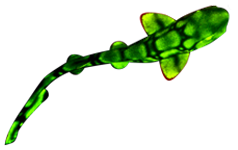
KEY Award Recipient – 2021
Posted On: Monday, August 23, 2021
The recipient of the 2021 NIGHTSEA/EMS KEY Award for New Faculty is Dr. Kyle Gustafson, Assistant Professor of Parasitology in the Department of Biological Sciences at Arkansas State University. The KEY Award was instituted in 2015 by NIGHTSEA founder Dr. Charles Mazel to acknowledge his own mentors and as a way of giving back to the scientific community. The annual award, sponsored jointly by NIGHTSEA and Electron Microscopy Sciences (EMS), includes a NIGHTSEA Model SFA Stereo Microscope Fluorescence Adapter system outfitted with two excitation/emission combinations plus $750 in supplies from the EMS catalog.
Dr. Gustafson received his PhD in Zoology from Oklahoma State University and post-doc’ed as an Associate Wildlife Biologist (The Wildlife Society), working in the Wildlife Genomics and Disease Ecology Lab at the University of Wyoming. His team at Arkansas State focuses on the environmental and ecological factors that affect the distribution, genetics, and genomics of host and parasite populations. Gustafson-lab research has a strong focus on how historic factors have led to the current composition of populations and communities and how contemporary factors are affecting the evolutionary potential of populations. Although field work is a key part of their workflow, many population-level processes can not be readily observed through field observations alone. Thus, they use genetic and genomic lab techniques to disentangle complex patterns of population structure, gene flow, and parasite transmission. They have a strong focus on conservation and commonly study nematodes, trematodes, snails, amphibians, and mammals, but the techniques can be easily expanded to other organisms. Dr. Gustafson is also the Curator of Mammals at the Arkansas Center for Biodiversity Collections.
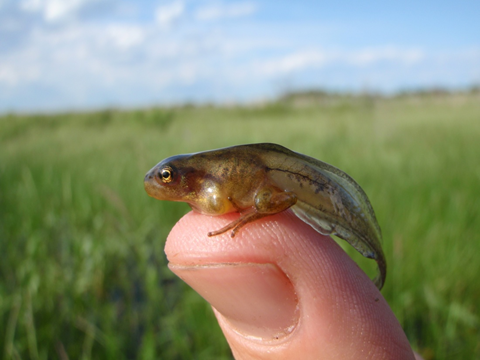
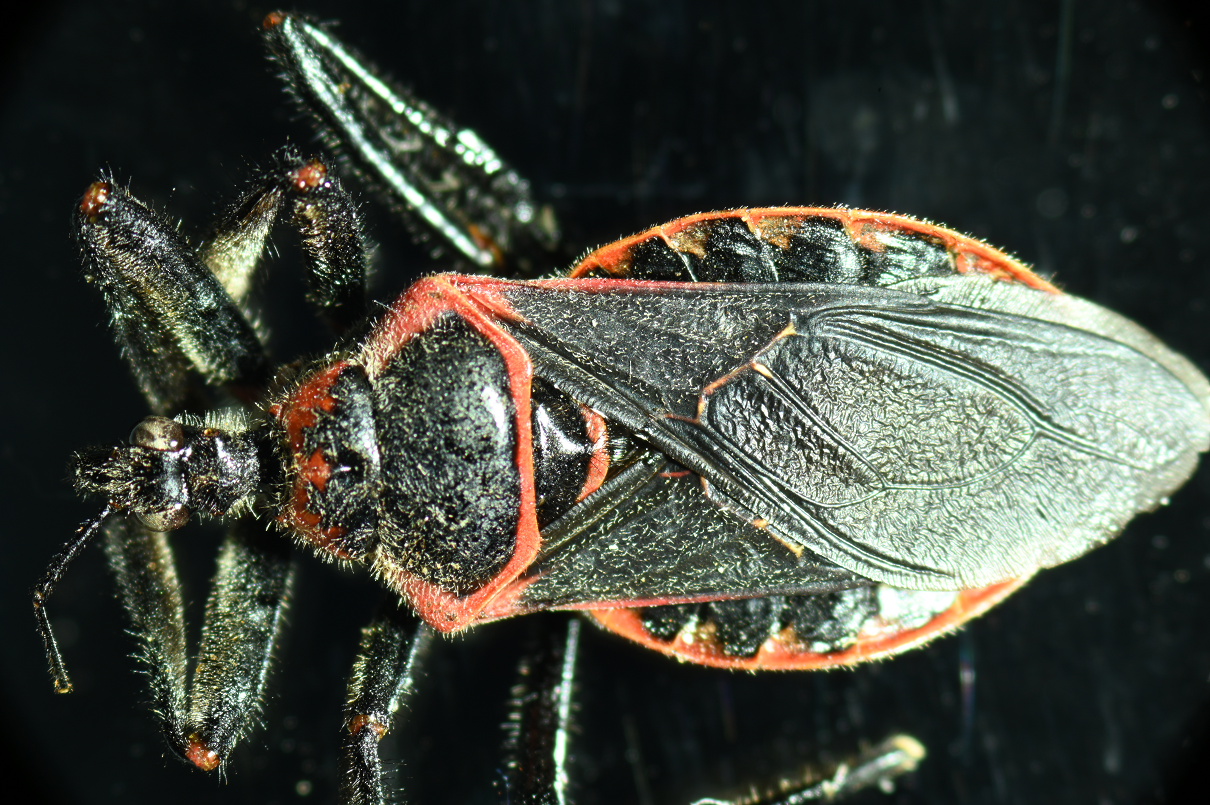
Dr. Gustafson plans to use the NIGHTSEA Stereo Microscope Fluorescence Adapter as an aid in studying (1) how amphibian lateral lines help tadpoles evade parasitism, and (2) the fluorescence variation of assassin bugs when infected with Trypanosoma cruzi, the vector for Chagas Disease. He will also use it in courses he is teaching in Parasitology and Microscopy, and will collaborate with an entomologist colleague in investigating the fluorescence properties of insects in the Arkansas State hemipteran collection.
(Click image for larger view)

The 2022 edition of the KEY Award will be announced in January.
Past recipients
- 2020 – Dr. Heather Ray (Idaho State University)
- 2019 – Dr. Josh Currie (University of Toronto)
- 2018 – Dr. Pierre-Paul Bitton (Memorial University of Newfoundland)
- 2017 – Dr. Kristen Gorman (California State University Chico)
- 2016 – Dr. Sarah Petersen (Kenyon College)
- 2015 – Dr. Robert Mitchell (University of Wisconsin Oshkosh)