
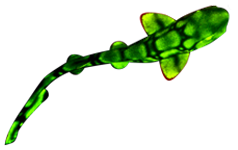

KEY Award Recipient – 2023
Dr. Andrea Suria is the recipient of the 9th Annual KEY Award for New Faculty.
read more »
KEY Award Recipient – 2022
We are pleased to announce that Dr. Oscar Ruiz of Houston Christian University is the recipient of the 8th annual NIGHTSEA/EMS KEY Award for New Faculty.
read more »
KEY Award Recipient – 2021
The recipient of the 2021 NIGHTSEA/EMS KEY Award for New Faculty is Dr. Kyle Gustafson, Assistant Professor of Parasitology in the Department of Biological Sciences at Arkansas State University. The KEY Award was instituted in 2015 by NIGHTSEA founder Dr. Charles Mazel to acknowledge his own mentors and as a way of giving back to […]
read more »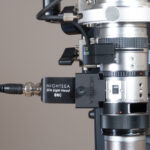
New NIGHTSEA Light Head Adapter for the Keyence VH-Z100 Lens
New adapter to mount the NIGHTSEA light head to the VH-Z100 lens to bring excitation light in from above.
read more »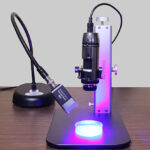
Turnkey digital fluorescence imaging for C. elegans
The InVivo FLite systems provide a convenient, inexpensive fluorescence microscope system for screening C. elegans.
read more »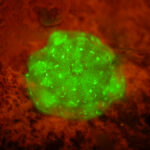
NIGHTSEA – A NOAA SBIR Success Story
NIGHTSEA has been featured as a SBIR Success Story by the NOAA Technology Partnerships Office.
read more »
KEY Award Recipient – 2020
We are pleased to announce that Dr. Heather Ray, Idaho State University, is the recipient of the 2020 NIGHTSEA/EMS KEY Award for New Faculty.
read more »
KEY Award Recipient – 2019
Dr. Joshua Currie of the University of Toronto is the recipient of the 2019 NIGHTSEA/EMS KEY Award for New Faculty.
read more »
KEY Award Recipient – 2018
The recipient of the fourth annual NIGHTSEA/EMS KEY Award for New Faculty is Dr. Pierre-Paul Bitton, who started his new position as Assistant Professor in the Cognitive and Behavioral Ecology (CABE) program at Memorial University of Newfoundland. Dr. Bitton is researching the mechanisms of fluorescent protein production, especially in red- and green-fluorescing fish. During his time as […]
read more »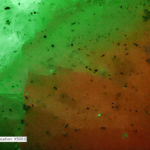
High magnification fluorescence with the Keyence VH-ZST lens
The new NIGHTSEA adapter for the Keyence VH-ZST lens can achieve high magnification fluorescence.
read more »
iBiology as a Resource for Fluorescence Techniques and More
iBiology.org is a fantastic free resource for educational videos, featuring a wide array of biological themes, principles, research topics, and ideas.
read more »
Helping Students Understand Genetics
Students use the NIGHTSEA Model SFA Stereo Microscope Fluorescence Adapter system to conduct inquiry-based genetics experiments in the laboratory.
read more »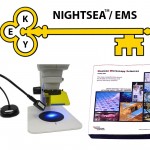
KEY Award Recipient – 2017
The recipient of the third annual NIGHTSEA/EMS KEY Award for New Faculty is Dr. Kristen Gorman, Assistant Professor of Biological Sciences at Cal State Chico.
read more »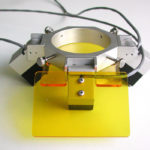
The Story Behind the NIGHTSEA Stereo Microscope Fluorescence Adapter
Did you ever wonder how a new piece of equipment comes into existence? The Model SFA arose from a solution to our own marine biology research challenge.
read more »
STEM Outreach – Windows into Development
NIGHTSEA SFA system enables fluorescence microscopy at a STEM outreach event.
read more »
New Application Note – Failure Analysis
Fluorescence is widely used for failure analysis. The NIGHTSEA adapters can add a fluorescence capability to a wide range of existing microscopes.
read more »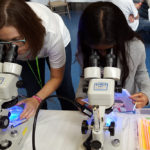
STEM Outreach – BrainFest
Convenient fluorescence microscopy goes on the road for BrainFest – a neuroscience-focused STEM outreach event.
read more »
KEY Award Recipient – 2016
The recipient of the second annual NIGHTSEA/EMS KEY Award for New Faculty is Dr. Sarah Petersen, the new Ashby Denoon Assistant Professor of Neuroscience at Kenyon College.
read more »NIGHTSEA Violet Light Head Photoconverts CaMPARI
The NIGHTSEA Violet light source has been used successfully to photoconvert the color-switching CaMPARI protein.
read more »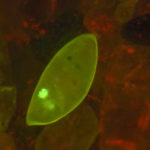
Fluorescence microscopy – NIGHTSEA with Unitron and Zeiss
Fluorescence microscopy imaging trials with the NIGHTSEA Model SFA and Unitron and Zeiss microscopes with digital cameras.
read more »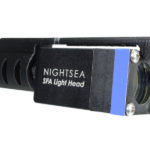
NIGHTSEA SFA V1 Light Head Retainer
Custom V1 light head retainer for the NIGHTSEA SFA system
read more »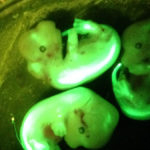
GFP Mouse Embryos
The NIGHTSEA Stereo Microscope Fluorescence Adapter (SFA) improved workflow for research with mouse embryos by detecting GFP-positive specimens and aiding in dissection – right in the mouse facility.
read more »
SFA Fluorescence Excitation Light Head Connector
New fluorescence excitation light head connector for the NIGHTSEA Model SFA Stereo Microscope Fluorescence Adapter.
read more »
NIGHTSEA Stereo Microscope Adapter with Fluorescent Dye Fills
KEY Award winner Dr. Robert Mitchell is using the NIGHTSEA Stereo Microscope Fluorescence Adapter to image nerves filled with fluorescent dye.
read more »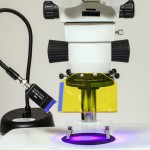
Stereo Microscope Filter Shield
Fluorescence stereo microscopes should include a protective shield. The NIGHTSEA filter shield does double duty as an eye protector and as a viewing filter.
read more »
KEY Award Recipient – 2015
Dr. Robert Mitchell, University of Wisconsin Oshkosh, was the recipient of the first NIGHTSEA/EMS KEY Award for New Faculty.
read more »Stereo microscopes to use with the NIGHTSEA SFA
Surplus stereo microscopes are an alternative to use with the NIGHTSEA Stereo Microscope Fluorescence Adapter.
read more »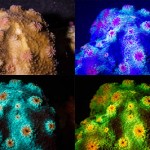
Coral fluorescence appearance vs excitation wavelength
With fluorescence, what you see depends on how you excite and view the subject – the interaction of the excitation wavelength, the fluorescing substance, and the barrier filter.
read more »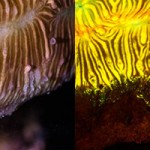
Coral fluorescence highlights tissue growth extension
Fluorescence microscopy helps in seeing the growing edge of coral tissue
read more »
SFA vs high-end systems for stereo fluorescence microscopy
Discussion of the NIGHTSEA SFA vs high-end systems for stereo fluorescence microscopy
read more »George McNamara comments on spectra viewers
George McNamara comments on spectra viewers and public availability of spectral data.
read more »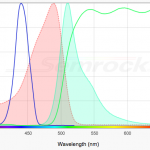
Fluorescence Spectra Viewers
List of interactive fluorescence spectra viewers on the web
read more »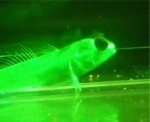
Calcein fluorescence detection
NIGHTSEA’s fluorescence visualization tools are the preferred solution for working with calcein-stained fish at macro and micro scales.
read more »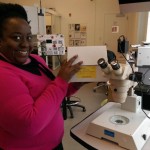
BioBus adds the NIGHTSEA Stereo Microscope Fluorescence Adapter to its suite of research-grade microscopes for educational outreach
BioBus and BioBase are now using the NIGHTSEA Stereo Microscope Fluorescence Adapter system to introduce students to fluorescence microscopy.
read more »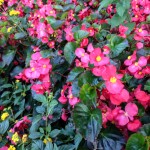
Flower fluorescence and the power of the Eclipse MicroTent
Photographing the fluorescence of a flower under a stereo microscope equipped with the Eclipse MicroTent(tm) to eliminate ambient light.
read more »SFA Tech Tip – Tests with C elegans strains
Test of the Model SFA Stereo Microscope Fluorescence Adapter with C elegans strains expressing GFP and mCherry.
read more »
SFA Tech Tip – Flies, fluorophores, and filter sets
Communication from a researcher discussing his application of the SFA filter sets with two lines of transgenic Drosophila.
read more »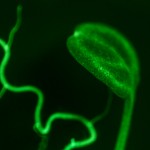
New Green Bandpass Filter for the Stereo Microscope Fluorescence Adapter
Green bandpass filter for the Stereo Microscope Fluorescence Adapter system to enhance viewing of GFP in the presence of background autofluorescence.
read more »SFA Tech Tip – Mixing and matching filters and light heads
A non-standard use of filters to solve a fluorescence viewing challenge with fluorescent zebrafish
read more »