

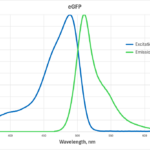
Fluorescence Excitation and Emission – Maxima vs Spectra
This article describes the relationship between fluorescence spectra vs maxima, and their role in selecting appropriate excitation and emission wavelengths.
read more »Fluorescence Spectra Viewers
It is useful to know the excitation and emission spectra of fluorophores to help in selecting lights and filters for fluorescence. Some web sites provide tabulations of excitation and emission maxima but we find it more helpful to be able to view full spectra, and ideally to overlay light source and filter characteristics. There are a number of sites that offer […]
read more »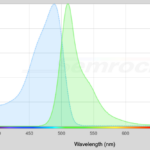
Why NIGHTSEA Offers Different Excitation Wavelengths
Why do we offer different color light sources? You need multiple options for excitation wavelengths because different materials may need different wavelengths to cause them to fluoresce.
read more »Imaging tips for Keyence microscopes
Recommendations for imaging fluorescence with the Keyence systems are primarily driven by the fact that the fluorescence emitted by your sample tends to be weaker than the reflected white light that the system is designed to image. This means that you will want to adjust things to either get more light to the camera, […]
read more »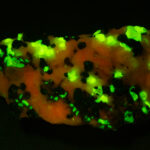
Fluorescence vs Phosphorescence – a Photographic Investigation
Using photography to document an interesting case of fluorescence vs phosporescence.
read more »
Signal from Noise – A Cautionary Fluorescence Tale
It is important to understand the impact that the choice of barrier filters can have on your fluorescence images. You may even think you are seeing something that is not there.
read more »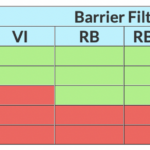
Mixing and matching light heads and filters
Guidance on mixing excitation sources and barrier filters for special applications.
read more »
Student Project – Coral Fluorescence Imaging and Spectroscopy
Students in the Walt Whitman High School science research program are using NIGHTSEA gear for research projects in coral reef biology.
read more »
Microplastics Publications Referencing Use of NIGHTSEA Equipment
A growing number of peer-reviewed publications related to microplastics reference use of NIGHTSEA equipment.
read more »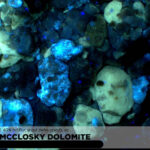
Oilfield Geology and Fluorescence
Fluorescence plays an important role in oilfield geology, the analysis of the cuttings coming out of a well as it is being drilled. Read how NIGHTSEA can help.
read more »
Adapting the SFA to Amscope Stereo Microscopes
The standard adapter ring supplied with our Stereo Microscope Fluorescence Adapter is the one piece of the system that directly attaches to your microscope. It serves as the means for mounting our modular barrier filters and filter shields. The ring attaches at the bottom of the objective housing with thumbscrews and is nearly universal. But […]
read more »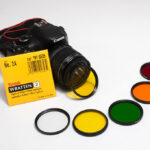
Fluorescence Photography – Camera Filters to Use with the NIGHTSEA Light Sources
Recommendations for off-the-shelf camera filters to use in combination with the NIGHTSEA excitation sources for fluorescence .photography.
read more »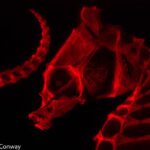
Fluorescence of Cleared and Stained Specimens
We received this beautifully detailed fluorescence image of a seahorse skeleton from Kevin Conway at Texas A&M University. The specimen, a dwarf seahorse (Hippocampus zosterae), was prepared using a technique called ‘clearing and staining’, a method that produces an intact specimen with cartilage stained blue and bones stained red. It is a great way […]
read more »Flashing Excitation for Enhanced Detection of Fluorescence in Ambient Light
The Xite flashlights include a flashing mode that can enhance the ability to detect fluorescence in the presence of ambient light. The more contrast there is between a subject and its background, the easier it will be to detect. While fluorescence may appear bright when viewed in conditions of darkness, in actuality it […]
read more »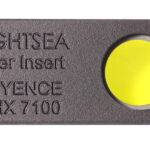
Custom Light Source Filter for Keyence VHX-7100 Fully Integrated Head
NIGHTSEA supplied a custom filter to trim the wavelength output of the light source built into the Keyence VHX-7100 Fully Integrated imaging head.
read more »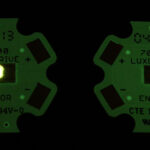
How a Remote Phosphor Works
Did you know there is no such thing as a ‘white’ LED (light-emitting diode)? Manufacturers use an added phosphor to make blue LEDs appear white. Learn more here.
read more »Publications Citing Use of NIGHTSEA Equipment
The 603 publications listed on this page cite the use of NIGHTSEA equipment in their Methods section. If you know of any references that should be added to this list, please email nightsea@nightsea.com. The more than 320 journals in which the papers below have been published include: 3 Biotech … Acarologia … ACS Applied Materials […]
read more »Research and Educational Institutions using NIGHTSEA Equipment – International
There are now at least 2204 research and educational entities in 67 countries using NIGHTSEA equipment for a wide variety of applications, and the list is growing rapidly. Besides these university, education, museum, and government establishments, numerous private companies engaged in various forms of laboratory and underwater research have also purchased equipment. This list became […]
read more »Research and Educational Institutions using NIGHTSEA Equipment
List of over 1100 research and educational institutions in 49 countries using NIGHTSEA equipment for a wide variety of fluorescence applications.
read more »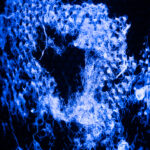
Microfiber Fluorescence
Microfiber fluorescence – An exploration of fibers collected by a filter system attached to a washing machine discharge hose.
read more »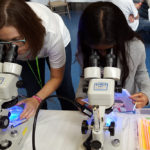
Fluorescence for Education and Outreach
The NIGHTSEA Stereo Microscope Fluorescence Adapter is a great tool for incorporating fluorescence in education and outreach.
read more »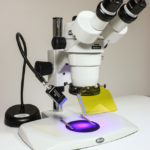
SFA vs High-End Systems for Fluorescence Stereo Microscopy
Comparing the NIGHTSEA SFA with high-end systems for fluorescence stereo microscopy
read more »
Tetracycline Fluorescence to Visualize Active Drug Distribution in Tablets
Tetracycline fluorescence reveals distribution of active drug compound relative to excipient in a pharmaceutical tablet.
read more »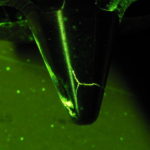
Examples of Blue Light Use in NDT
Customers are using the Model FL5000 flashlight in a variety of ways for their NDT inspection applications.
read more »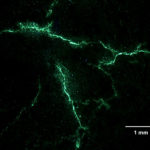
NDT Codes and Blue Light
Discussion of how the FL5000 blue light inspection light relates to NDT codes.
read more »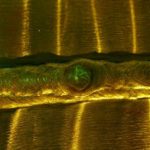
Outdoor Fluorescence Photography with the FPS-1 Fluorescence Photography System
The Model FPS-1 Fluorescence Photography System is a turnkey system that can even be used to photograph fluorescence outdoors in the daytime!
read more »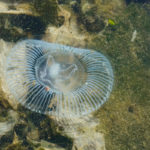
The Jellyfish that Won the Nobel Prize
The jellyfish Aequorea was the source of a discovery that led to one of the most significant advances in biological imaging ever – green fluorescent protein (GFP).
read more »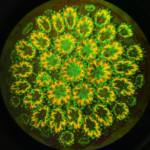
Coral Reef Restoration at Mote Marine Laboratory
Coral reef restoration efforts at Mote Marine Laboratory include new approaches to introducing more resilient corals to the wild.
read more »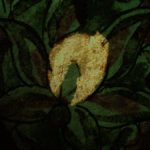
Image Subtraction to Isolate ‘Pure’ Fluorescence
Fluorescence imaging is best done in complete darkness, or at least when it is dark enough that the contribution of ambient light is so low that it is effectively completely underexposed. Sometimes that is not practical. It is not always a bad thing to have some non-fluorescent background as that can give context to an […]
read more »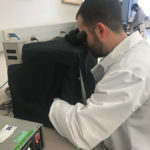
Custom Microscope ‘Dark Tent’ Solves Workflow Challenges
A custom darkness enclosure for a fluorescence microscope solves a hospital hematology lab workflow challenge.
read more »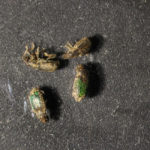
Pest Management Behavior Study with Fluorescent Marking
Understanding insect behavior is critical in developing strategies for pest management. Fluorescent marking and photography enabled a field study of annual bluegrass weevils.
read more »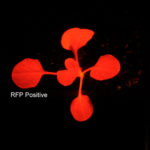
Crop Genetic Engineering and Fluorescence
Crop genetic engineering aims to improve existing crops. Fluorescent proteins as trait markers coupled with fluorescence viewing systems facilitate the research process.
read more »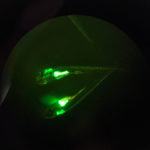
Zebrafish Metabolic Disease Reporters – mCherry and eGFP
NIGHTSEA recently visited Dr. Jessica Dunleavey at the Zaghloul Lab at the University of Maryland Baltimore to determine whether our Model SFA Stereo Microscope Fluorescence Adapter system could be used to screen their transgenic zebrafish. The research group investigates the functions of genes associated with metabolic diseases including diabetes, obesity, and NAFLD/NASH (nonalcoholic fatty liver disease […]
read more »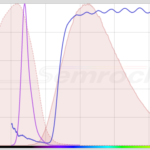
Which Excitation Should I Use for My Fluorophore?
This page provides guidance on selecting the right NIGHTSEA wavelength set for your fluorescence application.
read more »Full Wave Plate Mount for Keyence VHX Microscope
A customer in New England approached the local Keyence representative with a special request – they wanted to mount a first order retardation plate (also known as a full wave, red, red-one, first order red, gypsum, or lambda plate) on their Keyence VHX-6000 digital microscope with the VH-ZST dual magnification lens. Retardation plates like this are […]
read more »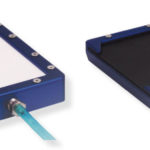
Fly Pad Fluorescence
Background fly pad fluorescence can interfere with sorting fluorescent transgenic Drosophila. We compared the background fluorescence of white and black fly pads.
read more »
Fluorescence of Deep Sea Corals of the Phoenix Island Protected Area (PIPA)
NIGHTSEA recently collaborated with professor Randi Rotjan of Boston University on her work with the Schmidt Ocean Institute mission aimed at studying deep sea corals growing on seamounts within “PIPA.”
read more »
Concrete Thin Section Fluorescence
Fluorescence is a valuable tool in the concrete petrographic world. The NIGHTSEA fluorescence adapter systems can be used with microscopes at a variety of scales for detailed examination of a number of features.
read more »Hydrogel Curing
NIGHTSEA created a custom flashlight to assist a customer who needed to cure a degradable hydrogel as part of a biomedical development project.
read more »